A Bio-Patch Regrows Bone inside the Body

Researchers from the University of Iowa have developed a remarkable new procedure for regenerating missing or damaged bone. It’s called a “bio patch” — and it works by sending bone-producing instructions directly into cells using microscopic particles embedded with DNA.

In experiments, the gene-encoding patch has already regrown bone fully enough to cover skull wounds in test animals. It has also stimulated new growth in human bone marrow stromal cells. Eventually, the patch could be used to repair birth defects involving missing bone around the head or face. It could also help dentists rebuild bone in areas which provides a concrete-like foundation for implants.

To create the bio patch, a research team led by Satheesh Elangovan delivered bone-producing instructions to existing bone cells inside a living body, which allowed those cell to produce the required proteins for more bone production. This was accomplished by using a piece of DNA that encodes for a platelet-derived growth factor called PDGF-B. Previous research relied on repeated applications from the outside, but they proved costly, intensive, and more difficult to replicate with any kind of consistency.

“We delivered the DNA to the cells, so that the cells produce the protein and that’s how the protein is generated to enhance bone regeneration,” explained Aliasger Salem in a statement. “If you deliver just the protein, you have keep delivering it with continuous injections to maintain the dose. With our method, you get local, sustained expression over a prolonged period of time without having to give continued doses of protein.” Salem is a professor in the College of Pharmacy and a co-corresponding author on the paper.

While performing the procedure, the researchers made a collagen scaffold in the actual shape and size of the bone defect. The patch, was loaded with synthetically created plasmids and outfitted with the genetic instructions for building bone did the rest, achieving complete regeneration that matched the shape of what should have been there. This was followed by inserting the scaffold onto the missing area. Four weeks is usually all that it took — growing 44-times more bone and soft tissue in the affected areas compared to just the scaffold alone.

“The delivery mechanism is the scaffold loaded with the plasmid,” Salem says. “When cells migrate into the scaffold, they meet with the plasmid, they take up the plasmid, and they get the encoding to start producing PDGF-B, which enhances bone regeneration.”

The researchers also note that the delivery system is nonviral, meaning that the plasmid is not likely to cause an undesired immune response, and that it’s easier to mass produce, which lowers the cost.

Source: Discovery news


China Reports Two New Cases Of H7N9 Bird Flu

Earlier this week, Chinese health officials notified the World Health Organization (WHO) of two new infections of H7N9 – a strain of the virus responsible for causing the bird flu. The Asian nation’s Xinhua news agency reported on one of the cases Tuesday – that of a three-year-old boy living in south China’s Guangdong Province. The boy tested positive for the virus by the provincial disease prevention and control center and is in stable condition at the People’s Hospital of Dongguan City, according to the news agency.

Hong Kong’s Centre for Health Protection (CHP) said the boy’s seven close contacts had tested negative for the virus, but three of them had flu-like symptoms.

According to the WHO, the second patient is a 64-year-old woman from Zhejiang Province in eastern China, who is a farmer and had regular contact with live poultry. She fell ill on October 30 and was admitted to a local hospital the next day. She is currently in a critical condition, the international health organization said.

Officials from Zhejiang province, which sits about 800 miles northeast of Guangdong, reported two infections in October, a 35-year-old man and in a 67-year-old farmer, who also worked with live poultry. The Chinese province has reported the most H7N9 cases, with 49 infections and 11 deaths so far.

When Chinese officials identified the bird flu strain back in March, the number of cases jumped before falling off into May. Only two cases were reported over the summer. Experts have warned that flu viruses are erratic and there is a chance that the number of cases could start rising as the Northern Hemisphere moves into winter, a pattern followed by other avian influenza viruses.

The four Chinese infections reported this autumn are fueling worries of another wave of H7N9 infections, but some public health experts say it’s too early to tell. Richard Webby, director of the WHO collaborating center for influenza studies at St. Jude Children’s Research Hospital in Memphis, told CIDRAP News that it’s too early to tell if the recent infections are due to cooling temperatures, “or if we are seeing an increase at all.”Webby also pointed out, “chicken production is also likely getting ramped up soon for Chinese New Year.”

Marion Koopmans, a virologist at the National Institute of Public Health and the Environment in the Netherlands, said the timing of the cases hints at seasonal factors, but there are too few of them to call it a trend just yet. She added that market surveys could be used to determine any trends.

“Whether or not we expect seasonality is related to the question where these viruses come from,” Koopmans told CIDRAP, a health news service of the University of Minnesota. She also noted seasonality reports seem to focus on virality of the flu virus in wild birds. “If H7N9 is circulating in backyard farms, the picture may be quite different,” Koopmans said.

The WHO has said that since H7N9 causes only a mild infection in the birds, it could still be in the avian population of China. It has called for China and bordering countries to continue monitoring public health markers for the virus.

Source; Red Orbit


Methadone reducing drug use in India

Anti-addictive drug Methadone has been found to be effective in reducing drug use in India, says a study released on Thursday.

Methadone is a drug that can be taken orally or injected. It helps people dependent on morphine, heroin and other substances to reduce and stop their drug usage.

“Currently, five centres across India are offering methadone maintenance treatment. When the methadone treatment was used as a pilot project, it was found to be more effective with results of reduced drug use, injecting episodes and criminal behaviour amongst drug users,” said Christina Albertin, UN Office on Drugs and Crime (UNODC)representative for South Asia.

“The treatment using Methadone will also be a vital option for HIV prevention. So there is a need to scale up the process in India,” Albertin added.

The pilot study was conducted by the UNODC in collaboration with the National Drug Dependence Treatment Centre and the All India Institute of Medical Sciences

Source: IANS Live


How torture affects pain perception

Israeli soldiers captured during the 1973 Yom Kippur War were subjected to brutal torture in Egypt and Syria. Held alone in tiny, filthy spaces for weeks or months, sometimes handcuffed and blindfolded, they suffered severe beatings, burns, electric shocks, starvation, and worse. And rather than receiving treatment, additional torture was inflicted on existing wounds.

Forty years later, research by Prof. Ruth Defrin of the Department of Physical Therapy in the Sackler Faculty of Medicine at Tel Aviv University shows that the ex-prisoners of war (POWs), continue to suffer from dysfunctional pain perception and regulation, likely as a result of their torture. The study—conducted in collaboration with Prof. Zahava Solomon and Prof. Karni Ginzburg of TAU’s Bob Shapell School of Social Work and Prof. Mario Mikulincer of the School of Psychology at the Interdisciplinary Center, Herzliya—was published in the European Journal of Pain.

“The human body’s pain system can either inhibit or excite pain. It’s two sides of the same coin,” says Prof. Defrin. “Usually, when it does more of one, it does less of the other. But in Israeli ex-POWs, torture appears to have caused dysfunction in both directions. Our findings emphasize that tissue damage can have long-term systemic effects and needs to be treated immediately.”

A painful legacy

The study focused on 104 combat veterans of the Yom Kippur War. Sixty of the men were taken prisoner during the war, and 44 of them were not. In the study, all were put through a battery of psychophysical pain tests—applying a heating device to one arm, submerging the other arm in a hot water bath, and pressing a nylon fiber into a middle finger. They also filled out psychological questionnaires.

The ex-POWs exhibited diminished pain inhibition (the degree to which the body eases one pain in response to another) and heightened pain excitation (the degree to which repeated exposure to the same sensation heightens the resulting pain). Based on these novel findings, the researchers conclude that the torture survivors’ bodies now regulate pain in a dysfunctional way.

It is not entirely clear whether the dysfunction is the result of years of chronic pain or of the original torture itself. But the ex-POWs exhibited worse pain regulation than the non-POW chronic pain sufferers in the study. And a statistical analysis of the test data also suggested that being tortured had a direct effect on their ability to regulate pain.

Head games

The researchers say non-physical torture may have also contributed to the ex-POWs’ chronic pain. Among other forms of oppression and humiliation, the ex-POWs were not allowed to use the toilet, cursed at and threatened, told demoralizing misinformation about their loved ones, and exposed to mock executions. In the later stages of captivity, most of the POWs were transferred to a group cell, where social isolation was replaced by intense friction, crowding, and loss of privacy.

“We think psychological torture also affects the physiological pain system,” says Prof. Defrin. “We still have to fully analyze the data, but preliminary analysis suggests there is a connection.”

Source: Medical Xpress


Childhood music lessons boost adulthood cognitive skills

The study unveils that playing a musical instrument during childhood leaves benefits in brain that lasts long even into adult life, according to the findings published in the Journal of Neuroscience.

 The research scientists monitored the brains of 44 people in their 50s, 60s and 70s at the Auditory Neuroscience Laboratory at Northwestern University in Illinois, US.

The participants had to listen to a synthesized speech syllable, “da”, while researchers measured electrical activity in the spot of the brain that is responsible for processing sound information known as the auditory brainstem.

The observation unraveled that though none of the volunteers had music practice for nearly 40 years, their brain responses were totally different.

Those who had music training between four and 14 years early in life showed a faster response to the speech sound than those ones who never had music lessons.

Experts suggest “musical training particularly with an emphasis on rhythmic skills can exercise the auditory-system.”

“As people grow older, they often experience changes in the brain that compromise hearing. For instance, the brains of older adults show a slower response to fast-changing sounds, which is important for interpreting speech,” researchers clarified.

“Being a millisecond faster may not seem like much, but the brain is very sensitive to timing and a millisecond compounded over millions of neurons can make a real difference in the lives of older adults,” said Michael Kilgard from the University of Texas, who was not involved with the research.

An earlier study conducted by scientists from Concordia University and the Montreal Neurological Institute and Hospital at McGill University also revealed the positive effects of music practice on the brain.

The study demonstrated that “musical training before age 7 is linked with more white matter in the corpus callosum part of the brain, as well as better performance on visual sensorimotor synchronization tasks compared with people who started music training after age 7.”

Source: Press TV


19 natural remedies for anxiety

You’re anxious, worried, freaked. You’re upset about (pick one): money, health, work, family, love. Your heart is beating fast, your breathing is shallow and rapid, your mind is imagining doom, and you wish you could just relax…now! Whether you have a full-blown anxiety disorder or are just freaking out, you may not want to try medication—at least not yet.

There are many safe nondrug remedies for anxiety, from mind-body techniques to supplements to calming teas. Some start working right away, while others may help lessen anxiety over time.

Chamomile

If you have a jittery moment, a cuppa chamomile tea might help calm you down. Some compounds in chamomile (Matricaria recutita) bind to the same brain receptors as drugs like Valium.

You can also take it as a supplement, typically standardized to contain 1.2 percent apigenin (an active ingredient), along with dried chamomile flowers. In one study at the University of Pennsylvania Medical Center, in Philadelphia, patients with generalized anxiety disorder (GAD) who took chamomile supplements for eight weeks had a significant decrease in anxiety symptoms compared to patients taking placebo.

L-theanine (or green tea)

They say Japanese Buddhist monks could meditate for hours, both alert and relaxed. One reason may have been an amino acid in their green tea called L-theanine, says Mark Blumenthal, of the American Botanical Council.

Research shows that L-theanine helps curb a rising heart rate and blood pressure, and a few small human studies have found that it reduces anxiety. In one study, anxiety-prone subjects were calmer and more focused during a test if they took 200 milligrams of L-theanine beforehand.

You can get that much L-theanine from green tea, but you’ll have to drink many cups—as few as five, as many as 20.

Hops

Yes, it’s in beer, but you won’t get the tranquilizing benefits of the bitter herb hops (Humulus lupulus) from a brew. The sedative compound in hops is a volatile oil, so you get it in extracts and tinctures—and as aromatherapy in hops pillows.

“It’s very bitter, so you don’t see it in tea much, unless combined with chamomile or mint,” says Blumenthal. Hops is often used as a sedative, to promote sleep, often with another herb, valerian. Note: Don’t take sedative herbs if you are taking a prescription tranquilizer or sedative, and let your doctor know any supplements you are taking.

Valerian

Some herbal supplements reduce anxiety without making you sleepy (such as L-theanine), while others are sedatives. Valerian (Valeriana officinalis) is squarely in the second category. It is a sleep aid, for insomnia. It contains sedative compounds; the German government has approved it as a treatment for sleep problems.

Valerian smells kind of nasty, so most people take it as a capsule or tincture, rather than a tea. If you want to try it, take it in the evening—not before you go to work! Valerian is often combined with other sedative herbs such as hops, chamomile, and lemon balm.

Lemon balm

Named after the Greek word for “honey bee,” lemon balm (Melissa officinalis), has been used at least since the Middle Ages to reduce stress and anxiety, and help with sleep. In one study of healthy volunteers, those who took standardized lemon balm extracts (600 mg) were more calm and alert than those who took a placebo.

While it’s generally safe, be aware that some studies have found that taking too much can actually make you more anxious. So follow directions and start with the smallest dose. Lemon balm is sold as a tea, capsule, and tincture. It’s often combined with other calming herbs such as hops, chamomile, and valerian.

Exercise

Exercise is safe, good for the brain, and a powerful antidote to depression and anxiety, both immediately and in the long term. “If you exercise on a regular basis, you’ll have more self-esteem and feel healthier,” says Dr. Drew Ramsey, assistant clinical professor of psychiatry at New York-Presbyterian Hospital, Columbia University.

“One of the major causes of anxiety is worrying about illness and health, and that dissipates when you are fit.”

The 21-minute cure

Twenty-one minutes: That’s about how long it takes for exercise to reliably reduce anxiety, studies show, give or take a minute. “If you’re really anxious and you hop on a treadmill, you will feel more calm after the workout,” Ramsey says.

“I generally ask my patients to spend 20 to 30 minutes in an activity that gets their heart rate up, whether it’s a treadmill or elliptical or stair stepping—anything you like. If you rowed in college, get back to rowing. If you don’t exercise, start taking brisk walks.”

Passionflower

In spite of the name, this herb won’t help you in love. It’s a sedative; the German government has approved it for nervous restlessness. Some studies find that it can reduce symptoms of anxiety as effectively as prescription drugs. It’s often used for insomnia.

Like other sedatives, it can cause sleepiness and drowsiness, so don’t take it—or valerian, hops, kava, lemon balm, or other sedative herbs—when you are also taking a prescription sedative.

Be careful about using more than one sedative herb at a time, and don’t take passionflower for longer than one month at a time.

Lavender

The intoxicating (but safe) aroma of lavender (Lavandula hybrida) may be an “emotional” anti-inflammatory. In one study, Greek dental patients were less anxious if the waiting room was scented with lavender oil. In a Florida study, students who inhaled lavender oil scent before an exam has less anxiety—although some students said it made their minds “fuzzy” during the test.

In one German study, a specially formulated lavender pill (not available in the U.S.) was shown to reduce anxiety symptoms in people with Generalized Anxiety Disorder (GAD) as effectively as lorazepam (brand name: Ativan), an anti-anxiety medication in the same class as Valium.

Hold your breath!

Ok, let it out now. We’re not recommending that you turn blue, but yoga breathing has been shown to be effective in lowering stress and anxiety. In his bestselling 2011 book Spontaneous Happiness, Dr. Andrew Weil introduced a classic yoga breathing technique he calls the 4-7-8 breath.

One reason it works is that you can’t breathe deeply and be anxious at the same time. To do the 4-7-8 breath, exhale completely through your mouth, then inhale through your nose for a count of four. Hold your breath for a count of seven. Now let it out slowly through your mouth for a count of eight. Repeat at least twice a day.

Eat something, quick

“Almost universally, people get more anxious and irritable when they are hungry,” says Ramsey, coauthor of The Happiness Diet. “When you get an anxiety attack, it may mean your blood sugar is dropping. The best thing to do is to have a quick sustaining snack, like a handful of walnuts, or a piece of dark chocolate, along with a glass of water or a nice cup of hot tea.”

In the long term, diet is key to reducing anxiety, says Ramsey. His advice: Eat a whole-foods, plant-based diet with carefully selected meat and seafood, plenty of leafy greens (such as kale) to get folate, and a wide variety of phytonutrients to help reduce anxiety.

Eat breakfast

Stop starving yourself, advises Ramsey. “Many people with anxiety disorders skip breakfast. I recommend that people eat things like eggs, which are a satiating and filling protein, and are nature’s top source of choline. Low levels of choline are associated with increased anxiety.”

Eat omega-3s

You know fish oils are good for the heart, and perhaps they protect against depression. Add anxiety to the list. In one study, students who took 2.5 milligrams a day of mixed omega-3 fatty acids for 12 weeks had less anxiety before an exam than students taking placebo.

Experts generally recommend that you get your omega-3s from food whenever possible. Oily, cold-water fishes like salmon are the best sources of the fatty acids; a six-ounce piece of grilled wild salmon contains about 3.75 grams.

Stop catastrophizing

When you’re attacked by anxiety, it’s easy to get into a mind set known as “catastrophic thinking” or “catastrophizing.” Your mind goes to the bad terrible really horrible just unbearable things and what if they really do happen? “You think, ‘This could really ruin my life,'” says Ramsey.

Instead, take a few deep breaths, walk around the block, and consider the real probability that this problem will really spin out into catastrophe. How likely is it that you’ll lose your job, never talk to your sister again, go bankrupt?

Chances are a catastrophic outcome is a lot less likely than you think when you’re consumed with anxiety. “Very few events really change the trajectory of your life,” says Ramsey.

Get hot

Ever wonder why you feel so relaxed after a spell in the sauna or a steam room? Heating up your body reduces muscle tension and anxiety, research finds. Sensations of warmth may alter neural circuits that control mood, including those that affect the neurotransmitter serotonin. Warming up may be one of the ways that exercise—not to mention curling up by a fire with a cozy cup of tea—boosts mood.

As one group of researchers put it, “Whether lying on the beach in the midday sun on a Caribbean island, grabbing a few minutes in the sauna or spa after work, or sitting in a hot bath or Jacuzzi in the evening, we often associate feeling warm with a sense of relaxation and well-being.”

Take a ‘forest bath’

The Japanese call it Shinrin-yoku, literally “forest bath.” You and I know it as a walk in the woods. Japanese researchers measured body changes in people who walked for about 20 minutes in a beautiful forest, with the woodsy smells and the sounds of a running stream.

The forest bathers had lower stress hormone levels after their walk than they did after a comparable walk in an urban area.

Learn mindfulness meditation

Mindfulness meditation, originally a Buddhist practice but now a mainstream therapy, is particularly effective in treating anxiety, says Teresa M. Edenfield, a clinical psychologist in the Veterans Administration Medical Center in Durham, N.C., who often uses it to treat anxiety patients. “The act of practicing mindful awareness allows one to experience the true essence of each moment as it really occurs, rather than what is expected or feared,” she says.

How to begin? You can start by simply “paying attention to the present moment, intentionally, with curiosity, and with an effort to attend non-judgmentally,” Edenfield says.

Breath and question

To stay mindful, ask yourself simple questions while practicing breathing exercises, Edenfield suggests. “Sit in a comfortable place, close your eyes, and focus on how your breath feels coming in and out of your body. Now ask yourself silent questions while focusing on the breath.”

What is the temperature of the air as it enters your nose? How does your breath feel different as it leaves your body? How does the air feel as it fills your lungs?

Give yourself credit

Are you having anxious thoughts? Congratulations. You’re aware of your emotional state, and that awareness is the first step in reducing anxiety, says Edenfield.

“Remember to give yourself credit for being aware that you are having anxious thoughts, and probably body changes. This is truly a skill of mindfulness that must be learned, and is essential in making the next steps of intervening through strategies such as positive self-talk, cognitive reframing, or the use of mindfulness or relaxation strategies.”

Source: Fox News



20 %of Nations Medical Education Funds Go to NY


New York state received 20 percent of all Medicare’s graduate medical education (GME) funding while 29 states, including places struggling with a severe shortage of physicians, got less than 1 percent, according to a report published today by researchers at the George Washington (GW) University School of Public Health and Health Services (SPHHS).

New York suffers from no lack of physicians yet in 2010 the state received $2 billion in federal GME funding according to the study, which appears in the November issue of Health Affairs. At the same time, the researchers found that many states struggling with severe physician shortages received a fraction of that funding: For example, Florida received one tenth the GME funding ($268 million) and Mississippi, the state with the lowest ratio of doctors to patients in the country, received just $22 million in these federal payments.

“Such imbalances play out across the country and can affect access to health care,” said lead author Fitzhugh Mullan, MD, the Murdock Head Professor of Medicine and Health Policy, a joint position at SPHHS and the GW School of Medicine and Health Sciences. “Due to the rigid formula that governs the GME system, a disproportionate share of this federal investment in the physician workforce goes to certain states mostly in the Northeast. Unless the GME payment system is reformed, the skewed payments will continue to promote an imbalance in physician availability across the country.”

Other authors of the study include Candice Chen, MD, MPH, assistant professor of health policy and pediatrics and Erika Steinmetz, MBA, senior research scientist at the SPHHS Department of Health Policy.

The study adds to the evidence suggesting that the current system of allocating graduate medical education or GME money is based on an inflexible and outdated method, one that contributes to large imbalances in payments and a growing shortfall of physicians in some areas of the country. Since its start, the Medicare GME program has paid teaching hospitals to provide residency training for young physicians. In 2010, those teaching facilities received $10 billion in GME payments, an amount that represents the nation’s single largest public investment in the health workforce.

To find out how that $10 billion was distributed, the researchers analyzed the 2010 Medicare cost reports that list federal GME payments to teaching hospitals all over the country. The team found a disproportionate amount of Medicare GME dollars flowing to Northeastern states such as New York, Massachusetts and Rhode Island. In fact, the study shows that in these three states Medicare supports twice as many medical residents per person as the national average. And New York alone has more residents than 31 other states combined.

“Teaching hospitals in the Northeastern United States have a long history of large residency training programs, which capture a large share of GME funding,” Mullan said. “But these states also have the highest physician-to-population ratios. They are not doctor shortage states.”

While some residents move elsewhere after training, the majority of newly minted physicians set up a practice near where they were trained. Therefore, it is important that states with rural and growing populations receive appropriate support for starting and maintaining residency programs, Mullan said.


The study shows that many other parts of the country lose out when it comes to Medicare GME funding. Many Southern and Western states — which already face shortfalls in their physician workforce — such as Montana, Idaho, Arkansas, Wyoming, Florida and even California do not do well in terms of Medicare GME funding under the current system, according to the authors.

The researchers also found:

Large state-level differences in the number of Medicare-funded medical residents even when the density of the population is taken into account. For example, New York again is at the top of all the states with 77 Medicare-funded medical residents per 100,000 people while California has 19, Florida 14, and Arkansas has just 3.

Medicare GME payments have not kept pace with factors such as rapidly growing populations in Southern and Western United States. For example, Florida, Texas and California have rapidly growing populations yet they received substantially less GME funding in 2010.

Medicare’s current GME formula pays very different amounts to train medical residents depending on the state. For example, the federal government pays Louisiana $64,000 per year to train each medical resident but gives Connecticut $155,000 for the same job


  • The findings from this paper document a substantial imbalance in GME payments, one that has been frozen in place since 1997 when Congress passed a law that capped the number of residency positions at each hospital. Under the 1997 law, teaching hospitals can train any number of physicians but Medicare pays for the training only up to the allocated cap, the authors point out.
  • The end result of the cap and other inflexible attributes of the current GME system is a system that gives teaching hospitals in certain states with large numbers of practicing physicians big incentives to train more residents while shortchanging many smaller and rural states.

Ways to fix the problem include revisiting the GME payment formula and devising one that distributes GME funding so as to stimulate the growth of residency training in parts of the country that are chronically underserved or are growing rapidly. In addition, the authors say the GME funding system needs an oversight body that would look now and in the future at the distribution of GME dollars and make decisions about the best places to steer funding so that the federal government is making the wisest investment in the physician workforce.


Source: Science Daily


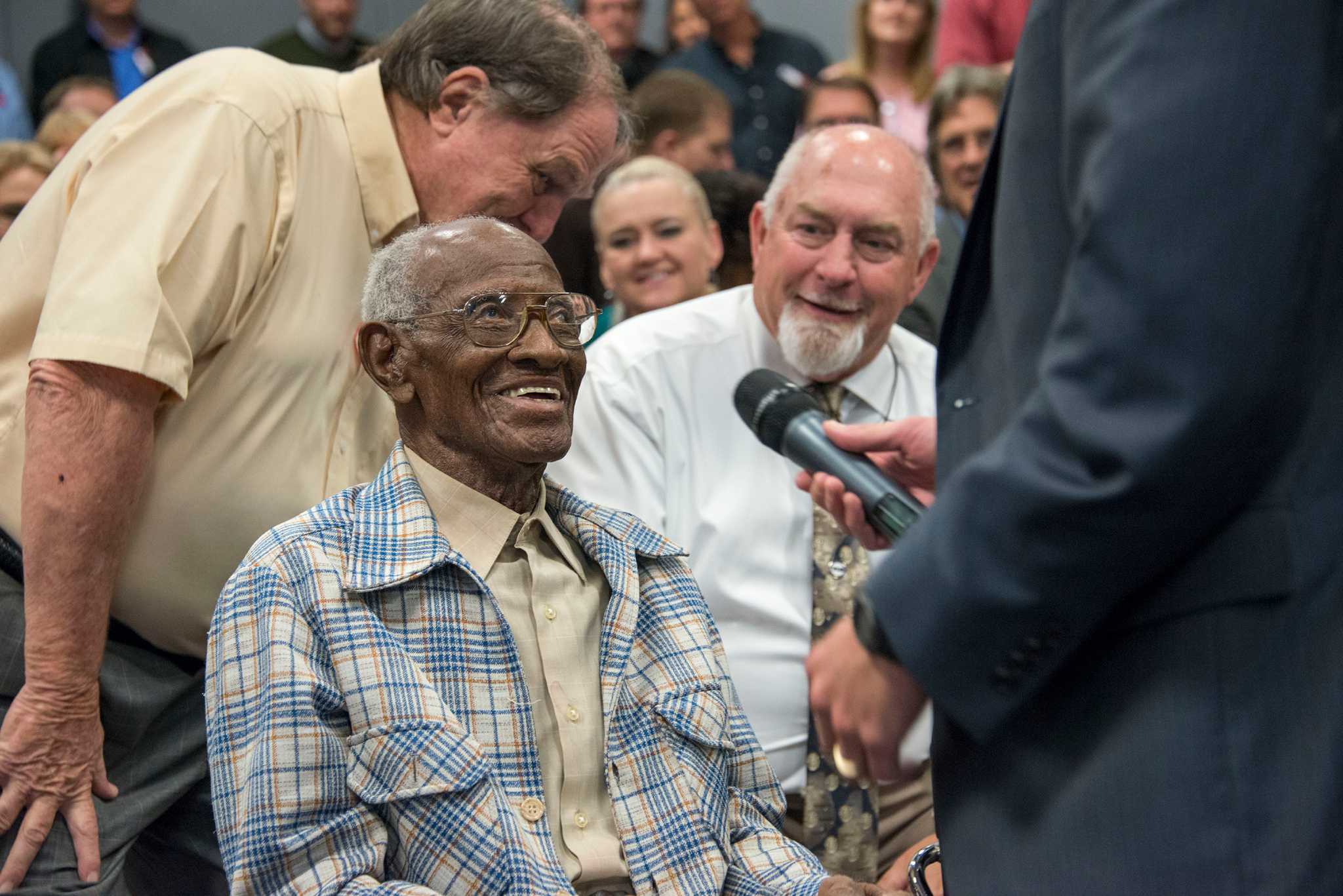
At 107, nation’s oldest veteran enjoys limelight

Richard Overton, believed to be the oldest living United States veteran at 107, accepted a box of cigars and a standing ovation Thursday with a humble demeanor and a beaming smile.

More than 100 people packed a conference room at the Stephen F. Austin building in downtown Austin to attend a pre-Veterans Day ceremony in Austin honoring Overton and Ken Wallingford, who spent 10 months in a tiger cage as a prisoner of war in Vietnam.

“I’ve gotten so many letters and so many thank yous and I enjoy every bit of it, but I’m still going to enjoy some more,” said Overton, who is planning a visit with President Barack Obama next week in Washington, D.C.

Ex-state employee

Overton, identified by the General Land Office as the nation’s oldest veteran, was born in Bastrop County. He served in the Army during World War II in the South Pacific and now lives in Austin. He sold furniture in Austin after the war and later worked for the state Treasurer’s Office.

He drives and walks without a cane. During a television interview in March, he told a reporter that he doesn’t take medicine, smokes cigars every day and takes whiskey in his morning coffee. The key to living to his age, he said, is simply “staying out of trouble.”

The day’s ceremony, sponsored by the General Land Office, also recognized Wallingford, who shared his experience in captivity in the Cambodian jungle as the audience listened in amazement.

The former Army sniper, now 65, alternately laughed and became emotional as he told the story of his imprisonment and triumphant return home.

“As we look forward to Veterans Day I hope each and every one of us can remember those who have served, and importantly, those who serve today,” said Wallingford, who is veterans liaison for the Veterans Land Board.

Emotional memories

Wallingford brought a food and water bowl, sandals, pajamas and photos from his imprisonment in April 1972 to being set free in February 1973. His voiced cracked as he described his return to the United States.

“We weren’t going to leave without you guys,” Wallingford remembered hearing in the Army helicopter on his way out.

President Lyndon B. Johnson offered Wallingford and the other POWs who returned with him the presidential suite and staff of the Brooke Army Medical Center in San Antonio, he said.

Bill McLemore, deputy commissioner for the Veterans Land Board and a retired Army colonel, served with Wallingford. “Most veterans are just looking to have someone reaffirm that what they’ve done was an honorable thing to do,” McLemore said.

Source: Houston Chronicle


Kids of less-educated moms may have noisier brains

A mother’s level of education has strong implications for a child’s development. Northwestern University researchers show in a new study that low maternal education is linked to a noisier nervous system in children, which could affect their learning.

 “You really can think of it as static on your radio that then will get in the way of hearing the announcer’s voice,” says Nina Kraus, senior author of the study and researcher at the Auditory Neuroscience Laboratory at Northwestern University.

The study, published in the Journal of Neuroscience, is part of a larger initiative working with children in public high schools in inner-city Chicago. The adolescents are tracked from ninth to 12th grade. An additional group of children in the gang-reduction zones of Los Angeles are also being tracked.

Kraus and colleagues are more broadly looking at how music experience, through classroom group-based musical experience, could offset certain negative effects of poverty.  But first, they wanted to see what biological effects poverty may have on the adolescents’ brain. In this particular study, 66 children – a small sample – in Chicago participated.

Those whose mothers had a “lower education” tended to have not graduated from high school. Kraus’s study did not directly track income of families, but most children in the study qualified for free lunch (to be eligible, a family of four must have income of about $29,000 or less).

Researchers found “children from lower-SES (socioeconomic status) backgrounds are exposed to less complex and linguistically rich input in addition to hearing fewer words per hour from their caregivers,” according to the study.

The new study shows that in a group of adolescents from inner-city Chicago, the nervous system is different, depending on an individual’s mother’s level of education– both in the absence of stimulation, and when the brain is stimulated by sound. The same children who showed more “noise” in the nervous system performed worse on standardized tests of memory and reading. Researchers used scalp electrodes to measure the ongoing electrical activity in kids’ brains.

Among children of less-educated mothers, study authors found more noise in the absence of sound, compared to those with mothers who had more education.  Additionally, the nervous system’s response to sound was less strong and less precise among children of less-educated mothers.

“You have this double whammy, if you will, of having a poorer signal coming through, and heightened background neural activity,” Kraus said. “That’s a signal-to-noise disaster.”

Kraus and colleagues also found that when children of lower-educated mother hear the same sound repeatedly, nervous system responses tended to vary, whereas those of more highly-educated mothers responded the same way each time.

“If the nervous system responds inconsistently to the same sound, how is a kid to learn what the sound means, because he’s getting this jittered input?” Kraus said.

Researchers saw that the sound waves and brain waves physically resemble each other, so they could see what components of the sounds a child’s brain is processing, or not. “The implications are very important once, vis-a-vis education. It just reinforces the idea that education is important, not just for you but for your children,” Kraus said.

You might be asking yourself: Is nature or nurture to blame? “It’s difficult to know where the deprivation starts,” Kraus said. “The data here point to environmental causes.”

Although this study did not measure other lifestyle factors directly, low maternal education is associated with poorer nutrition, less availability of books in the home, less exercise and less encouragement of children do their homework, Kraus said. All of these deficiencies could play a role in the development of a child’s nervous system.

Previous research has also indicated that a mother’s education matters in terms of a child’s auditory development and auditory language enrichment, which is necessary for language skills to develop. A study by Betty Hart and Todd R. Risley found that by the time a child from a family on welfare is 3 years old, he or she will have heard 30 million fewer words than if the parents are professionals. By the fourth year, an average child in a professional family would have accumulated experience with almost 45 million words, compared to an average child in a welfare family (13 million words).

Welfare children tend to also hear far more discouraging language than those whose parents are professionals, the research showed. When young children aren’t being exposed to a wealth of words, and the language they do hear is more negative than what their peers hear, their development can be noticeably different.

The researchers are interested to see what effect music education has on these children and the others in their study. Their hypothesis is that music will help, especially with strengthening language skills.

“In the same way as getting linguistic stimulation is a form of enrichment, because you are making sound-to-meaning connections all the time, and you are strengthening circuits in the nervous system that are important for language, music also strengthens many of these same circuits,” Kraus said.

A second study released this week in JAMA Pediatrics shows poverty also affects the hippocampus and amygdala parts of children’s brains.

Source: CNN health


A baby’s gaze may signal autism, study finds

When and how long a baby looks at other people’s eyes offers the earliest behavioral sign to date that a child is likely to develop autism, scientists are reporting.

In a study published Wednesday, researchers using eye-tracking technology found that children who were found to have autism at age 3 looked less at people’s eyes when they were babies than children who did not develop autism.

But contrary to what the researchers expected, the difference was not apparent at birth. It emerged in the next few months, and autism experts said that might suggest a window during which the progression toward autism can be halted or slowed.

The study, published online in the journal Nature, found that infants who later developed autism began spending less time looking at people’s eyes between 2 and 6 months of age and paid less attention to eyes as they grew older. By contrast, babies who did not develop autism looked increasingly at people’s eyes until about 9 months old, and then kept their attention to eyes fairly constant into toddlerhood.

“This paper is a major leap forward,” said Dr. Lonnie Zwaigenbaum, a pediatrician and autism researcher at the University of Alberta who was not involved in the study. “Documenting that there’s a developmental difference between 2 and 6 months is a major, major finding.”

The authors, Warren R. Jones and Ami Klin, both of the Marcus Autism Center and Emory University, also found that babies who showed the steepest decline in looking at people’s eyes over time developed the most severe autism.

“Kids whose eye fixation falls off most rapidly are the ones who later on are the most socially disabled and show the most symptoms,” said Jones, director of research at the autism center.

“These are the earliest known signs of social disability, and they are associated with outcome and with symptom severity. Our ultimate goal is to translate this discovery into a tool for early identification” of children with autism.

The eye-tracking differences are not something parents and pediatricians would be able to perceive without the technology and expertise of an autism clinic, Jones said. “We don’t want to create concern in parents that if a child isn’t looking them in the eyes all the time, it’s a problem,” he said. “It’s not. Children are looking all over the place.”

Autism therapies have not yet been developed for young babies, but there are efforts to adapt intensive behavioral therapy for use with children as young as 12 months, Jones said.

Diagnoses of autism have increased, according to the Centers for Disease Control and Prevention, from one child in 150 in 2002 to one in 88 in 2008. The reasons are unclear, although some factors could be greater awareness of the disorder and a growing number of older fathers.

Jones and Klin, who directs the autism center, studied two groups of babies. One group was at high risk for autism, with a 20 times greater likelihood of developing it because they had siblings with the disorder. The other group was at low risk, with no relatives with autism.

The researchers assessed 110 children, from 2 months to 2 years of age, 10 times while watching videos of friendly women acting like playful caregivers. Eye-tracking technology traced when the babies looked at the women’s eyes, mouths and bodies, as well as toys or other objects in the background. At age 3, the children were evaluated for autism. Ultimately, researchers used data from 36 boys, 11 of whom developed autism. (They excluded data from girls, because only two developed autism.)

While the number of children studied was small – and the researchers are now studying more children – experts not involved in the study said the results were significant because of the careful and repeated measurements that were not just snapshots, but showed change over time.

“It’s well done and very important,” said Dr. Geraldine Dawson, director of the Center for Autism Diagnosis and Treatment at Duke University. She said it was notable that “early on these babies look quite normal; this really gives us a clue to brain development.”

She said a possible explanation was that, early in life, activities like looking at faces are essentially reflexes “controlled by lower cortical regions of the brain that are likely intact” in children with autism. But “as the brain develops, babies begin to use these behaviors in a more intentional way. They can look at what they want to look at. We think that these higher cortical regions are the ones that are not working the same” as in typical children.

The researchers found that children who developed autism paid somewhat more attention to mouths and sustained attention to bodies past the age when typical children became less interested. Even more noticeable was that children who developed autism looked more at objects after the first year, while typical children’s interest in objects declined.

“We’re measuring what babies see, but more importantly we’re measuring what they don’t see,” Jones said.

Source: NDTV