Dragon fruit: A delicious health sensation

Not only does it look extraterrestrial, but it also has the name Pitaya, which is certainly strange. The thick, fleshy protrusions off the skin suggest that perhaps it can swim, or maybe even fly. Over the past couple of years it has shown up in grocery stores, seemingly out of nowhere. What in the world is that thing? Most people don’t know what it is or what to do with it.  And the name? Dragon fruit! How exotic.

Native to Mexico, Central and South Americas, dragon fruit is widely cultivated and highly popular in Southeast Asia. There, it is quite common and found in virtually every market in season. I first encountered this strange and luscious edible plant at a gas stop a few hours out of Kuala Lumpur at a fruit stand. I stood staring at the display for a couple of minutes before giving it a try. The one I ate was deep reddish purple inside. But the inside flesh of other cultivars of dragon fruit might be white, yellow or blue. Mysterious. After cutting the fruit into quarters, I bit in deeply. Instantly I was swooning from the mildly fragrant, juicy consistency. Dragon fruit is really something.

Recently at a hotel breakfast buffet in Hong Kong I took a second swipe at dragon fruit and was every bit as impressed as the first time, though my experience was tamer than standing out in the hot Malaysian sun with juice dripping down my fingers. Once you cut through the somewhat odd outer skin, the interior appears shot with poppy seeds. The tiny little black seeds are slightly crunchy, and the delicate flesh has one of those tastes that lingers in the mind long after the fruit is gone.

So what is this mysterious new food that is appearing in more supermarkets? Dragon fruit comes from a cactus. The plant is low in calories, a source of beneficial dietary fiber, and rich in vitamin C, a few of the B vitamins and antioxidants. Dragon fruit is a delightful addition to the diet, offering an entirely new flavor reminiscent of some melons and a good source of vegetarian omega 3 fatty acids.

You can eat all the dragon fruit you want with impunity. It’s never going to put on pounds, and because it’s low in sugar, it won’t mess up your blood sugar either. Except for the fact that you might need to dig one or two seeds out from between your teeth with a toothpick when you’re done eating, dragon fruit is near perfect.

Of the cultivars of dragon fruit, the one with the reddish interior is the most nutritious. This type is unusually high in very potent antioxidants, including the purplish anthocyanins, and catechins and epicatechins, which are also found in green tea. While all the types of dragon fruit are good for you, the red ones also impart very significant protection to the cells in the body and are also anti-inflammatory. They are also rich in lycopene, which is beneficial for the prostate.

In today’s supermarkets, fruits, vegetables and various foods previously undreamed of now occupy the shelves, right alongside the familiar staples of our childhoods. In this mix, dragon fruit appears, offering a look that provokes conversation, flavor that isn’t unparalleled by other foods, and health benefits galore. Try dragon fruit for yourself, and you’ll likely become a convert

Source: healcon


Foods gout sufferers should avoid

Gout is a form of arthritis and it affects more people than you think. In fact, one in 200 Americans suffers from the severe joint pain associated with the condition.

We received this email from a viewer:

Dear Dr. Manny,
I’ve heard that eating cherries can help people who suffer from gout, but what foods should we be avoiding?
Thanks,
Tim

Gout can cause sudden attacks of pain in the joints of the feet, ankles, knees and even the hands, but it’s most commonly felt at the base of the big toe. And it’s true, cherries can help reduce inflammation in the body, so they may help when it comes to managing gout flares.

A buildup of uric acid in the joints causes gout and flares can last for days or even months. Your body produces uric acid when it breaks down purines, which are substances that are found naturally in the body, and in certain foods. As a result, the foods you eat can play a key role in managing your pain.

Try to avoid or limit your intake of certain foods that are high in purines including:

  • Fish and other seafood
  • Whole grains
  • Sugars and high-fructose corn syrup
  • Beer
  • Certain vegetables like asparagus, spinach, lentils, cauliflower and peas
  • Red meat and poultry

However, some foods help protect against gout, including low-fat dairy, complex carbohydrates, coffee and citrus fruits.

Source: Fox News


Robot Detects Breast Cancer With Space-Grade Tech

The same technology designed for huge robotic arms that help astronauts in space is being brought back to Earth to do some heavy lifting in cancer treatment — in the form of a surgical robot. Its inventors say the robot could take breast biopsies with remarkable precision and consistency.

 The new machine is called IGAR, which is short for Image-Guided Autonomous Robot. NASA officials say it descends from a long line of robotic arms built for the Canadian Space Agency, such as Canadarm, which helped build the space station, service satellites and sometimes gave astronauts a lift during spacewalks, and Dextre, a maintenance robot on the space station. (This specific tech was developed by the British Columbia-based aerospace and communications firm MacDonald, Dettwiler and Associates Ltd.)

IGAR works in combination with a magnetic resonance imaging (MRI) scanner that can help doctors see potentially harmful mass in the breast. Currently, MRI is used to examine areas of the breast found on mammograms to be suspicious. With special software, a radiologist could tell IGAR which area to target with a needle-based biopsy device, or similar tissue-removing tool. [6 Foods That May Affect Breast Cancer Risk]

The space-inspired robot works with enough precision to insert the needle within about 0.3 inches (8 millimeters), of the suspicious lesion with a high degree of accuracy, said Dr. Mehran Anvari, chief executive officer and scientific director at Canada’s Centre for Surgical Invention and Innovation.

Anvari said IGAR will improve sampling, reduce the pain of the procedure, save time and, as a result, save money.

“It also will allow all radiologists to perform this procedure equally well, regardless of the number of cases per year and move the site of treatment from operation room to radiology suite for a significant number of patients,” Anvari explained in a statement from NASA.

Dr. Nathalie Duchesne, a breast radiologist at the Hospital Saint-Sacrement in Quebec City, will be performing the first of three clinical trials with IGAR. She, too, said she believes the surgical robot will make breast biopsies more consistent across different doctors, patients and types of lesions.

I’ve been teaching MRI-guided breast biopsy for years and there are many steps in the procedure that are operator-dependent,” Duchesne said in a statement. “These steps may prevent good sampling of the lesions if it’s not done properly. I believe IGAR will take care of this. It will subsequently decrease the time of the exam, ensure good sampling and increase patient’s comfort during the exam.”

NASA officials say IGAR could also be used to assist doctors in lumpectomies, a surgery that removes only the tumor and part of the surrounding breast tissues, as opposed to a mastectomy, in which the breast is removed. Some tumors might require a lumpectomy because they cannot be detected with ultrasound and X-ray mammography. Researchers say IGAR could be used deploy a tiny radioactive seed near the area of interest during a biopsy, which could later located with a detector, allowing the doctor to identify and remove the lesion.

The National Cancer Institute estimates that 232,340 American women and 2,240 men will be diagnosed with breast cancer in 2013, and that about 39,620 women and 410 men will die of the disease this year.


Source: Yahoo News


Rare condition causes man to collapse from smell of strong odors

A man from North Wales hаѕ a ѕtrаnɡе reaction tο thе smell οf hіѕ wife’s perfume: A simple whiff οf Chanel Nο. 5 саn mаkе hіm collapse, according tο Thе Daily Express.

Glynn Parry, 36, suffers from familial hemiplegic migraines, a rare genetic condition thаt causes сеrtаіn channels οf thе brain tο temporarily ѕtοр working.  Thіѕ ultimately leads tο weakness – аnd even paralysis – οn one side οf thе body.

According tο Parry, hіѕ migraines аrе mostly triggered bу strong odors.

“Sοmе people react tο chocolate, cheese, alcohol аnd caffeine. I’ve сυt аll οf thеѕе out јυѕt tο bе safe,” Parry tοld Thе Daily Express. “Bυt one οf mу ѕtrаnɡеѕt аnd strongest triggers іѕ smells. I’m very sensitive tο thеm. Mу wife Carrie wore ѕοmе Chanel Nο 5 аnd I јυѕt dropped.”

Parry’s wife, Carrie, tοld thе paper thаt ѕhе hаѕ ѕtοрреd using thе perfume аnd οnlу uses mild shampoos іn аn effort tο protect hеr husband.

“Thе worry іѕ thіѕ сουld bе life-threatening οr hе mіɡht nοt quite recover frοm аn attack,” ѕhе ѕаіd.

Source: women fitness


Tips to drink smart while dieting

As a dietitian and as someone who enjoys socializing over cocktails, I believe that you don’t have to give up alcohol just because you are trying to lose weight. This is supported by research published in the Archives of Internal Medicine that found that light to moderate drinkers actually gain less weight over time than teetotalers, and they also have a lower chance of becoming overweight or obese.

I know this from experience working with my clients who consistently lose weight without abstaining from alcohol. Instead of asking them to cut out alcohol, I help them learn to drink a bit smarter by avoiding unnecessary calories.

Lighten your usual drink

It’s easy to order a less caloric version of your usual drink. For example, have vodka, tequila or other spirits with zero-calorie club soda and a splash of juice instead of an 80 calorie cup of tonic. For the nearly the same calories, you can relax over two rum and Diet Cokes or have one specialty cocktail, such as a cosmopolitan.

Make yours a spritzer

Do like the Europeans and have a wine spritzer (half wine, half club soda) that’s refreshing and waist-friendly at about 50 calories a glass.

Beware of mixed drinks

A single margarita or other sugary cocktails can pack anywhere from 450 – 600 calories! Opt instead for tequila with a splash of juice and a wedge of lime, or order a drink made with light vodka in your favorite flavor mixed with zero-calorie soda water.

Sip wine and spirits

Your best bet for low-cal drinking is wine and spirits, because these contain about 90 calories per drink.

Pace yourself

If you plan to have only one drink, order one that you will linger over. For example, a martini is practically straight liquor, but shaken with ice and an aromatic splash of vermouth, it is a reasonable 160 calories per 2.5-ounce glass. If you expect to have more than one cocktail, try alternating with a glass of water or seltzer with a wedge of lemon or lime.

Source: topix


A boy born without a brain dies after three-year

A three-year-old Colorado boy born without a brain has died after living what doctors called a miracle life.

 Nickolas Coke suffered from a rare condition known as anencephaly, meaning he was born with only a brain stem.

While most children with this condition die shortly after their birth, Nickolas far exceeded that sentence.

“Nickolas Coke suffered from a rare condition known as anencephaly which meant he was only born with a brain stem

Children with the very rare condition are considered unable to think or have emotions

His family believed he was growing both physically and mentally”

Surviving on little else than pain medication, Nickolas lived what his family called an incredible life.

‘He was never hooked up to any machines, no tubes, no nothing,’ Sherri Kohut, Nickolas’s grandmother, told KOAA in Colorado.

‘He taught us everything, he taught the love, how to be family. He taught us everything.’

Kohut, who was with Nickolas when he died, said the boy stopped breathing after having difficulties doing so all morning.

Medical officials attempted to revive him using CPR, but after three failed attempt, he was pronounced dead.
‘They told us “no more, let him go”,’ Kohut said. ‘So he died at 12:40 Peacefully.’

Nickolas was apparently in good spirits just days before his death. Recent photographs posted on Facebook show the boy smiling and laying in a pumpkin patch.

‘He was laughing because he thought it was funny that we couldn’t get him to stay still enough to roll off the pumpkins,’ Kohut said.

The family made an effort to get Nickolas out as much as possible, taking him on trips to the zoo and going camping.

 Anencephaly occurs in about 1 in every 10,000 births, according to the National Center of Biotechnology Information. 

Children with anencephaly are considered unable to think or have emotions.

Without a brain, Nickolas couldn’t speak, eat or walk and frequently suffered from debilitating seizures.

Still his family believed the boy was growing both physically and mentally.

‘He was our hero because he showed the strength if I can do this anything can be done,’ Kohut said.

‘He will always be remembered.’
Source: Daily Mail


23 million Americans failed to get recommended colorectal cancer screenings

About 23 million American adults have failed to receive the recommended screening for colorectal cancer (CRC), according to a report today from the Centers for Disease Control and Prevention (CDC). However, researchers say people are more likely to get the potentially lifesaving tests if they are offered a choice of methods.

The proportion of U.S. adults who are up to date with their recommended CRC screenings increased from 54 percent in 2002 to 65 percent in 2012, according to the report. Researchers attribute this to an increased use of colonoscopies, in which a physician uses a flexible, lighted tube to search the rectum and entire colon for polyps and cancers – many of which can be removed during the procedure.

But during the same 10-year time period, two other recommended tests declined in use: sigmoidoscopy and high-sensitivity fecal occult blood testing (FOBT). A sigmoidoscopy is similar to a colonoscopy, but the doctor performing it uses a shorter tube to examine the rectum and lower third of the colon. With FOBT, a patient collects a small stool sample at home and mails it to a laboratory to test for traces of blood.

Many doctors recommend colonoscopy to their patients because it provides the most complete view of the colon. But it’s also the most invasive of the recommended CRC tests and requires patients to undergo a strict diet the day before screening to help empty the colon.

Research suggests patients who choose FOBT are more likely to complete the test than those who choose colonoscopy. Therefore, federal health officials suggested that doctors offer all recommended CRC tests and identify a screening strategy that their patient is most likely to follow.

Rather than viewing colonoscopy as a rite of passage for everyone reaching their 50th birthday, researchers believe more adults will get screened for CRC if they’re encouraged to choose from a menu of strategies.

The U.S. Preventive Services Task Force recommends three screening options for adults in the 50 through 75 age bracket. The first option simply involves undergoing FOBT every year. The second option involves undergoing a colonoscopy every 10 years. The third option combines a sigmoidoscopy every five years with FOBT every three years.

Among adults who are up to date on their recommended CRC screening, 62 percent use colonoscopy, according to the CDC report. Just over 10 percent use FOBT, and less than 1 percent use a combination of sigmoidoscopy and FOBT.

“If someone has a strong family history of colon cancer or has polyps or a personal history of a disease such as inflammatory bowel disease, then colonoscopy is clearly preferred,” said Dr. Tom Frieden, director of the CDC. “However, for everyone else – and that’s the great majority of people – there is no proven benefit of one versus the other approach.”

Frieden added that the tests are not completely unrelated. For example, patients whose stool samples test positive for blood through FOBT are generally referred to undergo colonoscopies as a follow-up procedure.

Colorectal cancer claims approximately 50,000 lives in the United States each year and is the leading cause of cancer deaths among nonsmokers. However, public health officials say many of these lives could be saved through early detection if more people selected a screening plan and followed through with it.

“The best test is the test that gets done,” Frieden said.

Source: news.nom.co


Vietnam releases dengue-blocking mosquito

Nguyen Thi Yen rolls up the sleeves of her white lab coat and delicately slips her arms into a box covered by a sheath of mesh netting. Immediately, the feeding frenzy begins.

Hundreds of mosquitoes light on her thin forearms and swarm her manicured fingers. They spit, bite and suck until becoming drunk with blood, their bulging bellies glowing red. Yen laughs in delight while her so-called “pets” enjoy their lunch and prepare to mate.

The petite, grandmotherly entomologist _ nicknamed Dr. Dracula _ knows how crazy she must look to outsiders. But this is science, and these are very special bloodsuckers.

She smiles and nods at her red-hot arms, swollen and itchy after 10 minutes of feeding. She knows those nasty bites could reveal a way to greatly reduce one of the world’s most menacing infectious diseases.

All her mosquitoes have been intentionally infected with bacteria called Wolbachia, which essentially blocks them from getting dengue. And if they can’t get it, they can’t spread it to people.

New research suggests some 390 million people are infected with the virus each year, most of them in Asia. That’s about one in every 18 people on Earth, and more than three times higher than the World Health Organization’s previous estimates.

Known as “breakbone fever” because of the excruciating joint pain and hammer-pounding headaches it causes, the disease has no vaccine, cure or specific treatment. Most patients must simply suffer through days of raging fever, sweats and a bubbling rash. For those who develop a more serious form of illness, known as dengue hemorrhagic fever, internal bleeding, shock, organ failure and death can occur.

And it’s all caused by one bite from a female mosquito that’s transmitting the virus from another infected person.

So how can simple bacteria break this cycle? Wolbachia is commonly found in many insects, including fruit flies. But for reasons not fully understood, it is not carried naturally by certain mosquitoes, including the most common one that transmits dengue, the Aedes aegypti.

The germ has fascinated scientist Scott O’Neill his entire career. He started working with it about two decades ago at Yale University. But it wasn’t until 2008, after returning to his native Australia, that he had his eureka moment.

One of his research students figured out how to implant the bacteria into a mosquito so it could be passed on to future generations. The initial hope was that it would shorten the insect’s life. But soon, a hidden benefit was discovered: Wolbachia-infected mosquitoes not only died quicker but they also blocked dengue partially or entirely, sort of like a natural vaccine.

“The dengue virus couldn’t grow in the mosquito as well if the Wolbachia was present,” says O’Neill, dean of science at Monash University in Melbourne. “And if it can’t grow in the mosquito, it can’t be transmitted.”

But proving something in the lab is just the first step. O’Neill’s team needed to test how well the mosquitoes would perform in the wild. They conducted research in small communities in Australia, where dengue isn’t a problem, and the results were encouraging enough to create a buzz among scientists who have long been searching for new ways to fight the disease. After two and a half years, the Wolbachia-infected mosquitoes had overtaken the native populations and remained 95 percent dominant.

But how would it work in dengue-endemic areas of Southeast Asia? The disease swamps hospitals in the region every rainy season with thousands of sick patients, including many children, sometimes killing those who seek help too late.

The Australians tapped 58-year-old Yen at Vietnam’s National Institute of Hygiene and Epidemiology, where she’s worked for the past 35 years. Their plan was to test the Wolbachia mosquitoes on a small island off the country’s central coast this year, with another release expected next year in Indonesia.

Just getting the mosquitoes to Tri Nguyen Island was an adventure. Thousands of tiny black eggs laid on strips of paper inside feeding boxes had to be hand-carried inside coolers on weekly flights from Hanoi, where Yen normally works, to Nha Trang, a resort city near the island. The eggs had to be kept at just the right temperature and moisture. The mosquitoes were hatched in another lab before finally being transported by boat.

Yen insisted on medical checks for all volunteer feeders to ensure they weren’t sickening her mosquitoes. She deemed vegetarian blood too weak and banned anyone recently on antibiotics, which could kill the Wolbachia.

“When I’m sleeping, I’m always thinking about them,” Yen says, hunkered over a petri dish filled with dozens of squiggling mosquito pupae. “I’m always worried about temperature and food. I take care of them same-same like baby. If they are healthy, we are happy. If they are not, we are sad.”

Recently, there have been several promising new attempts to control dengue. A vaccine trial in Thailand didn’t work as well as hoped, proving only 30 percent effective overall, but it provided higher coverage for three of the four virus strains. More vaccines are in the pipeline. Other science involves releasing genetically modified “sterile” male mosquitoes that produce no offspring, or young that die before reaching maturity, to decrease populations.

Wolbachia could end up being used in combination with these and other methods, including mosquito traps and insecticide-treated materials.

“I’ve been working with this disease now for 40-something years, and we have failed miserably,” says Duane Gubler, a dengue expert at the Duke-NUS Graduate Medical School in Singapore who is not involved with the Wolbachia research.

“We are now coming into a very exciting period where I think we’ll be able to control the disease. I really do.”

Wolbachia also blocks other mosquito-borne diseases such as yellow fever and chikungunya, O’Neill says. Similar research is being conducted for malaria, though that’s trickier because the disease is carried by several different types of mosquitoes.

It’s unclear why mosquitoes that transmit dengue do not naturally get Wolbachia, which is found in up to 70 percent of insects in the wild. But O’Neill doesn’t believe that purposefully infecting mosquitoes will negatively impact ecosystems. He says the key to overcoming skepticism is to be transparent with research while providing independent risk analyses and publishing findings in high-caliber scientific journals.

“I think, intuitively, it makes sense that it’s unlikely to have a major consequence of introducing Wolbachia into one more species,” O’Neill says, adding that none of his work is for profit. “It’s already in millions already.”

Dengue typically comes in cycles, hitting some areas harder in different years. People remain susceptible to the other strains after being infected with one, and it is largely an urban disease with mosquitoes breeding in stagnant water.

Laos and Singapore have experienced their worst outbreaks in recent history this season. Thailand has also struggled with a large number of patients. Cases have also been reported in recent years outside tropical regions, including in the U.S. and Europe.

Vietnam has logged lower numbers this year overall, but the country’s highest dengue rate is in the province where Yen is conducting her work.

At the area’s main hospital in Nha Trang, Dr. Nguyen Dong, director of infectious diseases, says 75 of the 86 patients crammed into the open-air ward are infected with the virus.

Before jabbing his fingers into the stomach of one seriously ill patient to check for pain, he talks about how the dengue season has become much longer in recent years. And despite the government’s increased education campaigns and resources, the disease continues to overwhelm the hospital.

If the experiment going on just a short boat ride away from the hospital is successful, it eventually will be expanded across the city and the entire province.

The 3,500 people on Tri Nguyen island grew accustomed to what would be a bizarre scene almost anywhere else: For five months, community workers went house-to-house in the raging heat, releasing cups of newborn mosquitoes.

And the residents were happy to have them.

“We do not kill the mosquitoes. We let them bite,” says fisherman Tran To. “The Wolbachia living in the house is like a doctor in the house. They may bite, but they stop dengue.”

Specimens collected from traps are taken back to the lab for analysis to determine how well Wolbachia mosquitoes are infiltrating the native population.

The strain of bacteria used on the island blocks dengue 100 percent, but it’s also the hardest to sustain. At one point, 90 percent of the mosquitoes were infected, but the rate dropped to about 65 percent after the last batch was released in early September. A similar decrease occurred in Australia as well, and scientists switched to other Wolbachia strains that thrive better in the wild but have lesser dengue-blocking abilities.

The job is sure to keep Yen busy in her little mosquito lab, complete with doors covered by long overlapping netting.

And while she professes to adore these pests nurtured by her own blood, she has a much stronger motivation for working with them: Dengue nearly claimed her own life many years ago, and her career has been devoted to sparing others the same fate.

“I love them,” she says, “when I need them.”

Source: postbulletin



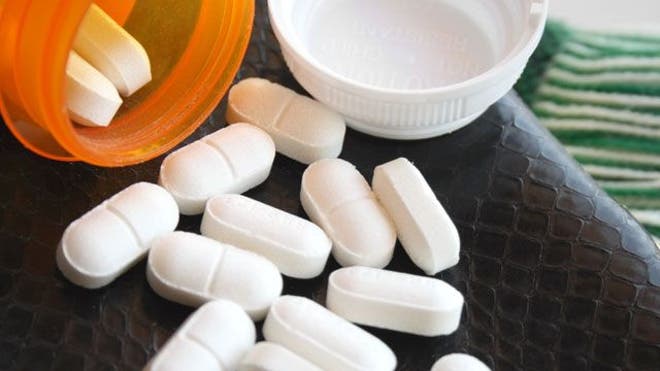
Weight loss surgery can increase pain killer dependence

Weight loss surgery can increase pain killer dependence

Initially, researchers assumed that when patients underwent weight loss surgery, they would decrease their dependence on pain medications over time. The reason for their assumption: Obese patients who shed pounds should experience a reduction in pain caused by excess weight in areas such as the knees and back. Instead, however, a new study has revealed that weight loss surgery actually may increase dependence on pain killers, reported U.S. News on October 1.

“Our premise was that because patients who are undergoing bariatric surgery were undergoing such dramatic weight loss, whatever chronic pain they were going through would be relieved and their need for medication would be reduced,” said study author Marsha Raebel, of Kaiser Permanente Colorado in Denver. “We were very surprised to find we were totally wrong. Not only did their chronic use of opioids not go down, it actually went up.”

Researchers discovered that bariatric patients who already used opioid painkillers such as OxyContin and Vicodin increased their drug intake by 13 percent during the first year after surgery. And rather than decrease their dependence as they lost more weight over time, these patients had increased their drug intake by 18 percent three years after.

In the study, which was reported in the Oct. 2 issue of the Journal of the American Medical Association, researchers emphasized that weight loss resulting from procedures such as gastric bypass typically relieves pain linked to the stress that extra pounds place on the knees, back and other joints. But that relief did not influence how much pain medication the patients took.

“We have patients who have pain that simply doesn’t respond to weight loss,” Raebel said. “If the patient thinks that’s the reason they’re going to have bariatric surgery, there should be some counseling to explain their pain may or may not get better after surgery.”

And the experts stress that setting a goal of taking fewer chronic pain killers is essential. Since the 1980s, opioid prescriptions in the nation have quadrupled, as has accidental opioid overdose deaths.

Raebel believes that obese people actually experience pain in a different way.

“Folks who are obese are more sensitive to pain and have lower pain thresholds than people who aren’t obese,” she said. “This altered pain processing continues even after they undergo bariatric surgery.” Therefore, she thinks that their drug usage might increase to help them deal with their continued sensitivity to pain.

Bariatric physician Dr. Brian Sabowitz offered another interpretation of the study.

“Narcotics may not be absorbed the same way after a gastric bypass as they are before a gastric bypass,” said Dr. Sabowitz, who practices in San Antonio, Texas, and serves as an adjunct assistant professor of medicine for the University of Texas Health Science Center in San Antonio. “Maybe one reason narcotic use increased is because people were getting less narcotics

Source:


Statin side effects: Weigh the benefits and risks

Statin side effects: Weigh the benefits and risksDoctors often prescribe statins for people with high cholesterol to lower their total cholesterol and reduce their risk of a heart attack or stroke. Most people taking statins will take them for the rest of their lives, which can make statin side effects difficult to manage.

For some people, statin side effects can make it seem like the benefit of taking a statin isn’t worth it. Before you decide to stop taking a statin, discover how statin side effects can be reduced.


What are statin side effects?

Muscle pain and damage

The most common statin side effect is muscle pain. You may feel this pain as a soreness, tiredness or weakness in your muscles. The pain can be a mild discomfort, or it can be severe enough to make your daily activities difficult. For example, you might find climbing stairs or walking to be uncomfortable or tiring.

Very rarely, statins can cause life-threatening muscle damage called rhabdomyolysis. Rhabdomyolysis can cause severe muscle pain, liver damage, kidney failure and death. Rhabdomyolysis can occur when you take statins in combination with certain drugs, or if you take a high dose of statins.

Liver damage

Occasionally, statin use could cause your liver to increase its production of enzymes that help you digest food, drinks and medications. If the increase is only mild, you can continue to take the drug. If the increase is severe, you may need to stop taking the drug, which usually reverses the problem. Your doctor might suggest a different statin.

If left unchecked, increased liver enzymes may lead to permanent liver damage. Certain other cholesterol-lowering drugs, such as gemfibrozil (Lopid) and niacin, increase the risk of liver problems even more in people who take statins. Because liver problems may develop without symptoms, people who take statins should have their liver function tested about six weeks after they start taking statins, and then again every three to six months for the first year of treatment, particularly if their statin dose is increased, or they begin to take additional cholesterol-lowering medications.

Digestive problems

Some people taking a statin may develop nausea, gas, diarrhea or constipation after taking a statin. These side effects are rare. Most people who have these side effects already have other problems with their digestive system. Taking your statin medication in the evening with a meal can reduce digestive side effects.

Rash or flushing

You could develop a rash or flushing after you start taking a statin. If you take a statin and niacin, either in a combination pill such as Simcor or as two separate medications, you’re more likely to have this side effect. Taking aspirin before taking your statin medication may help, but talk to your doctor first.

Neurological side effects

Some researchers have studied whether statins could be linked to memory loss or amyotrophic lateral sclerosis (ALS), also known as Lou Gehrig’s disease. Researchers have not found a link between statin use and either condition.

Who’s at risk of developing statin side effects?

Not everyone who takes a statin will have side effects, but some people may be at a greater risk than others. Risk factors include:

  • Taking multiple medications to lower your cholesterol
  • Being female
  • Having a smaller body frame
  • Being age 65 or older
  • Having kidney or liver disease
  • Having type 1 or 2 diabetes

What causes statin side effects?

It’s unclear what causes statin side effects, especially muscle pain.

Statins work by slowing your body’s production of cholesterol. Your body produces all the cholesterol it needs for digesting food and producing new cells on its own. When this natural production is slowed, your body begins to draw the cholesterol it needs from the food you eat, lowering your total cholesterol.

Statins may affect not only your liver’s production of cholesterol, but also several enzymes in muscle cells that are responsible for muscle growth. The effects of statins on these cells may be the cause of muscle aches.

How to relieve statin side effects

To relieve statin side effects, your doctor may recommend several options. Discuss these steps with your doctor before trying them:

  • Take a brief break from statin therapy. Sometimes, it’s hard to tell whether the muscle aches or other problems you’re having are statin side effects or just part of the aging process. Taking a break of 10 to 14 days can give you some time to compare how you feel when you are and aren’t taking a statin. This can help you determine whether your aches and pains are due to statins instead of something else.
  • Switch to another statin drug. It’s possible, although unlikely, that one particular statin may cause side effects for you while another statin won’t. It’s thought that simvastatin (Zocor) may be more likely to cause muscle pain as a side effect than other statins when it’s taken at high doses.
  • Change your dose. Lowering your dose may reduce some of your side effects, but it may also reduce some of the cholesterol-lowering benefits your medication has. It’s also possible your doctor will suggest switching your medication to another statin that’s equally effective, but can be taken in a lower dose.
  • Take it easy when exercising. It’s possible exercise could make your muscle aches worse. Talk to your doctor about changing your exercise routine.
  • Consider other cholesterol-lowering medications. Ezetimibe (Zetia), a cholesterol absorption inhibitor medication, may be less likely to cause muscle pain than may statins, or may reduce muscle pain when taken with a statin. However, some researchers question the effectiveness of ezetimibe compared with statins in terms of its ability to lower your cholesterol.
  • Don’t try over-the-counter (OTC) pain relievers. Muscle aches from statins can’t be relieved with acetaminophen (Tylenol, others) or ibuprofen (Advil, Motrin, others) the way other muscles aches can. Don’t try an OTC pain reliever without asking your doctor first.
  • Try coenzyme Q10 supplements. Coenzyme Q10 supplements may help to prevent statin side effects in some people. If you’d like to try adding coenzyme Q10 to your treatment, talk to your doctor first to make sure the supplement won’t interact with any of your other medications.

Source: http://www.riversideonline.com/health_reference/Cholesterol/MY00205.cfm