

A philanthropist who made his money as a credit card provider is giving $100 million to human stem-cell research.
The money will go to the University of California at San Diego during the next five years as researchers reach certain milestones, said T. Denny Sanford, who founded First Premier Bank here and offers low-limit Master cards and Visas to customers with poor credit through Premier Bankcard. United National Corp., where Sanford is now chief executive, owns both companies.
“This, in my opinion, is the medicine of the future,” he said. “The potential of stem cells is just unbelievable.”
The money will support the hiring of 20 or more scientists and efforts to recruit patients for drug trials along with new construction at the San Diego complex.
The donation pushes Sanford past the $1 billion mark for total gifts to health care and research, he said.
Sanford, 77, has homes in South Dakota, Arizona and California. On Oct. 19, he suffered a pulmonary embolism — a blood clot in the lungs — while on a hunting trip with friends near Gregory, S.D., about 140 miles west of here.
He said he was saved because of a middle-of-the-night medical flight to Sanford University of South Dakota Medical Center here, helicopter and plane flights made possible in part because of donations he has made to what is now Sanford Health system.
“I was within minutes or hours of death,” he said. His physician here, Dr. Eric Larson, said Sanford is doing fantastic, playing golf regularly and exercising on an elliptical machine, less than a month after getting clot-busting medications to treat the condition.
Most of Sanford’s donations, about $700 million, have gone to the Sanford Health. He has pledged to give all his money away. He said he still has close to $1 billion.
The $100 million he is committing to UC San Diego is the lead resource in a project that officials say will cost a total of $275 million.
What now is called the Sanford Consortium for Regenerative Medicine includes scientists from five institutions — UC San Diego, Sanford-Burnham, Scripps, the Salk Institute for Biological Studies and the LaJolla Institute for Allergy and Immunology.
“Overall, the effort is to bring stem cell research into human clinical trials,” said Debra Kain, director of health sciences research communications at UC San Diego.
In Sioux Falls, Sanford made a $400 million donation to the nonprofit medical center in 2007 and established four priorities, one of which was curing a major disease that officials later pegged as Type 1 diabetes. Another of his donations here, $100 million in 2011, is for research and treatment for breast cancer. His mother, Edith, died of the disease when he was 4 years old.
This gift is different because he has no personal or family connection to the neurological diseases he hopes that stem cell research can address.
Research so far has been instructive on the use of mice and monkeys, so it’s time now to extend the effort to humans, he said.
“We are excited about some major potential cures, particularly with neurological diseases like Lou Gehrig’s disease, or spinal cord injuries,” Sanford said. Lou Gehrig’s disease, also called amyotrophic lateral sclerosis, affects nerve cells in the brain and spinal cord that control muscle movement. It has no cure.
Sanford is excited that the work could lead several directions.
“It could be spinal cord injuries, Alzheimer’s, Parkinson’s, eventually heart and cancer and diabetes,” he said.
Source: USA Today





 incomplete, so it’s impressive that this edible ice cream dish rose to fame after an impromptu act. The ice cream cone gained popularity in 1904 at the St. Louis World’s Fair when Syrian concessionaire, Ernest Hamwi, decided to roll up some of his crisp, waffle-like pastries (also known as zalabia) to help out a neighboring ice cream vendor who ran out of dishes.
 to a positive outcome, but a revolutionary one.’ In 1965, scientist Dr. James Schlatter was working on an anti-ulcer drug when he went to lick his finger to pick up a piece of paper. His finger tasted sweet, so he traced back his steps and realized that the sweet-tasting substance was aspartame. Today, this popular low-calorie sweetener (which is about 200 times sweeter than sucrose) can be found in many popular foods.
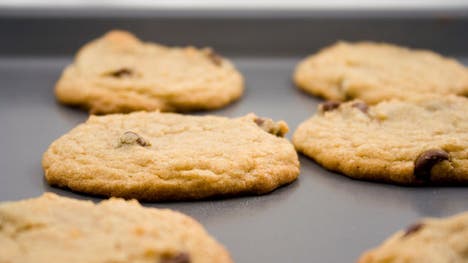 preparing a batch of butter drop cookies for her guests at the Toll House Inn in Massachusetts, Ruth Wakefield decided to stick pieces of a NESTLÉ® chocolate bar into the cookie dough, expecting it to dissolve once baked. Instead, the chocolate maintained its shape. NESTLÉ® quickly caught wind of the discovery and placed Wakefield’s recipe on their chocolate bar wrappers, where it still remains today. In 1997, to honor the popular recipe’s origin, Massachusetts designated the chocolate chip cookie as its official state cookie. If you ever need some validation that failure can lead to success, take at look back at the beginnings of corn flakes. In 1898, W.K. Kellogg (who later became the founder of Kellogg’s) and his brother, Dr. John Harvey Kellogg, accidently produced a batch of flaked wheat berry after attempting to make granola. The Kellogg brothers then decided to experiment by flaking corn and the rest is history.
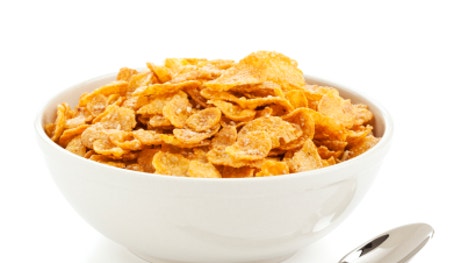 back at the beginnings of corn flakes. In 1898, W.K. Kellogg (who later became the founder of Kellogg’s) and his brother, Dr. John Harvey Kellogg, accidently produced a batch of flaked wheat berry after attempting to make granola. The Kellogg brothers then decided to experiment by flaking corn and the rest is history.
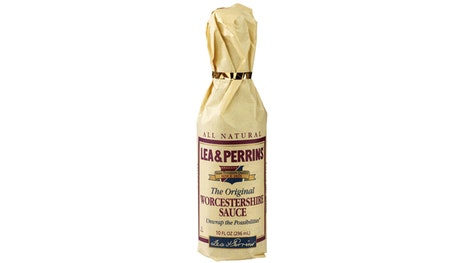 In the early 1800’s, a man by the name of Lord Sandys appointed chemists John Lea and William Perrins to the task of recreating a recipe he had tasted in Bengal. Lea and Perrins attempted the sauce, but did not like the result, so they left the sauce in jars in a cellar. Two years later, the two stumbled across the sauce, decided to taste it and found something amazing: it actually tasted good. Today, Lea & Perrins Worcestershire Sauce is aged in a wooden cask for 18 months and is a popular dressing on meats and salads.
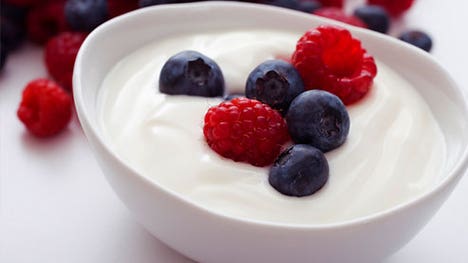 became domesticated, possibly around 5,000 B.C. To transport the animal milk, the milk was often placed in sacks made from the stomachs of animals. It’s believed that the bacteria as well as the acidity from the lining of the stomachs prompted the milk to coagulate, forming the beginnings of yogurt.
 New mothers are to be offered up to £200 in shopping vouchers to encourage them to breastfeed their babies.