

Number of adolescents with HIV jumps by one-third: UN

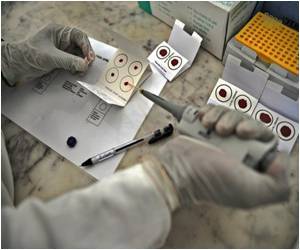
Geneva:  The number of adolescents infected by the HIV virus has jumped by one third over the past decade, the United Nation’s health agency said on Monday, blaming gaps in care programs.

“More than 2 million adolescents between the ages of 10 and 19 years are living with HIV,” marking a 33 per cent rise since 2001, the World Health Organization said.

“Many do not receive the care and support that they need to stay in good health and prevent transmission. In addition, millions more adolescents are at risk of infection,” it warned.

In the world’s most AIDS-affected region, sub-Saharan Africa, the majority of adolescents with the virus are girls who have had unprotected sex, sometimes under duress.

In addition, many of those born with the virus or infected at birth in sub-Saharan Africa are becoming adolescents.

In Asia, meanwhile, young drug-users were the worst affected.

The WHO said that the failure to provide proper adolescent-focused programs had also resulted in a 50-per cent increase in reported AIDS-related deaths in the age group from 2005 to 2012.

In 2005, 70,000 adolescents died of AIDS. Seven years later, the figure was 104,000.

That contrasted starkly with the 30-per cent decline in the general population, the WHO underlined.

The year 2005 marked the high point of global AIDS deaths, which hit 2.3 million. Last year, the toll was 1.6 million.

“Adolescent girls, young men who have sex with men, those who inject drugs or are subject to sexual coercion and abuse are at highest risk,” said Craig McClure, head of HIV programs at UN children’s agency UNICEF.

“They face many barriers, including harsh laws, inequalities, stigma and discrimination which prevent them from accessing services that could test, prevent, and treat HIV,” McClure added.

“About one-seventh of all new HIV infections occur during adolescence. Unless the barriers are removed, the dream of an AIDS-free generation will never be realised,” he insisted.

The data was issued as the WHO released its first adolescent-specific care guidelines ahead of World AIDS Day on December 1.

“Adolescents face difficult and often confusing emotional and social pressures as they grow from children into adults,” said Gottfried Hirnschall, head of the WHO’s HIV/AIDS Department.

“Adolescents need health services and support, tailored to their needs. They are less likely than adults to be tested for HIV and often need more support than adults to help them maintain care and to stick to treatment,” he added.

Among the measures needed, the WHO said, is an end to the requirement for parental permission to have an HIV test.

In sub-Saharan Africa, it is estimated that in the 15-24 age bracket, only 10 percent of young men and 15 percent of young women know their HIV status.

In other regions, although data are scarce, access to HIV testing and counseling by vulnerable adolescents is consistently reported as being very low, the WHO said.

Source: NDTV


Malaria, jaundice claim 20 lives in Arunachal in a week

Diseases like malaria and jaundice have claimed 20 lives since last week in Longding district of Arunachal Pradesh, an official report said today.

“This is not the first time when such an epidemic has broken out in Wancho area. In the past, too many such epidemics have been reported.

The reason may be due to the unhygienic way of living and lack of proper health-care facilities,” the report said.

“Though medicines have been rushed they are hardly adequate,” it said. When contacted, Parliamentary Secretary for Information and Public Relation Department, Thangwang Wangham, said that the situation is alarming as every day new cases are being reported.

Wangham, who is the local MLA, said though health workers were in the field there was no tangible respite. The MLA, who is camping at Longding to monitor the situation, has appealed the state government to send relief and more medicines.
Source: one India News


More walking tied to lower stroke risk among men

Older men who spend several hours walking each day are less likely to have a stroke than their peers who rarely walk, a new study suggests. And walking pace didn’t seem to matter.

Researchers said few studies have looked specifically at how both walking speed and walking time or distance is linked to stroke risk.

“Stroke is a major cause of death and disability and it is important to find ways to prevent it, especially in older people who are at high stroke risk,” Barbara J. Jefferis told Reuters Health in an email. She led the research at University College London in the UK.

“Our study suggests that maintaining an active lifestyle, specifically by spending more time on all forms of walking, could be an important part of stroke prevention strategies in older people,” Jefferis said.

She and her coauthors analyzed data from men enrolled in a long-term British heart study.

The men entered the study in 1978 to 1980. In 1998 to 2000, when they were in their 60s and 70s, they filled out surveys about how often they were physically active.

The new analysis includes 2,995 men who had not had a stroke or heart disease at the time of that survey. Researchers followed them for another 11 years.

More than half of the men walked an hour or less each day. About one in six reported walking more than two hours per day.

During the follow-up period, 195 of the men had a stroke. The researchers found that the more time men spent walking, the lower their risk of stroke.

Men who walked four to seven hours each week were 11 percent less likely to have a stroke than men who walked for three hours per week or less. But that difference could have been due to chance, Jefferis and her colleagues reported in the journal Stroke.

A stronger finding was that men who walked the most – for more than three hours each day – had a two-thirds lower risk of stroke than those who spent the least time walking.

Walking pace was also tied to stroke risk, such that average-pace or brisk walkers had a 38 percent lower risk of stroke than slow walkers. But distance walked explained that finding: men who walked at an average or brisk pace also walked further than their slower peers, according to the study.

The findings don’t prove walking prevents strokes. But they could not be explained by factors known to increase a person’s risk of stroke, like age, blood pressure and cholesterol. More recently identified markers of stroke, such as proteins associated with inflammation; blood clotting or heart muscle damage also weren’t behind the link.

“What we found was that all of these factors explained only a small amount of the relationship between time spent walking and onset of stroke,” Jefferis said. “This suggests that there may be other factors operating which explain why walking protects against stroke.”

Her team’s study was funded by the National Institute for Health Research and the British Heart Foundation.

Although it only included men, Jefferis said other research has suggested walking is good for women, too.

For instance, a team of Spanish researchers reported late last year that women who walked briskly for at least three and a half hours per week had a lower risk of stroke than inactive women

According to the Centers for Disease Control and Prevention (CDC), close to 800,000 people in the U.S. have a stroke every year, and strokes are the most common cause of serious long-term disability.

“Getting into the habit of walking every day for at least an hour could protect against stroke,” Jefferis said. That can include walking that is done while running errands, walking for leisure in a park or just walking around indoors.

Both the World Health Organization and CDC recommend adults get at least two and a half hours of moderate exercise each week.

Source: Reuters


Four tips to stay warm this winter

The chill of winters has set in and staying warm has become a priority. We have some pointers here to beat the cold and enjoy this season:


Dress smart

Wear multiple layers of light and warm clothes as it will keep your body heat insulated. Choose clothes made of wool, cotton or fleeced synthetic fibres.

Keep your extremities covered as they are the first parts of your body to lose circulation in cold temperatures. Wear a scarf, mitten and woollen cap when you are heading out.

Eat right

Eat at regular intervals as the burning of food will keep your body warm. Include lots of food items which are rich in protein.

Take hot drinks often to maintain your body temperature.

Move your body

Physical activity helps generate heat and fight cold. Engage in your daily exercise and chores to stimulate blood circulation and also prevent joints and muscles from stiffening.

Use hot water bottle

Stay warm with a hot water bottle. You will find hot water bottles in any department store or you can make one yourself by filling a glass bottle with hot water and wrapping it with a towel.

Source: inagist


Too much exposure to TV can stall preschoolers’ cognitive development

A new study has suggested that preschoolers who have a TV in their bedroom and are exposed to more background TV have a weaker understanding of other people’s beliefs and desires.

Amy Nathanson, Molly Sharp, Fashina Alade, Eric Rasmussen, and Katheryn Christy, all of The Ohio State University, interviewed and tested 107 children and their parents to determine the relationship between preschoolers’ television exposure and their understanding of mental states, such as beliefs, intentions, and feelings, known as theory of mind.

Parents were asked to report how many hours of TV their children were exposed to, including background TV. The children were then given tasks based on theory of mind. These tasks assessed whether the children could acknowledge that others can have different beliefs and desires, that beliefs can be wrong, and that behaviours stem from beliefs.

The researchers found that having a bedroom TV and being exposed to more background TV was related to a weaker understanding of mental states, even after accounting for differences in performance based on age and the socioeconomic status of the parent.

However, preschoolers whose parents talked with them about TV performed better on theory of mind assessments.

“When children achieve a theory of mind, they have reached a very important milestone in their social and cognitive development. Children with more developed theories of mind are better able to participate in social relationships. These children can engage in more sensitive, cooperative interactions with other children and are less likely to resort to aggression as a means of achieving goals,” lead researcher Nathanson said.

The study is published in the Journal of Communication.

Source: Deccan Chronicle


8 Interesting facts about your heart

Did you know these cool facts about your heart?

1.The average adult heart beats 72 times a minute; 100,000 times a day; 3,600,000 times a year; and 2.5 billion times during a lifetime.

2. The heart produces enough energy to drive a truck 20 miles. So,in a lifetime, that is equivalent to driving to the moon and back!

3. The heart pumps nearly 1.5 million barrels of blood during an average lifetime which is enough to fill 200 train tank cars.

4. Laughter really works wonders for your heart and is perfect remedy for stress .A good hearty laugh can send 20% more blood flowing through your entire body. So indulge yourself in funny movies and create a group of jovial and cheerful people.

5. The stethoscope was invented by French physician Rene Laennec when he felt it was inappropriate to place his ear on his large-buxomed female patients’ chests.

6. A woman’s heart typically beats faster than a man’s. The heart of an average man beats approximately 70 times a minute, whereas the average woman has a heart rate of 78 beats per minute

7. Studies show Monday blues affect the heart the most as the majority of heart attacks occur between the hours of 8 -9 am on Mondays.

8. It is thought that the heart got its love association in the ancient Greek city of Cyrene due to the Silphium plant with its heart-shaped seed pods that grew in the region.

Source: Zee news


6 technology trends that will change your family’s health forever

When the Affordable Care Act takes effect in January, it will not only change the health care system but how we manage our families’ health and our own.

And as technology continues to evolve, digital health tools will play an even bigger role in how we stay healthy and fit.

Read on for six of the latest health trends to look for.

1. Telemedicine

If you live far from a doctor, the office is closed, or it’s just not a convenient time, telemedicine might be the answer. Telemedicine – in the form of a phone consultation or “virtual visit” a la Skype or FaceTime – is relatively new, but the concept has been gaining momentum among doctors, according to Dr. Joseph C. Kvedar, founder and director of the Center for Connected Health in Boston, Mass.

Through telemedicine, a doctor could check your child’s throat for infection, do a follow-up visit for acne, or even send a prescription to the pharmacy. Yet experts say telemedicine will never replace traditional medicine.  “This isn’t in any way a substitute for the relationship you have with your doctor face to face when you need it,” Kvedar said.

2. Wearables

Gadgets that use sensors to measure and track your steps, calories, heart beat, body temperature, and even sleep, are one of the fastest growing areas in the digital health market. There are even kid-friendly pedometers that allow kids to upload their stats and get rewards for their progress.

“You’re seeing fitness wearables help people take their overall fitness seriously and make it kind of fun,” said Robin Raskin, founder of Living in Digital Times.

Next up? Look for these gadgets in smart watches too.

3. There’s an app for that

From apps that can help diagnose your child’s symptoms or send blood pressure readings to your doctor, to weight-loss programs that use photos of meals to estimate calories, apps will be a big part of your family’s health.

“The next time you go to your doctor, you may be just as likely to get an app as an aspirin,” Raskin said. In fact, by 2015, 500 million smartphone users worldwide will be using a health care app, according to a report by research2guidance. And as the Food and Drug Administration continues to oversee and approve mobile medical apps, expect to see more of them.

4. The Internet of things

The Internet of Things – products that combine a physical device, cloud-based data, and a mobile device to analyze and track health stats – is expected to be a big part of our lives. For example, a scale that captures your daily weight, tracks it on your mobile device and then allows you to share your progress with your community, can help you lose weight. The Internet of Things will also show up in heart monitors, blood glucose monitors and even stethoscopes.

5. Medical records all in one place

Web-based personal health record sites and free apps from insurance companies are some of the best and newest ways you can keep track of your child’s immunizations, lab results, and prescriptions.  These programs also allow you to share this information with your child’s doctors and school.

6. Health and safety at home

Sensors are also helping moms care for and keep their children safe at home. Instead of an invasive thermometer, new digital thermometers scan the forehead for a fever, for example. Sensor technology is also showing up in medicine bottles that sound an alarm if your child tries to open them.

Source: News.nom


Health Benefits of Cardamom

Commonly known in India as “choti elaichi”, cardamom’s scientific name is Elletaria cardamomum. Though it is more popularly used as a herbal spice , which is added in dishes to provide a strong aroma and flavor but in Ayurveda it is considered to be a very useful and effective medicine. In Ayurvedic texts cardamom is referred to as “ela”.

According to traditional wisdom of Ayurveda, cardamom is effective in improving digestion. It helps those suffering from stomach cramps. It is a good stimulant and beneficial for those suffering from flatulence and gas.

Cardamom also helps in cleansing the body as it has detoxifying properties. It is basically a warm spice and known to have originated from India. It improves blood circulation to the lungs and can be helpful in prevention of spasms or convulsions. Hence, cardamom in small quantities is beneficial for those suffering from asthma or bronchitis.

Cardamom enhances appetite and provides relief from acidity in the stomach. It is used in the cure of halitosis. It is beneficial for those suffering from various kinds of respiratory allergies. When you have sore throat, you can try out a little quantity of this medicinal spice.

Those suffering from nausea as well as excessive threat can also try out cardamom. Along with some other medicines, it can be used for treating mouth ulcers. It is known to be a good cure for weakness in general. Some practitioners of Ayurevda also advise its use for treating infection of the urinary tract.

Cardamom is known to be helpful in balancing all three ‘doshas’ in the human body. Hence it is termed as “tridoshic”. A little quantity of cardamom is especially beneficial in balancing “kapha”. It can be used for balancing “vata” and “pitta” also.

The quantity of cardamom which need to be consumed depends on the physiology of a person and the disease which is to be treated or cured from.

Source: August Ayurveda


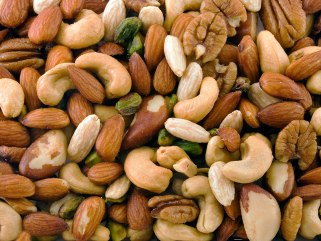
Go nuts! Healthy facts about nuts!

Good things come in small packages and nuts are no exceptions. These nuggets are packed with healthy fats, protein, vitamins, and minerals. Studies have suggested that people who include nuts, including peanuts, in their diet have fewer common health problems such as heart disease, cancer, diabetes, etc. Here are some facts you should know before including nuts in your diet:

Nut varieties

A nut usually have a hard shell and a seed and most fruits we called nuts are not technically nuts nonetheless they provide similar health benefits. They include hazelnuts, chestnuts, and acorns, almonds, Brazil nut, candlenut, cashew, Chilean hazelnut or Gevuina, macadamia,   Malabar chestnut, pecan, mongongo, peanut, pine nut, pistachio and walnut.

How much to eat

According to the American Heart Association, include 4 servings of nuts a week in your diet. A serving is a small handful or 1.5 ounces of whole nuts or 2 tablespoons of nut butter. Avoid salted or oiled ones; instead, eat them raw or dry roasted

Calorie count

Almonds, cashews and pistachios have the lowest calorie count at 160 per ounce while macadamia nuts and pecans have the highest at 200 per ounce.

How to eat

You can have them as snacks whenever you feel hungry or sprinkle them over desserts and salads

Source: Zee News


Why Bacteria Keeps You Healthy

We have more bacteria in our gut than cells in our body. Here’s why minding these microbes can help you get healthy from the inside out.

As foreign as it sounds, the word micro biome may soon be part of the mainstream lexicon. The term refers to the microbes or bacteria that naturally inhabit the body from the surface of your skin to your gut. We tend to think of microbes as bad-pathogens that need to be killed-but new research suggests that storing scores of them is paramount to our health and metabolism.

“We have 100 trillion microbes in our gut-more bacteria than cells in the body. They aid in digestion and detoxification, help support our immune system, and manufacture key vitamins, among other functions. Western medicine is catching on to the importance of all the bacteria in our bodies-especially in our gut. In Functional Medicine we’ve been manipulating this microbiome for some time, but it’s primarily been guesswork.” says Frank Lipman, MD, the founder of Eleven Eleven Wellnessin Manhattan. “Understanding these microbes is the future of medicine.”

The Human Microbiome Project, a National Institute of Health initiative, is working to shed light on the topic. “It’s such a new field and there are so many studies underway. But we do know that it’s important to keep your flora in a balanced state,” says Lipman. “A disturbed microbiome, where bad bacteria and yeast overtake the good ones can cause all sorts of health problems from autoimmune diseases to weight gain.”

Thus far, gut microbes have been shown to influence metabolism, and certain types may play a role in obesity. In fact, one family of bacteria called Firmicutes can even cause you to absorb more calories from your food. Another, called Bacteroidetes, is associated with leanness.

Wondering how to keep your belly balanced-and flat? Your trump card may be a healthy diet, which can prevent microbes associated with obesity from flourishing. No real surprises there, and until more is known Lipman suggests keeping your microbiome in mind when you eat. Here are his five tips:

1. Eat pre-biotic foods.

Healthy gut bacteria thrive on pre-biotics, which are non-digestible fibers found in foods like root vegetables, onions, leeks, garlic, artichokes, beans, asparagus, oats, nuts, and bananas. Think of it as giving the good microbes something to chew on.

2. Drink your green juice.

There are thousands of bacterial strains, and while we don’t know enough about all these organisms yet, greens appear to help improve the diversity of healthy organisms in the gut. Plus, research shows that the greater the diversity, the greater the health benefits.

3. No more processed foods.

The additives in processed foods can kill off good bacteria. Refined carbs are also problematic because sugar feeds bad bacteria, allowing it to proliferate and leading to physical cravings for more sugar. Stay away from wheat and soy, too. Most are genetically modified and GMOs disrupt gut flora.

4. Limit antibiotics-the over-the-counter meds and the ones in your meat.

There’s a place for antibiotics, but don’t take them every time you have a runny nose. They’re overused and even though they target bad bacteria, they also kill off the good guys. Another surprising problem is factory-farmed meats. Seventy percent of antibiotics in the U.S. are used in livestock, leading to chronic exposure; when you consume the meat, you’re absorbing those antibiotics, too.

5. Get your probiotics.

Fermented foods like kimchi, kombucha, and sauerkraut are making appearances on more menus as people learn more about body ecology. They’re important because they naturally contain probiotics, which encourage the growth of good bacteria. Some people also respond well to a supplement. Choose one containing some of the most studied probiotic strains: Lactobacillus acidophilus, Lactobacillus paracasei, Lactobacillus plantarum, Bifidobacterium longum, Bifidobacterium lactis.

Source: Yahoo shine