Recluse-Spider Bite Eats Hole in Young Woman’s Ear

The ear of a woman bitten by a Mediterranean recluse. The black tissue is dead, or necrotic.

The ear of a woman bitten by a Mediterranean recluse. The black tissue is dead, or necrotic.

One woman’s Italian vacation took a turn for the worse when she woke up with pain in her ear one night. She had no way of knowing then that she’d just been bitten by a Mediterranean recluse spider, and that a chunk of her ear would soon be liquefied by the spider’s venom. But that’s exactly what happened, according to a recent report of her case.

The 22-year-old woman soon sought treatment for her pain in an Italian hospital, where doctors prescribed an antihistamine. But the swelling in her face and pain in her ear didn’t get any better. Once she was back home in the Netherlands, the ear got worse, and portions of it turned black — a clear sign that the skin and cartilage cells were dead.

The dead tissue made it clear to doctors that the woman had been bitten by a Mediterranean recluse, a spider whose bite is known to destroy skin and underlying fat, causing “sunken-in” scars or “a disfigured ear, if you are very unlucky,” said Dr. Marieke van Wijk, a plastic surgeon in the Netherlands involved in the woman’s treatment.

Source: escience news


Electronic cigarettes ‘could save millions of lives’

Scientists say that if all smokers in the world switched from cigarettes to electronic cigarettes, it could save millions of lives.

In the UK there are currently about 100,000 deaths per year attributable to smoking, worldwide it is estimated to be more than five million.

Now researchers are hopeful that an increasing use of e-cigarettes could prevent some of these deaths.

But some groups warn that e-cigarettes could normalise smoking.

An estimated 700,000 users smoke e-cigarettes in the UK, according to Action on Smoking and Health. Some users combine “vaping”, as it is often called, with traditional cigarettes while others substitute it for smoking completely.

E-cigarettes have also recently be found to be just as effective as nicotine patches in helping smokers quit.

Future hope

Rather than inhaling the toxic substances found in tobacco, e-cigarette users inhale vaporised liquid nicotine.

Robert West, professor of health psychology at University College London, told delegates at the 2013 E-Cigarette Summit at London’s Royal Society that “literally millions of lives” could be saved.

“The big question, and why we’re here, is whether that goal can be realised and how best to do it… and what kind of cultural, regulatory environment can be put in place to make sure that’s achieved.

“I think it can be achieved but that’s a hope, a promise, not a reality,” he said.

A revolution

This view was echoed by Dr Jacques Le Houezec, a private consultant who has been researching the effects of nicotine and tobacco.

He said that because the harmful effects of its main comparator, tobacco, e-cigarette use should not be over-regulated.

“We’ve been in the field for very long, this for us is a revolution

“Every adolescent tries something new, many try smoking. I would prefer they try e-cigarettes to regular cigarettes.” Dr Le Houezec added.

Many are now calling for the industry to be regulated. An EU proposal to regulate e-cigarettes as a medicine was recently rejected, but in the UK e-cigarettes will be licensed as a medicine from 2016.

Konstantinos Farsalinos, from the University Hospital Gathuisberg, Belgium, said it was important for light regulation to be put in place “as soon as possible”.

“Companies are all hiding behind the lack of regulation and are not performing any tests on their products, this is a big problem.”

Prof Farsalinos studies the health impacts of e-cigarette vapor. Despite the lack of regulation, he remained positive about the health risks associated with inhaling it.

Healthy rats

E-cigarettes are still relatively new, so there is little in the way of long-term studies looking at their overall health impacts.

In order to have valid clinical data, a large group of e-cigarette users would need to be followed for many years.

Seeing as many users aim to stop smoking, following a large group of e-smokers for a long period could be difficult.

But in rats at least, a study showed that after they inhaled nicotine for two years, there were no harmful effects. This was found in a 1996 study before e-cigarettes were on the market, a study Dr Le Houezec said was reassuring.

Concern about the increase in e-cigarette use remains.

The World Health Organization advised that consumers should not use e-cigarettes until they are deemed safe. They said the potential risks “remain undetermined” and that the contents of the vapor emissions had not been thoroughly studied

The British Medical Association has called for a ban on public vapingin the same way that public smoking was banned.

They stated that a strong regulatory framework was needed to “restrict their marketing, sale and promotion so that it is only targeted at smokers as a way of cutting down and quitting, and does not appeal to non-smokers, in particular children and young people”.

Ram Moorthy, from the British Medical Association, said that their use normalizes smoking behavior.

“We don’t want that behavior to be considered normal again and that e-cigarettes are used as an alternative for the areas that people cannot smoke,” he told BBC News.

But Lynne Dawkins, from the University of East London, said that while light-touch regulation was important, it must be treated with caution.

She said that e-cigarettes presented a “viable safer alternative” to offer to smokers.

“We don’t want to spoil this great opportunity we have for overseeing this unprecedented growth and evolving technology that has not been seen before, We have to be careful not to stump that.”

Source:  BBC news


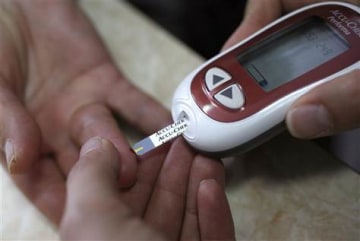
Diabetes battle ‘being lost’ as cases hit record 382 million

The world is losing the battle against diabetes as the number of people estimated to be living with the disease soars to a new record of 382 million this year, medical experts said on Thursday.

The vast majority have type 2 diabetes – the kind linked to obesity and lack of exercise – and the epidemic is spreading as more people in the developing world adopt Western, urban lifestyles.

The latest estimate from the International Diabetes Federation is equivalent to a global prevalence rate of 8.4 percent of the adult population and compares to 371 million cases in 2012.

By 2035, the organization predicts the number of cases will have soared by 55 percent to 592 million.

“The battle to protect people from diabetes and its disabling, life-threatening complications is being lost,” the federation said in the sixth edition of its Diabetes Atlas, noting that deaths from the disease were now running at 5.1 million a year or one every six seconds.

People with diabetes have inadequate blood sugar control, which can lead to a range of dangerous complications, including damage to the eyes, kidneys and heart. If left untreated, it can result in premature death.

“Year after year, the figures seem to be getting worse,” said David Whiting, an epidemiologist and public health specialist at the federation. “All around the world we are seeing increasing numbers of people developing diabetes.”

He said that a strategy involving all parts of society was needed to improve diets and promote healthier lifestyles.

The federation calculates diabetes already accounts for annual healthcare spending of $548 billion and this is likely to rise to $627 billion by 2035.

Worryingly, an estimated 175 million of diabetes cases are as yet undiagnosed, so a huge number of people are progressing towards complications unawares. Most of them live in low- and middle-income countries with far less access to medical care than in the United States and Europe.

The country with the most diabetics overall is China, where the case load is expected to rise to 142.7 million in 2035 from 98.4 million at present.

But the highest prevalence rates are to be found in the Western Pacific, where more than a third of adults in Tokelau, Micronesia and the Marshall Islands are already living with the disease.

Pharmaceutical companies have developed a range of medicines over the years to counter diabetes but many patients still struggle to control their condition adequately, leading to a continuing hunt for improved treatments.

Novo Nordisk, Sanofi and Eli Lilly are all major suppliers of insulin and other diabetes therapies.

Source: Reuters


Cancer Survivor to Return to Golf After 20 Months

When Jarrod Lyle returns to golf after a 20-month layoff at the Australian Masters, he expects some teary eyes on the tee.

Lyle is 32 years old and will be playing his first tournament since his second fight with myeloid leukemia — his first came at 17. This time, he’ll have his wife and young daughter with him Thursday when he starts a tournament that he’s not sure he’s physically ready to finish should he make the 36-hole cut.

“Just walking to that first tee and teeing the ball up and trying to hit it — that’s probably going to be the hardest thing,” Lyle said Tuesday at Royal Melbourne.

“It’s just going to let a whole lot of stuff out. Hopefully when that ball flies I can just get on to playing golf and put everything behind me and just get back to the golfer that I am.”

Lyle, then a regular on the U.S. PGA Tour, was diagnosed with his second bout of leukemia in March 2012 just before the birth of his daughter, Lusi. Lyle’s wife, Briony, became pregnant despite medical advice that Lyle’s first bout of cancer and the resulting chemotherapy would leave him sterile.

With a medical exemption to return to the PGA Tour whenever he feels he’s ready — and it might not be until late in 2014 — Lyle has found his second bout of cancer illuminating.

On the positive side, he knew what to expect, and anti-nausea drugs to counteract the chemotherapy had improved in the 15 years between his illnesses.

On the downside, because he had the disease once, it was harder to overcome twice. The first time, he spent two to three weeks at a stretch in the hospital. The second time, it often was four or five weeks or more. He’s lost weight, and his strength.

And he’s still not out of the usual five-year cancer-free time frame, as he thought he had done as a teenager.

Briony and Lusi, nearly 2, will be among a big group of friends and family supporting him at Royal Melbourne on Thursday on Friday. And against all odds, maybe the weekend.

Lyle will tee off just after midday on the first hole Thursday with two veterans to help him along — fellow Australian and 2006 U.S. Open champion Geoff Ogilvy, and Brendon de Jonge, the Zimbabwean who represented the International team at the recent Presidents Cup.

Many of Lyle’s fans will be wearing specially designed yellow shirts and hats to support his involvement in the children’s cancer charity Challenge.

When Tiger Woods won the Arnold Palmer Invitational at Bay Hill in 2012, he was wearing a “Leuk the Duck” pin on his cap. The cartoon duck is a mascot for kids who come through the Challenge charity, and Woods wore it out of respect for Lyle, as did many players in the field not long after Lyle’s second cancer fight was known.

“To have the support of all those guys, guys that I am not really close with as well, it is nice,” Lyle said at the time. “It is nice to know they still care and want to know how you are going.”

On Thursday, Lyle won’t forget that support and knows where his heart will be.

“I’m going to dedicate this first tee shot to everybody that’s done that over the years or over the last 20 months,” he said. “Everyone who has got in contact with us and given us support.”

Source: abc news


Health ‘score’ on food packages may help healthier choices

For people trying to wade though nutrition labels and choose healthy options, a front-of-package food label that boils down nutrition information to a single “score” may be the most user-friendly approach, a new study suggests.

In recent years, the fronts of some food packages have been decorated with short food labels, which are intended to briefly summarize a product’s nutrition, and make unhealthy ingredients (such as high levels of saturated fat) highly visible to consumers.

However, there is currently no standard for what information needs to be on these labels, leading to a variety of front-of-package food labeling systems that may confuse consumers, said study researcher Christina A. Roberto, a psychologist and epidemiologist at the Harvard School of Public Health.

Experts say that a single, uniform food label should be adopted, but before this can happen, researchers need to know what works best. The new study attempted to help answer this question by comparing five front-of-package food labeling systems, as well as packages with no label.

More than 1,000 people, about half of whom were actively trying to lose weight, were randomly assigned to view food products with one of the following labels:

A “Facts Up Front” label, which was created by the food industry and contains information about calories, saturated fat, sodium and sugars, as well as any noteworthy vitamins.

A “NuVal” label, a proprietary labeling system that gives products a score from 1 to 100 based on a product’s nutritional quality; higher scores denote healthier products.

A single traffic light symbol, which is colored red, yellow or green based on the healthfulness of the product.

A label depicting multiple “traffic lights,” in which different nutrients get their own red/yellow/green symbol (such as green for saturated fat, but yellow for sodium).

A star system, in which a product is given 0 to 3 stars based on its nutrition quality.

No label

In a simulated online shopping task, participants viewed different soups, cereals, beverages, rice products and ice creams, and were asked to choose which products they would like to eat this week.

The only food labeling system that prompted people to pick healthier soups was the NuVal label, the study found.

When shown two products and asked, “Which is healthier?” the NuVal label, along with the multiple traffic-light label, worked best to help participants identify which product was truly healthier.

However, those who viewed the NuVal label were able to choose the healthier product in half the time as those who viewed the multiple traffic-light label, Roberto said.

Based on these preliminary data, NuVal is probably “the most user-friendly,” Roberto said. The simplicity of the system (with just one number), and the fact that it allows users to compare products with high and low numbers, may be helpful to consumers, Roberto said.

However, much more research is needed to confirm the findings, including studies of “real-world” purchasing scenarios, Roberto said.

In addition, it’s not clear how much front-of-package labels help consumers overall. In the study, the food labels did not help consumers pick healthier cereals, beverages, rice products or ice creams.

However, Roberto argues these labels have a purpose.

“It might not massively shift behavior, but I think it’s still worth informing consumers,” Roberto said. “It might influence behavior some of the time, and that can still have an important and meaningful public health impact.”

And if front-of-package labels were mandatory — as proposed in a recent congressional bill — food companies may be pressured change their products so they are healthier (to get a higher NuVal score, or more “green” traffic lights, for instance).

If a uniform front-of-package label system is rolled out, consumers should be educated regarding how to interpret and use the labels, Roberto said.

The study was presented last week at the American Public Health Association meeting in Boston.

Source: Yahoo News


Weekly exercise by pregnant moms boost babies’ brains

A new study has suggested when to-be-moms exercised for three 20-minute sessions a week, their babies’ brains showed more mature patterns of activity.

The findings have come from a randomised controlled trial in humans to show that a pregnant mother’s exercise routine can impact her baby’s brain.

Elise Labonte-LeMoyne at the University of Montreal, said that mother’s exercise also impacts their kid’s weight gain in life, the Guardian reported.

Women joined the research group in their first trimester and were randomly assigned to an exercise or a sedentary control group.

The 10 women in the exercise group cycled, walked, ran or swam for three short sessions a week.

The eight women in other group were instructed not to exercise.

Eight to 12 days after babies were born, the researchers measured their brain activity.

They used a hairnet of 124 electrodes, and recorded electroencephalograms (EEG) while they played sleeping babies a series of beeps that were interspersed with different sounds.

Even though they were asleep, brain activity patterns showed how efficiently they were able to discriminate between old and novel sounds.

Source: DNA India


Vegetable Protein May Help Kidney Disease Patients Live Longer

Increased consumption of vegetable protein was linked with prolonged survival among kidney disease patients in a new a study. The findings will be presented at ASN Kidney Week 2013 November 5-10 at the Georgia World Congress Center in Atlanta, GA.

Due to poor kidney function, toxins that are normally excreted in the urine can build up in the blood of individuals with chronic kidney disease (CKD). Research shows that compared with animal protein, vegetable protein intake in patients is linked with lower production of such toxins. It is unclear whether consuming more vegetable protein prolongs CKD patients’ lives, however.

To investigate, a team led by Xiaorui Chen (University of Utah) studied 1,104 CKD patients in the1988-1994 National Health and Nutrition Examination Survey III and asked them about their animal and vegetable protein intake.

After controlling for various factors such as age, smoking, and BMI, the researchers found that for each 10 gram increase in vegetable protein intake per day, participants had a 14% lower risk of dying by the end of 2006. “Interventional trials are needed to establish whether increasing vegetable protein will decrease mortality in the CKD population,” they wrote.

Source: Nephrology news


China Reports Two New Cases Of H7N9 Bird Flu

Earlier this week, Chinese health officials notified the World Health Organization (WHO) of two new infections of H7N9 – a strain of the virus responsible for causing the bird flu. The Asian nation’s Xinhua news agency reported on one of the cases Tuesday – that of a three-year-old boy living in south China’s Guangdong Province. The boy tested positive for the virus by the provincial disease prevention and control center and is in stable condition at the People’s Hospital of Dongguan City, according to the news agency.

Hong Kong’s Centre for Health Protection (CHP) said the boy’s seven close contacts had tested negative for the virus, but three of them had flu-like symptoms.

According to the WHO, the second patient is a 64-year-old woman from Zhejiang Province in eastern China, who is a farmer and had regular contact with live poultry. She fell ill on October 30 and was admitted to a local hospital the next day. She is currently in a critical condition, the international health organization said.

Officials from Zhejiang province, which sits about 800 miles northeast of Guangdong, reported two infections in October, a 35-year-old man and in a 67-year-old farmer, who also worked with live poultry. The Chinese province has reported the most H7N9 cases, with 49 infections and 11 deaths so far.

When Chinese officials identified the bird flu strain back in March, the number of cases jumped before falling off into May. Only two cases were reported over the summer. Experts have warned that flu viruses are erratic and there is a chance that the number of cases could start rising as the Northern Hemisphere moves into winter, a pattern followed by other avian influenza viruses.

The four Chinese infections reported this autumn are fueling worries of another wave of H7N9 infections, but some public health experts say it’s too early to tell. Richard Webby, director of the WHO collaborating center for influenza studies at St. Jude Children’s Research Hospital in Memphis, told CIDRAP News that it’s too early to tell if the recent infections are due to cooling temperatures, “or if we are seeing an increase at all.”Webby also pointed out, “chicken production is also likely getting ramped up soon for Chinese New Year.”

Marion Koopmans, a virologist at the National Institute of Public Health and the Environment in the Netherlands, said the timing of the cases hints at seasonal factors, but there are too few of them to call it a trend just yet. She added that market surveys could be used to determine any trends.

“Whether or not we expect seasonality is related to the question where these viruses come from,” Koopmans told CIDRAP, a health news service of the University of Minnesota. She also noted seasonality reports seem to focus on virality of the flu virus in wild birds. “If H7N9 is circulating in backyard farms, the picture may be quite different,” Koopmans said.

The WHO has said that since H7N9 causes only a mild infection in the birds, it could still be in the avian population of China. It has called for China and bordering countries to continue monitoring public health markers for the virus.

Source; Red Orbit


10 medical breakthroughs that sound like science fiction

The news that comes out of research universities and hospitals often sounds too hopeful: Here’s a gene that maybe, could potentially end obesity. This newly discovered protein pathway might sort-of, some day cure cancer. Do any of the thousands of studies published each year really result in a meaningful change in someone’s life?

Here’s your answer: For the eighth consecutive year, the Cleveland Clinic has selected 10 technologies and discoveries that are already making an impact. “We look for innovations that are somewhat disruptive, so a new medication isn’t just a little better, it’s substantially better,” says Dr. Michael Roizen, who headed the panel of 30 medical professionals that selected this year’s finalists. Check out the technology of the future that’s already on our doorstep.

The Bionic Eye

The “Argus II” takes a video signal from a camera built into sunglasses and wirelessly transmits that image to implants in the retinas of people who have lost their vision. Though it’s been available in Europe since 2011, the U.S. Food and Drug Administration (FDA) only approved the eye earlier this year. “This really is like Star Trek technology,” Roizen says.

The system isn’t perfect. It lets a blind person regain basic functions like walking on a sidewalk without stepping off a curb, and distinguishing black from white socks, but only lets you read one giant-sized word at a time on a Kindle. Plus, as the retina itself heals over the implant, the quality of vision decreases. The Argus II is currently only approved for people who have lost their sight from retinal pigmentosis—which affects 1 in 4,000 Americans. But the technology could soon help the more than 1.75 million people who suffer from macular degeneration. (The eyes are the window to the…mind?

The Cancer Gene Fingerprint

Not all cancers are equally lethal—cancer in your prostate means a longer survival rate than a malignancy in your brain, for example. But even prostate cancer comes in multiple flavors ranging from manageable to very bad. By analyzing the mutated genome of a tumor, doctors can now pinpoint whether a cancer is sensitive to a certain chemotherapy, or one that doesn’t respond at all to current treatments. Knowing the subtype might mean jumping directly to a clinical trial that could save your life.

The Seizure Stopper

For the 840,000 epileptics suffering from sudden, uncontrollable seizures, the NeuroPace is like “a defibrillator for your brain,” Roizen says. The system includes sensors implanted in the brain that can spot the first tremors of an oncoming seizure. Then it sends electrical pulses that counteract the brain’s own haywire signals, stopping the seizure in its tracks. Even more impressive: The NeuroPace can be fine-tuned by doctors based on its performance. In the first year it was available, seizure episodes were reduced by an average of 40 percent—but 2 years later, they dropped by 53 percent.

The Hepatitis Cure

Until recently, treatment for hepatitis C fell into the good-but-not-great category, with only around 70 percent of patients being cured. And that was after as much as 48 weeks of a strict anti-viral drug regimen, including injections of interferon—which causes a number of debilitating side effects. But the new drug Sofosbuvir is a much more potent killer of hep C, with success in as many as 95 percent of patients. Even more, the medication only has to be administered for 12 weeks, sans interferon injections.

The Anesthesiologist’s iPad

Surgeons may get more glory, but anesthesiologists probably play the most vital role in keeping you alive during surgery. They’re the last face you see before you’re put into a medicated sleep so deep you don’t even notice that your body is being peeled open. Between keeping track of your heart rate, breathing, and brain functions, an anesthesiologist also needs to be familiar with the ins and outs of the procedure so they can adjust sedatives and painkillers—without causing complications. 

The new “perioperative information management systems” include software on touchscreen-enabled computers that can warn doctors if things are going south, keep track of the surgeon’s workflows, and document every step of the procedure. All are essential when surgeries last up to 16 hours and docs need to pass the reins to a fresh pair of eyes.

The Fecal Transplant

The idea of taking someone else’s poop and giving it a new home in your own colon may sound repulsive, but the treatment has proven remarkably effective in curing infections of C. difficile—a nasty bacteria that kills 15,000 people each year. Take heart: The digested food waste in feces isn’t itself the cure. You’re simply gaining some of the helpful bacteria living in the donor’s gut—like a farmer choosing the hardiest crops to seed next year’s fields.

“The bacteria produce proteins that are involved in a lot more diseases than we realized,” says Roizen. Still grossed out? Researchers in Canada have developed a method to deliver just the bacteria—no feces—via an oral pill, skipping the need for a poo enema.

The Heart-Saving Hormone

Around one in four people who are hospitalized for heart failure don’t last much longer than a year. But a new drug called Serelaxin has upped the odds of survival by as much as 37 percent, according to a University of California, San Francisco study. It’s a synthetic version of the hormone relaxin, which is produced by pregnant women to help with the increased stress carrying a fetus places on the heart. “It not only opens up your blood vessels to supply your organs oxygen, but it has anti-inflammatory properties,” Roizen says. Serelaxin’s life-saving potential is profound enough that in June, the FDA dubbed it a “breakthrough therapy,” putting it on a faster track for approval in hospitals.

The Robot Doctor

If you’re undergoing a colonoscopy, you’ll want something to take the edge off (for obvious reasons). But even a light sedative to help you snooze while doctors spelunk your butt requires the presence of an anesthesiologist—which translates to $1 billion in additional medical expenses, according to a study in the Journal of the American Medical Association.

Enter the Sedasys: a computer with an attachment on the IV that meters out the correct amount of sedative and monitors vitals. It even includes an earpiece to wake patients up if necessary. That allows docs to administer “light to moderate” sedation on their own, with a single anesthesiologist supervising multiple patients. “If Michael Jackson’s doctor had this and knew how to use it, then Michael Jackson would still be alive today,” says Roizen.

The Better Heart-Attack Risk Test

Today you get a cholesterol test to assess your risk of heart attack, but soon you’ll be more worried about your trimethylamine N-oxide (TMAO) levels. Why? People with the highest levels of TMAO in their blood have 2.5 times the risk of a heart attack compared to those with the lowest levels, according to a recent study in the New England Journal of Medicine. TMAO is a compound produced by intestine bacteria—yep, the same ones involved in fecal transplants—after you eat choline, which is found in eggs, red meat, and dairy.

Once in your bloodstream, TMAO accelerates the process of cholesterol forming into plaques in your arteries. “We’re learning why red meat is hazardous, and what could be done to avoid that hazard,” Roizen says. Beyond simply avoiding red meat, preventive steps could include probiotics or medications that pinch off TMAO-producing pathways.

The Precision-Guided Cancer Treatment

The difficult goal in any cancer treatment is to kill the tumor while leaving healthy cells alone. Recently, a better understanding of what makes cancer cells tick has allowed scientists to develop a class of drugs that pinpoint a weakness in cancer’s uncontrolled growth. For example, in lymphomas and leukemias, scientists have determined that the growth is controlled by a protein called Bruton’s tyrosine kinase (BTK). After years of experimentation, doctors developed a new drug called Ibrutinib that blocks BTK

Source: inagist



10-year-old boy cured of serious peanut allergy

On occasion, a medical transplant will confer more than the intended primary benefit from donor to recipient. That’s what happened when a 10-year-old boy lost his peanut allergy after receiving bone marrow to treat his acute lymphocytic leukemia.

“It has been reported that bone marrow and liver transplants can transfer peanut allergy from donor to recipient,” allergist Yong Luo, told reporters. “But our research found a rare case in which a transplant seems to have cured the recipient of their allergy.”

Luo presented his findings on Friday in Baltimore to the American College of Allergy, Asthma, and Immunology’s annual meeting, sharing the boy’s history as a case study. The research team noted the boy had been diagnosed at 15 months of age with a peanut allergy after vomiting and erupting in whole-body hives after eating peanuts.


Later, the boy received a diagnosis for leukemia and, at age 10, underwent the transplant from a donor with no known allergies. Intrigued, allergists confirmed the loss of the peanut allergy by conducting an “oral food challenge,” which should not be undertaken at home doctors warn. Under close watch, the boy ingested a small amount of peanut and showed no reaction.

Medical researcher Steven Weiss, a co-author of the study, told attendees at the meeting that food allergy is associated with the body’s abnormal production of high specific IgE levels. This case adds to previous reports indicating that “genetic modification during the early stages of immune cell development in bone marrow may play a large role in causing allergy.”

One of the most common food allergies in the United States, peanut allergy affects some 400,000 Americans. Among schoolchildren, peanut allergy is the leading type of food allergy. But unlike other types of allergies, such as reactions to milk or soy, peanut allergy lasts a lifetime. Should any parent insist their child has “outgrown” his or her peanut allergy, experts advise a visit to a board-certified allergist for proper testing for allergens.

Any child with a peanut allergy should carry a prescribed epinephrine pen, at all times. “Food allergies are serious and can cause a severe, life-threatening reaction known as anaphylaxis,” Weiss said. “It’s important to be under the regular care of an allergist who can perform proper tests and administer treatment.”

Although minor reactions to peanut allergens are common, the more severe anaphylaxis causes a rush of symptoms including an itchy rash, throat swelling, and lowered blood pressure, which could progress to fatal shock.

There is no known cure for peanut allergy.

Source: Medical Daily