
Bedroom computers, TV may add to autism sleep issues

http://health.yahoo.net/hdvid/thumbnails/ADHD_Autism_082613.jpg

Kids with autism and related disorders are prone to sleep disturbances but a new study finds that screen time, especially in the bedroom, may make their sleep problems worse.

When researchers compared boys with autism spectrum disorders (ASD) to other boys, they found that all the kids with bedroom access to media slept fewer hours, but the relationship was twice as strong for the boys with autism.

“In-room media access was associated with about 1.5 fewer hours of sleep per night in the group with autism,” said Christopher R. Engelhardt, who led the study at the University of Missouri-Columbia.

“This association can potentially be problematic, particularly if the reduction in sleep interferes with other daily activities, such as school, homework, interactions with other people, or driving,” he told Reuters Health in an email.

Past studies suggest that up to 80 percent of kids with autism, and related conditions like Asperger syndrome, experience sleep troubles, including difficulty falling asleep or staying asleep through the night. Children with attention deficit hyperactivity disorder (ADHD) also are known to have a high rate of sleep disturbances.

With both conditions, it’s unclear why sleep is so difficult. Theories include a disruption in sleep-wake cycles that are regulated by the hormone melatonin, which is often deficient in kids with ASDs, Engelhardt and his colleagues write in Pediatrics.

Because kids with autism spectrum disorders, like those with ADHD, also tend to spend a lot of time watching TV and playing video or computer games, the researchers wondered whether that could be contributing to their sleep problems.

So they recruited the parents of 49 boys with autism spectrum disorders, 38 with ADHD and 41 comparison boys with typical development to fill out questionnaires about their children’s bedroom screen access and sleep patterns. All the kids were between ages eight and 17.

Boys with autism who had TV, computers or video games in their bedrooms got less sleep than all the other boys, including boys with autism who didn’t have media in their bedrooms.

Without a TV in their room, boys with autism spent an average of about nine hours sleeping, compared to less than eight hours among kids with an ASD and a bedroom TV.

In contrast, bedroom TVs didn’t seem to make a difference for boys with ADHD or typical development.

Boys with autism with computers in their rooms slept nearly two hours less than boys with autism and no bedroom computer.

A lot of time spent playing video games, regardless of where they were located, was also linked to shorter sleep times among boys with ASDs.

Even for typical children, too much time with TV or video games has been linked to attention problems, hyperactivity, arguments and physical fights, Engelhardt said.

“We can’t say that access to a TV causes less sleep,” only that the two are linked for some kids, he said.

Last month, the American Academy of Pediatrics called for limiting screen time for all kids to one or two hours per day “This is a good recommendation for all children,” Dr. Beth Marlow, Burry Chair in Cognitive Childhood Development and director of the Sleep Disorders Division at Vanderbilt University Medical Center in Nashville, Tennessee.

“Following this recommendation for kids with (autism spectrum) and ADHD is good, although children with (autism spectrum) or ADHD who are still having difficulty with sleep despite limiting electronics really deserve a sleep evaluation by their pediatrician or sleep specialist.”

Sleep troubles can also stem from anxiety, sleep apnea, pain that the child might not be able to express, gastrointestinal problems or seizures, she said.

For typically developing kids, bedroom TV access doesn’t usually seem to cut into sleep.

“However, (Engelhardt’s) finding for teens with ASD concurs with our clinical impressions – that these teens have difficulty ‘switching off’ videogames,” Michael Gradisar said.

Gradisar is a clinical psychologist who studies technology use and sleep, especially among teens, at Flinders University in Adelaide, South Australia.

“Many teens have a distorted sense of time passing when playing videogames, however, it may be that this time distortion is stronger for teens with ASD,” he said.

Parents can have a tough time managing how much their children play games or watch TV, he said. “It may take quite some time to do, but one option is for parents to introduce other hobbies and activities into their teens lives, so that videogaming eventually occupies less time.”

People with autism tend to spend more time with media outlets, researchers think, because the electronic worlds have engaging audio and visual features and their social interactions are easy relative to real life interactions.

This doesn’t necessarily mean that parents should take TVs or video games out of their autistic children’s rooms, but might consider limiting or monitoring media consumption, he said.

“Screen media can certainly be good for kids with autism,” he said. “Scientists have long known that video games are great at teaching and reinforcing certain behaviors, so it’s possible that these games can be used to adjust and shape the types of behaviors generally valued by society, such as behaviors intended to help others.”

Source: Reuters


Teenage girl dies of toxic shock syndrome after using tampon


Teenage girl, 14, died from toxic shock syndrome caused by using her first tampon, say family as they launch campaign about rare infection

A teenager who dreamed of starring in the West End died from an ultra-rare infection after using a tampon for the first time, her heartbroken family have said.

Natasha Scott-Falber, 14, died suddenly on Valentine’s Day in Caerwent, Wales, and five days after she fell ill with what was thought to be the norovirus.

Her family now believes the teenager died of toxic shock syndrome – a bacterial infection which affects just 40 people a year in Britain.

Posting on Facebook, her family – which includes her mother Mandy Scott, 52, Brother Daniel Falber, stepfather Mike Scott and stepmother Linda Falber – have launched a campaign to raise awareness of the condition so other sufferers spot the signs earlier.

They said: ‘Natasha died of toxic shock syndrome the first time that she used tampons.

‘Generally speaking, it is accepted knowledge that leaving a tampon in for too long can cause toxic shock syndrome. In Natasha’s case, she followed all of the instructions and used the tampon correctly; it was simply the introduction of the tampon into her body which caused toxic shock syndrome to take effect.

‘Tash became ill five days before she died but remained in good spirits, and only the evening before she died, she was telling Mandy off for fussing over her, and saying that she was feeling much better.
She died peacefully at approximately 6.45am on Valentine’s Day after falling asleep watching one of her favorite TV programs.

‘We cannot express how much we miss our beautiful, gifted, kind and funny Natasha. All of our family, and many others close to us, are still reeling from the shock of losing our wonderful girl.

‘We hope that you and your family never have to go through what we have gone through, and are still going through.’

Natasha, who was found dead by her father Mike Falber, was described as an ‘all-singing and all-dancing’ youngster who enjoyed acting and playing the guitar.

She had been selected last year to perform in a backing choir for English tenor Alfie Boe at one of Wales’ most prestigious concert halls, St David’s Hall, Cardiff.

After Natasha’s death it was initially believed she had fallen victim to septicaemia, better known as blood poisoning.

Toxic shock syndrome affects about 40 people each year in the UK.

The infection is caused when usually harmless Staphylococcus aureus or Streptococcus bacteria, which live on the skin, invade the bloodstream and produce dangerous toxins.

A statement from BUPA said: ‘It’s not exactly understood why using a tampon is linked with toxic shock syndrome, but tampon absorbency (the amount of menstrual blood a tampon absorbs) is thought to be a factor.

‘If you’re a woman using tampons, use a tampon with the lowest absorbency suitable for your menstrual blood flow, change your tampon frequently, use a sanitary towel or panty liner from time to time during your period, never insert more than one tampon at one time and use a sanitary towel at night instead of a tampon.’

The family said: ‘We thought that one thing we could do, to honour Natasha, and to help others, would be to start an awareness campaign about toxic shock syndrome.

‘We are in communication with Public Health Wales, the two main tampon companies, and we have already had some success with GPs and with the education system in Gwent. All the age-appropriate pupils attending schools in Gwent have been made aware of toxic shock syndrome.

‘We are determined to make at least everyone in the UK aware of what the symptoms are, and what the risks are.’

Toxic shock syndrome is a highly dangerous bacterial infection – but it can be misdiagnosed, because the symptoms are the same as other illnesses and because it is so rare.

It occurs when usually harmless Staphylococcus aureus or Streptococcus bacteria, which live on the skin, invade the bloodstream and produce dangerous toxins.

This causes a sudden high fever, a massive drop in blood pressure resulting in dizziness and confusion, and occasionally vomiting and diarrhoea.

Other symptoms – none of which are exclusive to toxic shock syndrome, which is extremely rare – include a sunburn-like skin rash, the whites of the eyes becoming red or pink and the shedding of the skin in large sheets, especially from the palms of the hands and soles of the feet, one or two weeks after becoming ill.

Women are most at risk of getting toxic shock syndrome during menstruation and particularly if they are using tampons, have recently given birth, or are using an internal barrier contraceptive such as a diaphragm.
Source: Mail Online


2 mins walk for every half an hour around office keeps diabetes at bay

A new study suggests that taking a two-minute stroll around the office every half hour could save millions from the misery of diabetes.

Leaving the desk for a walkabout can have a bigger impact on your health than a brisk 30-minute walk before work, the Daily Express reported.

Anthony Barnett, Emeritus Professor of Medicine at the Heart of England NHS Foundation Trust, said lifestyle changes can significantly reduce the risk of Type 2 diabetes, which is reaching epidemic proportions in Britain.

He said that short bursts of regular exercise in people with sedentary occupations appears to be at least as good as longer, but less frequent, periods of exercise in improving sugar and fat levels.

Scientists at Otago University in New Zealand found that volunteers who regularly walked for just one minute and 40 seconds had lower blood sugar and insulin levels.

Raised sugar and insulin readings are warning signs that Type 2 diabetes, a major risk factor for heart disease and stroke, could be setting in.

But the latest findings show that brief walkabouts could be all that is needed to lower the risks.

The study is published in the American Journal of Clinical Nutrition.

Source: Deccan Chronicle


3 healthy Thanksgiving swaps

Healthy, gluten-free living is an easy endeavor when you consider using “this” instead of “that”. By swapping out less health-conscious ingredients for more nutritious ones, you’re sure to be eating a balanced diet you can smile about.

Try these easy swaps and then check out my gluten-free, dairy-free and vegan Almond Cookies – they’re the perfect guilt-free Thanksgiving dessert!

Apple cobbler

Make your own homemade apple cobbler using almond flour, ground cinnamon and baked apples instead of white flour with refined sugar. It isn’t necessary to use a ton of butter or oil in your holiday baking; use nonstick baking spray to coat the baking dish and bake the apples until tender to ensure they release their natural, sweet juices.

Gravy

Pass on the salty canned gravy. Instead, make your own gravy by saving the drippings from your roasted turkey and adding a bit of fresh herbs, such as 

herbs de Provence, for an extra kick of flavor without the additives in processed gravy.

Potatoes

Swap your white mashed potatoes for sweet potatoes. You can serve mashed sweet potatoes or enjoy sweet potato casserole without the added butter and cream. Simply bake the 

potatoes then mash them together, along with olive oil, sea salt and freshly ground pepper for a flavorful side dish without the added saturated fat.

Source: Fox News


More Deaths, Illness Linked to Energy Drinks

The FDA has posted adverse-event reports for two more energy drinks: 40 illnesses and five deaths linked to Monster Energy, and 13 illnesses and two lasting disabilities linked to Rock star Energy.

 The new reports follow this week’s revelation of FDA reports linking 92 illnesses and 13 deaths to 5-Hour Energy shots. The FDA previously said it was investigating the deaths linked to Monster Energy.

These adverse-event reports (AERs) are filed by patients, families, or doctors. They simply warn that the products might have harmed someone — but they do not prove that the product caused harm. The FDA can remove a product from the market only when investigation shows that the product causes harm when used according to the product label.

“If we find a relationship between consumption of the product and harm, FDA will take appropriate action to reduce or eliminate the risk,”  FDA public information officer Shelly Burgess says.

Moreover, the reports do not offer details on any underlying medical conditions that may have led to product-related illnesses.

The reports, some dating back to 2004, are not a complete inventory of all events that product users may have suffered. Most people, and many doctors, do not know how to file these reports or do not get around to filing them. And even when a product actually causes an illness, a user or doctor may not associate the product with the illness.

The new reports detail the events suffered by users of 5-Hour, Monster, and Rockstar energy drinks. These include:

Deaths due to heart attack or suicide linked to 5-Hour Energy

  • A miscarriage linked to 5-Hour Energy
  • Convulsions, life-threatening fear, deafness, and hemorrhage linked to 5-Hour Energy
  • Deaths due to heart attack or loss of consciousness linked to Monster Energy drink
  • Hospitalization due to irregular heartbeat, severe diarrhea, migraine, psychotic disorder, heart attack, and/or vomiting linked to Monster Energy drink
  • Disability from irregular heartbeat or stroke linked to Rockstar Energy drink
  • Hospitalization due to psychotic disorder, increased heart rate, or loss of consciousness linked to Rockstar Energy drink
  • All of these reports are collected by the product manufacturers. Because they market their products as nutritional supplements, they are required to submit them to the FDA.

A recent government report documented a sharp spike in the number of people who need emergency medical care after consuming energy drinks.

Living Essentials, the maker of 5-Hour Energy, said in a statement that the company “takes reports of any potential adverse event tied to our products very seriously.”

But the company maintains that its products are safe when used as directed. Rockstar and Monster Energy did not respond to interview requests by publication time.

Source: Web MD


Chemical Found in French Fries Linked to Cancer

The US Food and Drug Administration (FDA) has issued yet another popular food ingredient to its list of foods to be wary of and this time, it’s a chemical called acrylamide which is found in crispy French fries.

In a consumer update posted to its website, the FDA gives a detailed report, urging consumers to cut back on acrylamide, a chemical that forms naturally in plant-based foods when they are cooked at high temperatures for a long time. The most popular food item this ingredient is found in is French fries, especially crispy ones.

Besides crispy fries, the chemical acrylamide is commonly found in cereals, coffee, crackers, breads and dried fruits. Acrylamide is not only limited to food items, the chemical has also found its way into the industrial chain in products including paper, dyes and plastics and treating drinking water, wastewater and sewage.

Several studies on animals have found that when high levels of arylamide are induced, there is a higher risk of cancer. However, more research is needed, particularly long-term studies on humans, in order to determine the link between arylamide and cancer development.

Since up to 40 percent of the calories we consume contain acrylamide, according to the Grocery Manufacturers Association, it’s worth exploring some of the other ways to reduce it where we can.

The cancer concern arylamide poses is not one that only the FDA has. Both the World Health Organization and the Food and Agriculture Organization call the levels of acrylamide in foods a “major concern,” and call for more research.

Below are some tips on how to reduce acrylamide consumption from the FDA and Cancer.gov:

  • Avoid frying foods. “If frying frozen fries follow manufacturers’ recommendations on time and temperature and avoid overcooking, heavy crisping or burning,” the FDA says.
  • Frying, baking, roasting and broiling are the methods that create the most acrylamide, while boiling, steaming, and microwaving appear to generate less.
  • According to Cancer.gov, 248°F (120°C) seems to be the magic temperature, above which more acrylamide forms. On the contrary, foods heated to below 248°F or less do not seem to contain the chemical.
  • Avoid eating burnt toast. “Toast bread to a light brown color rather than a dark brown color. Avoid very brown areas,” advises the FDA.


Source: Parent Herald


Identical twins share breast cancer, rare surgery

Identical twins Kelly McCarthy and Kristen Maurer have shared a lot in their lives so when one was diagnosed with breast cancer, she urged the other to get tested, too.

“You just do everything together, don’t you,” the doctor told Maurer before delivering the bad news that she, too, had the disease.

Now the 34-year-old twins from Crown Point, Ind., are sharing a medical rarity: Maurer donated skin and fat tissue for McCarthy’s breast reconstruction.

“It wasn’t a question, she didn’t have to ask me,” said Maurer, a college enrollment counselor. “Having a twin is very like having a child. You would do anything for them … in a heartbeat.”

The first successful organ transplant was between identical twins in Boston in 1954 and involved a kidney.

Since then, identical twins have been involved in many other transplant operations, involving kidneys and other organs, bone marrow, and stem cells. But breast reconstruction between identical twins has only been done a handful of times; Maurer and McCarthy, a nurse, are among the youngest patients.

Identical twins are ideal donors because their skin, tissue and organs are perfect genetic matches, explained Dr. David Song, chief of plastic and reconstructive surgery at the University of Chicago Medical Center. And that eliminates the need for anti-rejection medicine, he said.

Song performed the twins’ surgeries on Tuesday and both fared well.

Typically, breast reconstruction surgery involves implants and/or a woman’s own tissue, sometimes taken from the abdomen, thighs or buttocks. But McCarthy is among women who don’t have enough extra tissue; plus, radiation treatment damaged tissue near her breasts. So Maurer offered to be a donor.

McCarthy said her sister’s sacrifice, “just so I can feel better about myself … is really humbling.”

With their blonde bobs, sparkling brown eyes and easy, engaging smiles, the twins are clearly mirror images of each other. Discovering breast cancer in identical twins isn’t unusual because of their exact genetic makeup, Song said. With twins, there’s also often a “mirroring effect,” with breast cancer developing in the opposite breast, he said. That’s what happened with McCarthy and Maurer.

While their mother died from colon cancer last year, there was no family history of breast cancer.

McCarthy was diagnosed first, in December 2011, with triple-negative breast cancer, a hard-to-treat form of cancer whose growth is not fueled by hormones. She was nine months pregnant and her son was born a week later. Soon after she started treatment, chemotherapy, surgery to remove her right breast, and radiation.

Maurer was diagnosed with a very early-stage cancer in her left breast a few months after her sister.

“Kelly was more upset than I was during my diagnosis, and likewise, when she was diagnosed I was a mess,” Maurer said.

Maurer had a double mastectomy, recommended because her sister’s cancer was so aggressive, but she didn’t need chemotherapy or radiation. She had reconstruction with implants after the birth of her second child last March.

McCarthy’s operation this week involved a second mastectomy, and reconstruction of both breasts. Some of her own tissue was used to fashion one breast. At the same time, surgeons essentially performed a “tummy tuck” on Maurer, removing lower abdominal skin and fat tissue and transplanted it to her sister to create a second new breast.

The twins have always been extremely close, sometimes speaking in unison or completing each other’s sentences. But now, McCarthy said, “I feel closer. Her tissue is over my heart.”

Source: Yahoo news


Let The Sunshine In for Healthy Bones

You may already know that Vitamin D stimulates the absorption of calcium and magnesium, both essential to maintaining strong and healthy bones and living happily without the fear of fractures.

But what is surprising is that scientists agree that dietary sources (like food and supplements) account for very little of the amount of D circulating in our blood.

So where can we get all the Vitamin D we need?

Time to let the sunshine in… Studies have shown that sunlight is an excellent natural source of Vitamin D3, the best form of Vitamin D, also known as Cholecalciferol.

What’s unique about Vitamin D3 is that with the help of the sun, our own bodies can produce it! How beautiful… think about this: we can build healthier bones while our bodies – hand in hand with Mother Nature – do all the work for us.

And as if the Vitamin D benefit wouldn’t be enough, you’ll be happy to know that sunlight triggers an increase in the feel-good brain chemical Serotonin. This neurotransmitter controls sleep patterns, body temperature, our sex drive, and also lifts our mood and wards off depression. No wonder we all have fun in the sun!

Spending just 20 minutes or so a few days a week in the sun, without sunscreen, can provide you with a healthy amount of Vitamin D3, that will help you build stronger bones and improve your mood as well.

It’s important to remember that the fairer your skin the less direct exposure is needed to activate Vitamin D synthesis. For people with very fair skin, just a short burst of sunshine on their skin would also be enough.

And if you’re afraid of the risks of going out to the sun without sunscreen lotion, just remember that the benefits of the moderate sun exposure outweigh the risks.

So go out and enjoy… Oh, and don’t forget to smile.

Source: Save our bones


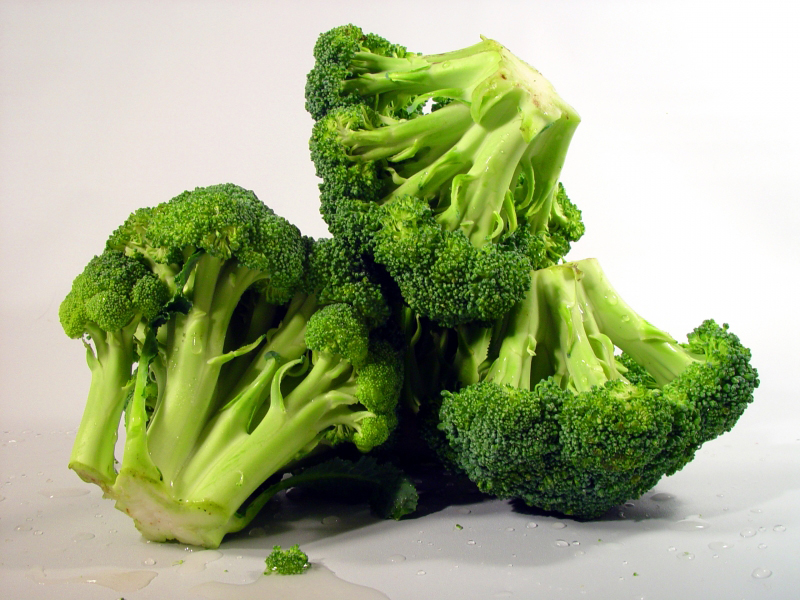
Include broccoli in your diet to keep diseases at bay

Scientists hope that the harvesting of what they call ”booster broccoli” — containing more vitamins and nutrients than other vegetables — will soon begin.

Bred from strains of the vegetable naturally high in antioxidants, it joins a growing crop of ”super foods” that are believed to be good enough to prevent heart disease, cancers and degenerative diseases like Alzheimer’s and help weight control.

Vital Vegetables chairman John says that capsicums with extra vitamins A, C and E levels, and tomatoes that can reduce risks of prostate cancer will be released in the next 12 months.

According to him, supermarkets will soon stock foods ‘boasting higher levels of goodness’ for the time poor.

”Our lifestyles seem to get faster all the time. If you can get the recommended daily intake of fruits and vegetables through eating less, isn’t that kind of the way we are going in the world these days?” the ‘Age’ quoted him as saying.

”I think consumers are looking at things that are better for them. And here you’re going to get more bang for your bite,” he added.

Two breakfast cereals with the potential to reduce the risk of colon and bowel cancers, heart disease, diabetes, stroke and to help control weight were released by the CSIRO last month.

Dr Bruce Lee, director of the CSIRO’s Food Futures National Research Flagship, says that other super grains to be used in breads, biscuits and pasta can be released by 2012.

”You can take supplements or you can get people to eat a healthy diet, but often it is hard to get people to change their dietary habits. ”The beauty of these types of foods is that you can add the wholegrain into the food – you are not forcing consumers to change their diet to something else,” he says.

Source: Indian Express


Fast food meals have more calories than you think

People eating at fast food restaurants aren’t very good at estimating how many calories are in their meals, particularly if they’re eating at Subway, a new study suggests.

For the study, researchers queried more than 3,000 customers, including adults, teenagers and parents with young children, at such fast food chains in New England, such as McDonald’s, Burger King, Subway, Wendy’s, KFC and Dunkin’ Donuts. Customers were asked how many calories they thought were in their meal (or, if they were parents, in their children’s meals), and researchers viewed receipts to verify what was purchased.

About two-thirds of customers thought there were fewer calories in their meal than there actually were, according to the study presented here at the American Public Health Association.

On average, adults underestimated the calorie content of their food by 175 calories, teens underestimated by 259 calories, and parents underestimated their children’s meals by 175 calories.

The biggest underestimates were at Subway: Calorie estimates were about 20 to 25 percent more incorrect at Subway than at McDonald’s. On average, teens eating at the sandwich chain underestimated by nearly 500 calories.

People were also more likely to underestimate calories if they had a big meal, or if they also underestimated how many calories they need in a day.

The researchers said they don’t know why people seem to have more trouble estimating the calorie content of food from Subway. But it could be because the chain has made a big effort to advertise its low-calorie sandwiches, leading some people to mistakenly believe that all sandwiches sold at the restaurant are low-calorie.

“Subway has really had a very concerted effort to identify themselves as a healthy chain,” said study researcher Dr. Jason Block, an assistant professor of population medicine at Harvard Medical School. “It’s not wrong. You can eat healthfully there,” but a lot of people don’t, Block said.

Instead of ordering the smaller, 6-inch-long sandwiches, customers often buy the foot-long sandwiches, because they are sold at a bargain price.

“No matter what you put on a foot-long piece of bread, it’s a lot of calories,” Block said.

Read More: CBS news