Doctors perform C-section on woman who wasn’t pregnant

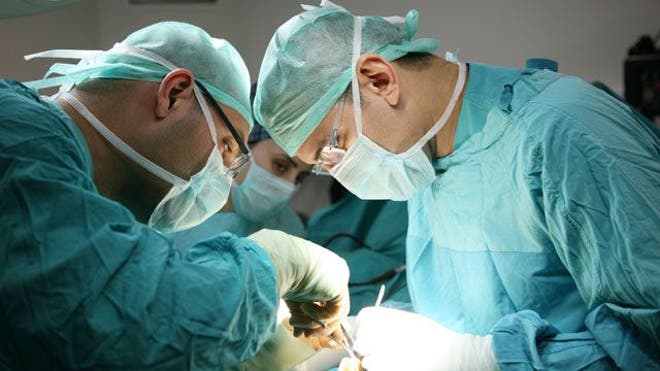
Officials in southeastern Brazil say doctors performed a cesarean section on a 37-year-old woman only to discover that she wasn’t pregnant.

Simone Carvalho is a spokeswoman for the Health Department of the coastal city of Cabo Frio. She said Tuesday the woman told doctors at the city’s Woman’s Hospital she was 41 weeks pregnant and in pain.

Carvalho said one reason doctors believed she was pregnant was because “she had the symptoms associated with pregnancy like an enlarged abdomen and nausea.”

Carvalho said “doctors could not hear the baby’s heartbeat and feeling its life was in danger ordered an emergency cesarean after which they discovered it was a false pregnancy.”

The spokeswoman added the woman “was so convinced she was pregnant, that she altered her prenatal tests that showed otherwise because she was convinced the results were wrong.”

Source: fox news


7 Natural Ways to Ease Back Pain


1. Capsaicin

Capsaicin is the substance in chili peppers that gives them their red-hot “burn” when you eat them.  Researchers have found that when this substance is used in a cream and smoothed onto the skin, it reduces the levels of a neurochemical compound that transmits pain signals. In a recent study, pain sufferers who were given capsaicin cream experienced more pain relief than those who were given a placebo.

2. Willow bark

The bark of the white willow tree (Salix alba) contains a substance called salicin, which the body can convert to salicylic acid. This is the same compound that aspirin becomes once it’s been metabolized by the body. Salicylic acid is believed to be the active compound in aspirin that relieves pain and inflammation, making white willow tree bark a possible natural alternative to the painkiller.

vitamin B 12

There is some evidence that vitamin B12 may help relieve back pain. In a recent study, Italian researchers gave either vitamin B12 or a placebo to people who suffered from lower back pain. They found that the vitamin B12 users experienced a statistically significant reduction in their level of pain and disability. They were also less likely to use painkillers than those given the placebo.

Acupuncture

Acupuncture is a traditional Chinese medicine practice designed to unlock energy pathways that are causing pain. British researchers found that pain sufferers who received acupuncture reported less pain and less worry about their pain compared to people receiving standard care. After two years, the acupuncture group was significantly more likely to report being pain-free and less likely to use painkillers.

   Chiropractics


Chiropractors use spinal manipulation to restore joint mobility and relieve pain. To do this, these doctors of chiropractics manually apply a controlled force to joints that have become damaged or constrained by muscle injury, inflammation, and pain. These “adjustments” have been found in many studies to relieve pain and muscle tightness and encourage healing.

Yoga


Yoga is the practice of physical postures or poses that are designed to have specific effects on the mind, body, and spirit. A study of people with chronic mild low back pain compared patients who did Iyengar yoga to those who received only back education. After 16 weeks, investigators found that there was a significant reduction in pain, disability, and use of pain medication in the people who did yoga.

Balneotherapy

Balneotherapy is one of the oldest forms of pain relief. This type of therapy involves bathing or soaking in warm water or mineral water to relieve pain. A recent study looked at balneotherapy’s effectiveness for low back pain and found promising benefits. But balneotherapy may not be for everyone. People with heart disease should not use it unless they are under the supervision of a physician.

Source: health line


‘Baby Illusion’ Makes Family’s Youngest Seem Tiny

The youngest child in a family may be perpetually the baby, according to new research showing that moms literally perceive their littlest as smaller than he or she really is.

This “baby illusion” often shatters suddenly upon the birth of another child, researchers wrote today (Dec. 16) in the journal Current Biology. In a survey of 747 moms, more than 70 percent reported their first child suddenly seemed larger and older upon the birth of a second baby.

“Contrary to what many may think, this isn’t happening just because the older child just looks so big compared to a baby,” Jordy Kaufman of the Swinburne University of Technology in Australia said in a statement. “It actually happens because all along, the parents were under an illusion that their first child was smaller than he or she really was. When the new baby is born, the spell is broken, and parents now see their older child as he or she really is.”

To get to the heart of the illusion, Kaufman and colleagues asked mothers to estimate the height of one of their children on a blank wall. The researchers then compared the marks made by mom with the kid’s actual height. Some of the kids were older siblings, while others were either the youngest in their family or were only children.

Moms routinely underestimated the size of their youngest or only kids, the results revealed. On average, only children or youngest children were seen as almost 3 inches (7.5 centimeters) shorter than they really were. In contrast, moms were right on target in estimating their older children’s height.

The illusion could be beneficial for kids and parents alike, as seeing their youngest as more vulnerable than they really are could prompt parents to pour more resources into that child — an important key to survival in a family where multiple kids need attention. The findings also might lend credence to the idea that birth order helps shape personality.

“The key implication is that we may treat our youngest children as if they are actually younger than they really are,” Kaufman said. “In other words, our research potentially explains why the ‘baby of the family’ never outgrows that label. To the parents, the baby of the family may always be ‘the baby.'”

Source: live science


Deadly human MERS virus infects camels

Scientists have proved for the first time that the Middle East respiratory syndrome (MERS) virus that has killed 71 people can also infect camels, strengthening suspicions the animals may be a source of the human outbreak.

Researchers from the Netherlands and Qatar used gene-sequencing techniques to show that three dromedary, or one-humped camels, on a farm in Qatar where two people had contracted the MERS coronavirus (CoV) were also infected. The study, published in the Lancet Infectious Diseases journal on Tuesday.  confirms preliminary findings released by Qatari health officials last month. Camels are used in the region for meat, milk, transport and racing.

But the researchers cautioned it is too early to say whether the camels were definitely the source of the two human cases – in a 61-year-old man and then in a 23-year-old male employee of the farm – and more research is needed.

“This is definitive proof that camels can be infected with MERS-CoV, but based on the current data we cannot conclude whether the humans on the farm were infected by the camels or vice versa,” said Bart Haagmans of Rotterdam’s Erasmus Medical Centre, who led the study with other Dutch and Qatari scientists.

He said a further possibility is that humans and camels could have been infected “from a third as yet unknown source”.
“The big unknown is the exact timing of infections, both in the persons and in the camels,” he added. Both the men infected in Qatar recovered.

Scientists around the world have been searching for the animal source, or reservoir, of MERS virus infections ever since the first human cases were confirmed in September 2012.

Globally to date, the World Health Organisation (WHO) says there have been 163 laboratory-confirmed human cases of MERS, including 71 deaths. The WHO is also aware of around a dozen other probable but unconfirmed MERS cases in people.

In humans, MERS cause coughing, fever and pneumonia, which can be fatal. Cases have so far been reported in Saudi Arabia, Qatar, Kuwait, Jordan, United Arab Emirates, Oman, Tunisia, France, Germany, Spain, Italy and Britain.

British researchers who conducted some of the first genetic analyses on MERS last September said the virus, which is from the same family as Severe Acute Respiratory Syndrome, or SARS, is also related to a virus found in bats.

In the Qatar study, researchers collected clinical samples – including nasal swabs, blood and rectal swabs, as well as stool samples – from 14 dromedary camels living in a barn in Qatar where in the previous week, the 61-year-old owner of the barn had been diagnosed with MERS infection.

The samples were sent to laboratories in the Netherlands for genetic analysis and antibody testing, which confirmed the presence of MERS in three of the animals.

Researchers said the virus gene sequences were very similar – although not identical – to those identified in the two people from the same site.

They also noted that all 14 of the camels tested had antibodies to MERS, suggesting the virus might have been circulating among the animals for some time, allowing most of them to build up immune protection against infection.

Since they were not able to say definitely whether the virus had passed from the camels to humans, or the other way, the researchers stressed they also could not rule out that other common livestock species, like cattle, sheep and goats, or other animals, may be involved in the spread of MERS.

To help find more answers, they said, researchers should aim to plot detailed case histories of all human cases of MERS, including any exposure to animals or animal products as well as links with other infected people. Reuters
Source: the Nation


water from US fracking sites had levels of chemicals

The study, published on Endocrinology, analysed 39 water samples from Garfield County in Colorado, an area that has more than 10,000 drilling sites. It found that a number of them contained endocrine disrupting chemicals (EDCs).

According to the study, “Of the 39 unique water samples, 89%, 41%, 12%, and 46% exhibited estrogenic, anti-estrogenic, androgenic, and anti-androgenic activities, respectively. Our data suggest that natural gas drilling operations may result in elevated EDC activity in surface and ground water.”

The endocrine system regulates hormones in the organism, including those related to metabolism, mood, growth and sleep. A disruption of the system can have various consequences, including cancer, development and sexual disorders and even birth defects.
Susan Nagel, one of the authors from the University of Missouri, said, “More than 700 chemicals are used in the fracking process, and many of them disturb hormone function.

“With fracking on the rise, populations may face greater health risks from increased endocrine-disrupting chemical exposure.”
The process of extracting gas from shale rocks, known as hydraulic fracturing or fracking, has been often criticised for its possible consequences over water contamination.

However, it caused a drop of gas prices in the US and has been praised by the UK government as well, as a ‘transition fuel’ towards a cleaner energy system – as it emits less greenhouse gases than conventional fossil fuels.

The debate in the UK is still going on between those supporting it – including David Cameron, who recently wrote to the European Commission asking it not to oppose fracking developments – and those opposing it on environmental and economic grounds.

Source: blue and green tomorrow


EU issues warning on potential health risk from insecticides

European health authorities warned on Tuesday that two insecticides, including a widely-used chemical made by Bayer, may affect the developing human brain and should be more tightly controlled to limit human exposure.

The products – acetamiprid and imidacloprid – belong to a popular class of insecticides called neonicotinoids, which have recently been in the spotlight due to links with plunging populations of bees. Imidacloprid is one of the most widely used insecticides in the world.

The European Union voted in April to ban three neonicotinoids – including imidacloprid which is primarily manufactured by Bayer – for two years amid safety and environmental concerns.

In Tuesday’s move, the European Food Safety Authority (EFSA) recommended that guidance levels for exposure to the products be lowered while further research is carried out to provide more reliable data on so-called developmental neurotoxicity.

“Acetamiprid and imidacloprid may adversely affect the development of neurons and brain structures associated with functions such as learning and memory,” EFSA said in a statement from its Rome headquarters.

“Some current guidance levels for acceptable exposure to acetamiprid and imidacloprid may not be protective enough to safeguard against developmental neurotoxicity and should be reduced.”

A spokesman for the European Commission, which asked EFSA to carry out the assessment, said it would give Bayer and the makers of acetamiprid an opportunity to comment on the findings.

“In principle, the next step would then be to amend the reference values,” said Commission health spokesman Frederic Vincent, adding that EU government officials would begin the process at a meeting in March.

In response, Bayer’s CropScience division said it saw no link between imidacloprid and developmental neurotoxicity in humans, and said EFSA had based its concerns on an inconclusive 2012 study that used tests on rat cell cultures.

“EFSA itself recognizes the limitations of this publication. Bayer CropScience has also evaluated the publication and can confirm that few conclusions can be drawn from it,” the statement said.

Source: reuters


Exposure to Dogs May Keep Kids from Developing Allergies

Exposure to “dog dust,” or the dried flakes of skin that fall from Fido, may protect against developing allergies and asthma in later life by altering intestinal bacteria, a new study in mice suggests.

The dust appears to contain bacteria that, when present in an animal’s gut, affects the production of immune cells in the animal’s airway.

“Perhaps early life dog exposure introduces microbes into the home that somehow influence the gut microbiome, and change the immune response in the airways,” said study researcher Susan Lynch, an associate professor of medicine at the University of California, San Francisco.

Past research has shown that exposure to pets, particularly dogs, during infancy may prevent people from developing allergies, and other work has found that bacteria in the gut can affect allergies and asthma. The new study adds to the research because it links these ideas showing that the reason exposure to dog dust may prevent allergies is that the dust affects the population of gut microbes.

In the study, Lynch and her colleagues exposed mice to dust from a dog owner’s home, and then tested the mice’s immune response to cockroach allergens and ovalbumin (a component of egg whites), two substances that commonly trigger asthma attacks. They found that mice exposed to dog dust had fewer immune cells in the airway that respond to allergens, compared with mice not exposed to dog dust.

The findings, detailed online today (Dec. 16) in the journal Proceedings of the National Academy of Sciences, hint at a mechanism for how dog exposure may protect against allergies or asthma.

“It seems to be that early life exposure to dogs, and cats to a lesser extent, can protect against asthma allergens,” Lynch told LiveScience, though she stopped short of recommending exposing infants to dogs

Source: Healcon


Oakland girl declared brain dead three days after having tonsils removed

The family of Jahi McMath wants answers after the 13-year-old girl suffered complications soon after having her tonsils out. ‘She wasn’t able to talk, and she started to write notes to her mother saying I’m swallowing too much mucus, mom — am I OK? Mom — I feel like I’m choking,’ her uncle says. The family is hoping for a Christmas miracle by keeping Jahi on life support.

She was just supposed to have her tonsils out, and now her heartbroken family wants answers.
Jahi McMath, 13, was declared brain dead on Thursday, three days after undergoing surgery at Children’s Hospital Oakland. Despite the tragic development, the family is holding out hope and refusing to take Jahi off life support.
“It’s shock, it’s disbelief,” uncle Omari Sealey told the San Jose Mercury News. “You never think something like this will happen to you.”

Jahi, an eighth grader at E.C. Reems Academy of Technology and Arts in Oakland, underwent the tonsils procedure on Dec. 9 in order to improve her sleep apnea. After the surgery she asked for a popsicle and seemed OK, but just 30 minutes later she started choking on her own blood, NBC reported.
“She wasn’t able to talk, and she started to write notes to her mother saying I’m swallowing too much mucus, mom — am I OK? Mom — I feel like I’m choking,” Sealey told the Mercury News. “And she began to write these notes because she couldn’t talk because there was so much blood — it wasn’t mucus — it was blood. But my sister, the mother, was too afraid to let her know that it was blood and not mucus.”
Jahi went into cardiac arrest and was revived, but was declared brain dead two days later, family members told the Mercury News. They are urging the hospital to investigate what they believe to be shoddy emergency care.

‘here catch them with the cup so we can measure them,'” mom Nailah Winkfield told ABC.
Grandmother Sandra Chatman, a surgical nurse at a different hospital, was stunned by the lack of attention that Jahi received.
“I went in and I said ‘is this normal, do you guys find this to be normal?,'” Chatman told ABC. “And they said ‘I don’t really know,’ and I said ‘well then get a doctor.'”

Sealey told NBC that family members believe “an error was committed by the hospital, either before, during, or after surgery. I absolutely believe that somewhere along the way, there was a protocol that wasn’t followed, or there was a surgical error.”
Hospital spokeswoman Melinda Krigel said in a statement: “We’re very sad about this outcome, about what’s happened to her, but at this point I have no information on the details of the surgery. We will certainly investigate what happened. In any surgery there are risks and there can be unexpected, unanticipated complications.”

The family is hoping for a Christmas miracle by keeping Jahi on life support, even though doctors say she is brain dead.
“My little girl in there, my little niece, is in there with her own heartbeat, which lets me know that she is alive,” Sealey told NBC.

source: Daily news


FDA examining antibacterial soaps, body washes

Manufacturers of antibacterial hand soap and body wash will be required to prove their products are more effective than plain soap and water in preventing illness and the spread of infection, under a proposed rule announced Monday by the Food and Drug Administration.

Those manufacturers also will be required to prove their products are safe for long-term use, the agency said.
“Millions of Americans use antibacterial hand soap and body wash products,” the agency said in a statement. “Although consumers generally view these products as effective tools to help prevent the spread of germs, there is currently no evidence that they are any more effective at preventing illness than washing with plain soap and water.

“Further, some data suggest that long-term exposure to certain active ingredients used in antibacterial products — for example, triclosan (liquid soaps) and triclocarban (bar soaps) — could pose health risks, such as bacterial resistance or hormonal effects.”
About 2,000 individual products contain these products, health officials said.

“Our goal is, if a company is making a claim that something is antibacterial and in this case promoting the concept that consumers who use these products can prevent the spread of germs, then there ought to be data behind that,” said Dr. Sandra Kweder, deputy director of the Office of New Drugs in FDA’s Center for Drug Evaluation and Research.

“We think that companies ought to have data before they make these claims.” Studies in rats have shown a decrease in thyroid hormones with long-term exposure, she said. Collecting data from humans is “very difficult” because the studies look at a long time period.

Get dangerous germs out of your home

Before the proposed rule is finalized, companies will need to provide data to support their claims, or — if they do not — the products will need to be reformulated or relabeled to remain on the market.

“This is a good first step toward getting unsafe triclosan off the market,” said Mae Wu, an attorney for the Natural Resources Defense Council. “FDA is finally taking concerns about triclosan seriously. Washing your hands with soap containing triclosan doesn’t make them cleaner than using regular soap and water and can carry potential health risks.

The FDA first proposed removing triclosan from certain products in 1978, the council said, “but because the agency took no final action, triclosan has been found in more and more soaps.”

In 2010, the council said it sued FDA to force it to issue a final rule. The new proposed rule stems from a settlement in that suit, according to the NRDC.

The rule is available for public comment for 180 days, with a concurrent one-year period for companies to submit new data and information, followed by a 60-day period for rebuttal comments, according to the FDA.

The target deadline is June 2014 for the public comment period, then companies will have until December 2014 to submit data and studies. The FDA wants to finalize the rule and determine whether these products are “generally recognized as safe and effective” by September 2016.

“Antibacterial soaps and body washes are used widely and frequently by consumers in everyday home, work, school and public settings, where the risk of infection is relatively low,” said Dr. Janet Woodcock, director of the FDA’s Center for Drug Evaluation and Research.

“Due to consumers’ extensive exposure to the ingredients in antibacterial soaps, we believe there should be a clearly demonstrated benefit from using antibacterial soap to balance any potential risk.”

The action is part of FDA’s ongoing review of antibacterial active ingredients, the agency said. Hand sanitizers, wipes and antibacterial products used in health care settings are not affected.

Most hand sanitizers have 60% alcohol or ethanol and are generally recognized as safe when water isn’t available, Kweder said. However, health officials still believe washing hands with soap and water is the best method.

Source: CNN


Energy efficient light bulbs could pose UV-risk to skin, trigger migraines

Starting in January, traditional incandescent bulbs will be on their way out the door. A 2007 bill is setting new efficiency standards for light bulb manufacturers, stating that 40 watt bulbs must draw just 10.5 W, and 60 W bulbs can only draw 11 W.

So how does this translate? Essentially, it means that incandescents will be going dark, while newer compact fluorescents (CFLs) and LED bulbs will be lighting up.

While this move is ultimately meant to conserve the nation’s available energy, the transition may actually not be so beneficial in other aspects. Broader use of CFLs may actually come with some unwanted health risks – most notably in regards to people’s skin.

The danger lies in the CFL design. Current fluorescent bulbs house a small tube of liquid mercury, and when the light is turned on, the incoming electricity changes some of that mercury into gas. This excited vapor emits invisible ultraviolet (UV) light, which is then absorbed by the bulb’s phosphor coating. The coating serves two purposes, both re-emitting the UV rays as visible light and shielding human skin from harm.

“Ultraviolet light is similar to the ultraviolet wavelengths found in natural sunlight, and we do not want huge amounts or extra amounts of ultraviolet light on our skin because it can cause biological effects that can lead to cancer,” Dr. Elma Baron, director in the lasers and photomedicine department at UH Case Medical Center in Cleveland, told FoxNews.com. “I think the chance of that happening, having UV light emission from the new bulbs, is only present when there is a defect in the coating.”

However, it seems that these defects are a definite possibility. A 2012 study from Stony Brook University found that the twisty CFL bulbs, which also use mercury, are much more likely to leak UV light compared to traditional fluorescent bulbs.

According to the research, many of these bulbs “have cracks in the phosphor coating, probably due to the fact that the coating is brittle and has trouble making the tight bends required to make these bulbs compact,” explained the study’s lead author Miriam Rafailovich, a professor of materials science and engineering at Stony Brook.

As a result, the researchers found that exposure to CFL bulbs caused damage to healthy human skin cells, similar to damage seen from ultraviolet radiation. However, it remains unclear how much exposure to a cracked CFL bulb is enough to cause serious adverse health effects.

“When you’re talking about skin effects of light, it all has to do with wavelength; what’s the wavelength being emitted?” Baron said. “A 5 Joule of UVA light may not do anything, but once you get to a 20 Joule of UVA, that might cause some redness or alter some processes in the skin. So it’s a matter of dose, and I don’t think anyone has quantified what the dose is through one of those sources if something is cracked.”

Another concern surrounding CFL light bulbs has to do with their potential to trigger migraine headaches. According to Dr. Mark Green, director of the Center for Headache and Pain Medicine at the Icahn School of Medicine at Mount Sinai, current fluorescent lights are reviled by many migraine suffers, who claim certain forms of lighting can prompt painful attacks.

“The reality is [fluorescent lighting] rarely does trigger migraines, but it’s possible, and the reason for that is there is a flicker rate – the lights fire off at a certain rate,” Green told FoxNews.com. “The way we trigger migraines in the lab is to give people a strobe effect, using high density lights at a high flicker rate… So we don’t like fluorescent lights in migraine people in general.”

Green said that most migraine sufferers enjoy incandescent lighting, since it doesn’t produce any flickering sensations and has a nice warm feel. But with this change, it’s going to be harder for individuals to avoid fluorescent lights, and for the 1 or 2 percent of people who experience migraines, CFLs may exacerbate their symptoms.

“We’re all going to be living in a world of fluorescent light,” Green said. “So what we do as doctors, since we can’t change the world, we just try to treat the migraines more aggressively. When you use preventive migraine therapy, you reduce sensitivity of that part of the brain. We can’t change the trigger but we can try to change the brain’s response to the trigger.”

Fortunately, there is still an option for people worried about the potential health effects from CFLs. Considered to be the future of bulb technology, LED lights don’t contain any filaments that will burn out, and they don’t heat up very much either. Instead, they are illuminated by the movement of electrons in a semiconductor material, causing no flickering and emitting almost no UV light.

Yet, there’s a catch. LED lights are much more costly for consumers, with a six-pack of 60-Watt LEDs from Cree selling for $77.82 – $12.97 each. So if you’re looking to make the switch to LEDs, it may burn a few holes in your pockets.

Source: News.nom