

17 holiday health tips

Follow this advice to enjoy a little holiday indulgence without sacrificing your health goals.

Indulging Without Overindulging
Relax. You won’t gain 10 pounds. It’s a misconception that you’ll need to go up a pant size in January. The average person gains only about a pound during the weeks between Thanksgiving and New Year’s. That’s no excuse to eat with abandon, though. (After all, gaining one pound every year can add up in the long run.)

But a study published in the Journal of Social and Clinical Psychology notes that people who had an attitude of forgiveness and self-compassion after one high-calorie setback were less likely to give up and keep bingeing. So if you lose control with a dish of chocolate truffles, don’t think, I’ve blown it. Might as well move on to the eggnog. Just forgive yourself for the truffles.

Don’t skip meals.
It seems logical: Forgo lunch; leave more room for pigs in blankets later. But arriving starved may result in overeating, and drinking on an empty stomach will give you a quicker buzz, which is more likely to lead to mindless munching. Eat normally during the day, and be strategic at the buffet. Don’t bother with things you don’t absolutely love. Splurge on something special (hint: It’s not those cubes of Cheddar), then stop.

Count your bites.
“A lot of appetizers are about 60 calories a bite,” said Karen Diaz, a registered dietitian in Wyckoff, New Jersey. Just five bites is around 300 calories. “That’s about half of what you might eat for dinner,” said Diaz. Keep a mental tab—or fill a small plate, once—so you don’t go overboard.

Turn down Aunt Jan’s pie.
“It’s better to sit with a little guilt than to overeat just to please loved ones,” Diaz said. If you can’t say no to Jan’s face, try “Maybe later,” then hope she forgets.
Give yourself a break from the gym.
According to a Gallup poll, the percentage of people who exercise regularly is lower in December than at any other time of the year. So don’t beat yourself up—you’re not the only one who’s too busy for Spinning class.

But try to stay active in other ways. Speed-walking with shopping bags counts. So does cleaning, said Mark Macdonald, the author of Body Confidence. Add some toning by tightening your core muscles as you vacuum or reach for scattered toys (imagine trying to get your belly button to touch your spine). And most important: Get back into your regular exercise routine once the holidays end.

Weigh yourself every day.
Or try on a pair of snug-fitting jeans to gauge those subtle ups and…OK, just ups. The point isn’t to get obsessive and berate yourself over every ounce gained; it’s to prevent yourself from completely letting go of good habits.

“Breaking the rhythm of healthy behaviors that you’ve built up is the real danger. You don’t want to have to start from scratch on January 1,” Macdonald said.

Drinking Responsibly
Practice moderation (really). Drinking too much may not just mean a terrible hangover. Around this time of year, doctors report seeing a spike in erratic heartbeats—dubbed “holiday heart syndrome.” It is more common among people who usually aren’t heavy drinkers but drink in excess for a short time.

“Alcohol may be toxic to enough cardiac cells that it disrupts the coordination required to maintain a normal heart rate,” said Kenneth Mukamal, an internist at Beth Israel Deaconess Medical Center, in Boston.

“Women should have no more than three drinks on any occasion and seven per week,” said Michael Weaver, an associate professor of internal medicine at Virginia Commonwealth University School of Medicine, in Richmond. “So a woman can have up to three drinks in a night and go out two nights, but that’s it for the week—or else the chances of problems go way up.”
Keep it on the rocks.
Melting ice dilutes a cocktail and creates more liquid. So order your drink on the rocks to try to avoid a quick buzz—and to sip longer before a refill. Use soda water as a mixer for liquor (a cocktail with liquor and club soda is only about 100 calories), and don’t be ashamed to add ice cubes to bubbly. In France, it’s called a piscine. Très chic.

Put a cork in it early.
Alcohol may help you to conk out quickly; the problem comes when it starts to wear off. The period in which your body is metabolizing the alcohol is when sleep is disrupted. You may wake up frequently in the middle of the night (even if you don’t remember doing so) and miss out on restorative rest. The best strategy is to allow time for the alcohol levels in your body to drop before going to sleep; at the very least, retire your flute several hours before bedtime.

Don’t let late nights make you fat.
“People who sleep less over time tend to be heavier,” said Lawrence Epstein, the chief medical officer of the Sleep Health Centers, in Brighton, Massachusetts. But it doesn’t take long for the cycle to start. “If you pull one all-nighter or miss a few hours each night over a week, your body releases hormones that prompt eating and weight gain,” Epstein said.

Use the weekend to catch up.
Most of us have sleep debt: the difference between the number of hours we need every night (which varies per person) and how many we get. If you feel best after seven hours a night and you get five for three nights in a row during a busy week, you have a sleep debt of six hours (two missing hours for three nights). Erasing that debt requires you to get six extra hours over the course of a few days, but they don’t have to be consecutive, Epstein said.

David F. Dinges, the chief of the division of sleep and chronobiology at the University of Pennsylvania School of Medicine, conducted a study in which participants were restricted to about four hours of sleep for five consecutive nights, then allowed to sleep for 10 hours or more on the sixth night. The researchers found that after the recovery night, participants regained some of their previous levels of alertness and ability to concentrate.

So while you should focus on eliminating your sleep debt completely, just one good snooze (a few hours more than you normally need) can give you a fresher start.

Watch out for hidden caffeine.
Think hot cocoa is a soothing way to end a winter’s night? Hold on to your marshmallows. Chocolate, even the powdered kind, contains caffeine, as do many over-the-counter pain medicines that you might pop at night to get a head start on a hangover. Excedrin Extra-Strength Caplets, for example, contain 65 milligrams of caffeine; by comparison, the average cup of coffee contains 50 to 100.

Skip the sliders.
Foods that are high in fat or protein require your body to work harder at digestion. When your body is busy breaking down mini hamburgers, your sleep is more likely to be hampered. Watch the clock; an early cocktail party is the perfect time to snack on something more substantial. As the night wears on, taper off. Or, if you’re still hungry, have some complex carbohydrates, like whole-wheat crackers or a handful of crudités.

Don’t assume that this is the most depressing time of the year.
Contrary to popular belief, depression isn’t more common during the holidays. In fact, suicide rates in the United States are actually lowest in December, according to the Centers for Disease Control and Prevention.

“This may be a result of more social interaction, which has been found to enhance happiness,” said Caroline Adams Miller, the author of Creating Your Best Life. But that doesn’t mean that you’re immune to the holiday blues, especially when you’re missing a family member or stressed-out by the in-laws. Make plans with friends if your family is far away—or, on the flip side, opt out of events if your schedule is overwhelming.

“You don’t have to be a type E personality—everything to everyone,” said Ronald Nathan, a psychologist in Albany.

Consider a supplement.
Is there a magic pill that will cure the blues? Of course not. But some research shows that omega-3 fatty acids may relieve depression; other research has found that vitamin D may improve mood. Add a daily supplement of omega-3 or vitamin D to your diet. Or increase your intake of vitamin D–fortified milk or foods rich in omega-3s, such as fish, flaxseed, and walnuts.

Take Facebook with a grain of salt.
You’ve seen the status updates: “Hope Santa can find us in ARUBA!” or “Mmm, homemade cider, kids making cookies, life is good.” And you know what? Those people have bad days, too. Remember: Most people put their best self forward on Facebook and Twitter. Don’t compare your life with those dreamy-sounding posts.

Make plans for January.
“If you have social events coming up with people you like, you’ll be upbeat about what’s to come,” said Alison Ratner, a clinical social worker in Atlanta. Plan a weekend getaway or an Oscar-nominated–movie marathon. Or, ahem, if you did gain that holiday pound, might we suggest a jogging club?

Source: fox news


New method to keep track of heart risks

A new method to calculate the risk of heart diseases has been provided by the a study conducted by the National Heart Institute.

The Framingham Heart Study was started in 1948 to learn more about heart diseases and strokes and determine the common risk factors for cardiovascular disease, Fox News reported.

The long-term study has determined key risk factors that can increase a person’s chance of experiencing heart disease or a heart attack over their lifetime, which will help people in adopting lifestyle changes and treatments.

According to the Centers for Disease Control and Prevention, heart disease is the leading cause of death in both men and women and nearly 800,000 Americans experiencing a heart attack every year.

Source: DNA India


Toys, Books Spread Infectious Bacteria

All those Christmas toys and books may spread more than good cheer. A new study has concluded that two common bacteria that cause colds, ear infections, and strep throat can live for long periods on the surfaces of toys, stuffed animals, books, cribs, and other child-related items — even after being cleaned.

The findings, published in the journal Infection and Immunity and reported by Medical Xpress, indicate Streptococcus pneumoniae and Streptococcus pyogenes persist on surfaces for far longer than has been believed.

The researchers said the study suggests that additional precautions may be necessary to prevent infections, especially in settings such as schools, day care centers, and hospitals.

“These findings should make us more cautious about bacteria in the environment since they change our ideas about how these particular bacteria are spread,” said Anders Hakansson, assistant professor of microbiology and immunology in the UB School of Medicine and Biomedical Sciences. “This is the first paper to directly investigate that these bacteria can survive well on various surfaces, including hands, and potentially spread between individuals.”

S. pneumoniae, a leading cause of ear infections in children and respiratory illnesses, is widespread in daycare centers and a common cause of hospital infections, noted Hakansson. S. pyogenes commonly causes strep throat and skin infections in children and adults.

To reach their conclusions, the UB researchers tested the surfaces of toys and surfaces in a day care center. They found four out of five stuffed toys tested positive for S. pneumonaie and several surfaces, such as cribs, tested positive for S. pyogenes, even after being cleaned. The testing was done just prior to the center opening in the morning so it had been many hours since the last human contact.

“Bacterial colonization doesn’t, by itself, cause infection but it’s a necessary first step if an infection is going to become established in a human host,” he explains. “Children, the elderly and others with compromised immune systems are especially vulnerable to these infections.”

Source: news max health


Shock Therapy Can ‘Erase’ Bad Memories, Brain Researchers Show

In the film Eternal Sunshine of the Spotless Mind, unhappy lovers undergo an experimental brain treatment to erase all memories of each other from their minds. No such fix exists for real-life couples, but researchers report today in Nature Neuroscience that a targeted medical intervention helps to reduce specific negative memories in patients who are depressed.

“This is one time I would say that science is better than art,” says Karim Nader, a neuroscientist at McGill University in Montreal, Canada, who was not involved in the research. “It’s a very clever study.”

The technique, called electroconvulsive (ECT) or electroshock therapy, induces seizures by passing current into the brain through electrode pads placed on the scalp. Despite its sometimes negative reputation, ECT is an effective last-resort treatment for severe depression, and is used today in combination with anaesthesia and muscle relaxants.

Marijn Kroes, a neuroscientist at Radboud University Nijmegen in the Netherlands, and his colleagues found that by strategically timing ECT bursts, they could target and disrupt patients’ memory of a disturbing episode.

A matter of time
The strategy relies on a theory called memory reconsolidation, which proposes that memories are taken out of ‘mental storage’ each time they are accessed and ‘re-written’ over time back onto the brain’s circuits. Results from animal studies and limited evidence in humans suggest that during reconsolidation, memories are vulnerable to alteration or even erasure.

Kroes and his team tested this idea in 42 patients who had been prescribed ECT for severe clinical depression. In an initial session, the researchers showed two disturbing slide-show narratives: one depicting a car accident, and the other a physical assault.

The team later prompted patients to recall only one of the stories by replaying part of that slide show. Immediately afterwards, when the reactivated memory is thought to be vulnerable, the patients received electroconvulsive therapy.

One day later, when given a multiple-choice memory test, patients were significantly worse at remembering details from the reactivated story, performing near chance. Patients’ memory of the other story, however, remained largely unscathed. But when researchers administered the memory test 90 minutes after treatment, patients showed no differences in their ability to recall the two stories. This suggests that the therapy blocked the time-dependent process of reconsolidation, rather than causing sudden memory loss.

“This provides very strong and compelling evidence that memories in the human brain undergo reconsolidation, and that a window of opportunity exists to treat bad memories,” says Daniela Schiller, a neuroscientist at Mount Sinai Hospital in New York who also studies memory reconsolidation.

Thinking ahead
Schiller says more work is needed to establish how long the ECT effects last, and whether the technique works as effectively on older or more complex memories from real-life experiences, says Schiller.

Kroes adds that ECT may not be the best option for most patients, but says that these results could guide the development of less invasive interventions that target memory reconsolidation. Eventually, he says, the idea could be extended to memories involved in post-traumatic stress disorder, addiction and obsessive-compulsive disorder.

“The ability to permanently alter these types of memories might lead to novel, better treatments,” says Kroes.

Source: huffington post


7 Yoga Poses For Beauty

Almost 5,000 year old philosophy of good health has evolved into todays most talked about way of life… Want to take a guess at what it is??!

It’s Yoga!!!

Yoga is one of the well-known ancient practices for good health, and the oldest philosophies of Ayurveda, whose primary concern is the well being of an individual. Owing to its holistic approach to healing and wellness aspects, Yoga is known to be beneficial in a day to day routine.

Over All Benefits:

Practicing yoga on a regular basis helps improve, regain and retain good health as well as helps relieve stress while relaxing and strengthening the mind and body.

Yoga is known to help keep a check on diabetes, arthritis, back pain, high blood pressure, asthma and depression amongst others.
Believe it or not!!! But yoga helps you lose weight those extra kilos too… It helps you attain and maintain your ideal body weight.
Ladies health issues like menopause, polycystic ovary syndrome (PCOS) and other menstrual disorders are also treated through the regular practice of yoga.

This overall natural health care taker also is said to enhance beauty.
Yoga also has various beauty benefits. Using yoga to get glowing skin or yoga for hair growth etc. is not a new practice.
I doubt there is anyone in this world who does not want to look good!!! Wouldn’t you want a silky soft glowing and young looking skin??? Why not try yoga?

Apart from the overall health, the skin is, to benefit too…

Swami Sivananda is quoted by Holistic-Online saying that “By practicing the Asanas regularly, men and women will acquire a figure which will enhance their beauty and that suppleness which gives them charm and elegance in every movement,” and “be endowed with a peculiar glow in his face and eyes and a peculiar charm in his smile”.

Yoga will help you improve flexibility as well as correct posture preserving your younger looks. It will help detoxify your skin and body of the possible toxins, while helping with provide proper nutrition at cellular level. Beauty through yoga will only take place with the right balance of diet and exercise.

It is known to clear the skin of acne, blemishes and scars too!! There are a number of yoga positions that you can possibly do to reverse the signs of aging including wrinkles, saggy skin, crow’s feet and fine lines amongst others.

Yoga for Beauty: Poses

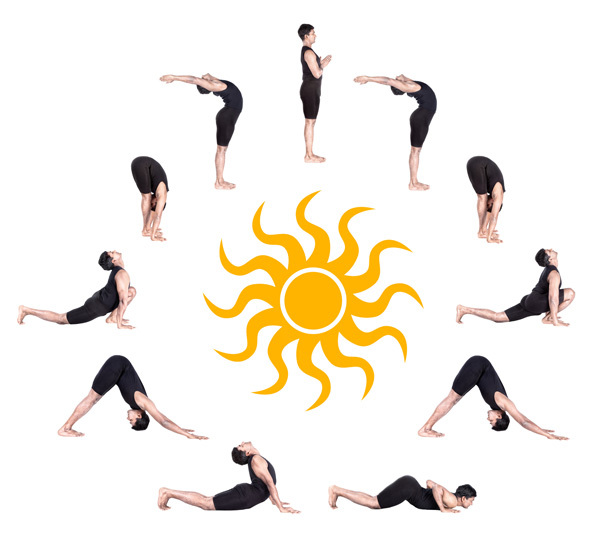
Suryanamaskar, Trikonasana, Yoga mudra, Pawanmuktasana, Bhujangasana, Ushtrasana, Sarvanghasana, and Halasana are few of the poses that you can regularly do to beautify your skin. These postures are said to stimulate blood circulation in the body, while reducing stress and tension. A perfect solution in yoga for face beauty.

1. Surya Namaskar

surya namaskar

2. Trikonasana

Trikonasana for yoga

3. Bhujangasana

bhujangasana

4. Halasana

Halasana

5.  Yoga for Beauty Poses: Pranayam

Yoga Pranayam practice helps provide oxygen to the cells across the body through the blood. Thirty minutes of pranayam can be a secret to your beauty that will be a cause envy. Rhythmic deep breathing, Alom Vilom , Kapalbhati , Bhastrika and Bhramri are few of the poses you can try for good health.

6. Kapalbhati

Kapalbhati for yoga

7.  Anulom Vilom

Anulom Vilom


Source: style craze


Google Glass surgeon’s new best friend? What one surgeon is saying about tech

eve_STRASSMANN5_122513.jpg


It’s hard to think of a way we live that Google hasn’t touched. And now, you can add surgery to the
list.

It all starts with Google Glass, which lets an expert lend a helping hand in the operating room, even
when he or she is in another state.

At the University of Alabama-Birmingham, orthopedic surgeon, Dr. Brent Ponce, prepared for a shoulder
replacement. Behind his face shield he wore Google Glass — the wearable computer. Its built-in camera
streamed live video of the procedure to another surgeon 150 miles away in Atlanta, where Dr. Phani
Dantuluri not only watched the surgery, but offered a virtual hand.

A ghostly projection of Dantuluri’s hands was superimposed over what Ponce saw on the operating table.
The merged images appeared in Ponce’s Google Glass display.
Asked what it was like when he first put on the Google Glass, Ponce said, “There’s a little bit of a
light bulb experience. We were able to say, not just ‘go left or right’ or ‘up or down,’ but we were
able to say ‘right here,’ ‘right there,’ ‘go faster from here to here’.”

On one day, Ponce and Dantuluri were testing Google Glass paired with VIPAAR, a videoconferencing
platform that allows users to interact with the picture.

It may be another year before the combined technology goes mainstream. Ponce is the only doctor testing
it in surgery.
Ponce said, “With this technology, if I’m struggling, another surgeon is able to say, ‘Hey, get your
head in the game. Let’s do this, let’s do this.’ And they’re able to walk through it together. So it’s a
little bit more of a safety net.”

Asked if it turns surgery into collaboration, Ponce replied, “Without question.”

VIPAAR plans to expand the pilot program to include more surgeons by the end of next year.

Source: cbs news


Testosterone may make men likely to get the flu, study finds

Just in time for flu season’s peak, science may have figured out a reason why some men make wimpy, needy patients compared to women when it comes to infectious diseases.

A report released today in the Proceedings of the National Academy of Sciences (PNAS) links testosterone levels with response to flu vaccine, showing that, as a group, men with higher levels of the male hormone are more likely to have weak, or no response to a flu vaccine, meaning that their bodies don’t mount a strong defense.

In short, they have weaker immune systems than do women, leaving them more vulnerable to severe infections.

“Men are suffering!” Mark M. Davis, the Avery Family Professor of Immunology at Stanford University School of Medicine and an investigator with the Howard Hughes Medical Institute, told NBC News. “They aren’t as resistant. Women are superior. There’s no way around it.”

Science has known for some time that there are gender differences between the immune systems of men and women, differences that can have profound impacts for health and medicine.

For example, while women tend to develop a more robust immune reaction to infection, that strength comes with a cost. Women are much more likely to suffer from autoimmune diseases like lupus, and they are more likely than men to develop Alzheimer’s disease. Men, on the other hand, are more likely to have severe cases of viral, bacterial and parasitic infections.

What mechanisms underlay this phenomenon has been somewhat mysterious. The study released today might help tease apart some of that mystery.

The multinational team from Stanford, France, and the University of North Carolina took blood from 54 women and 37 men of different ages, then studied a variety of immune system proteins and cells using complex systems to detect gene expression. Then they gave flu vaccines to these people and checked for any changes in these parameters. Sure enough, men, as a group, had a more muted response to the vaccine.

Thirty-three women and 10 men responded to the vaccine for the seasonal H3N2 flu strain. Twenty women and 24 men did not respond. (The remaining participants weren’t included due to incomplete or flawed results.)

“Lots of male non-responders had high levels of testosterone,” Davis explained, “while the men with lower testosterone levels had roughly equal responses to females. The high-T men were crappy responders.”

When the team completed the complicated genetic analysis, it found that genes involved with lipid (fats) metabolism – such as the manufacture of cholesterol by the liver – were powerfully associated with response to the vaccine. The more strongly those genes were expressed, and the higher the testosterone, the weaker the response to the vaccine.

To Carol Colton, a Duke University Medical Center professor of neurology who studies the interaction of hormones and the immune system, especially their effects on brain diseases, “that makes perfect sense” because our bodies make estrogen and testosterone from cholesterol, a lipid. The differences between men and women, she explained “are inherent, right down to the gene level.”

Why would evolution instill such differences? Davis speculated – and Colton heartily agreed – that higher testosterone in men is anti-inflammatory and aids the healing of injuries and wounds. Males of most species are more likely than females to suffer trauma. “If you’re in a battle, having lots of testosterone is wonderful,” Colton said.

“So you take a hit to your resistance to infectious disease,” Davis said, “but you gain in case of trauma.”

Davis said he hoped studies like this one would help inform scientists and physicians as new immune-therapies, like cancer vaccines, are developed. “There’s been some neglect in this area,” he said, “that I hope our study, and others, will help to correct.”

And for those who got the flu vaccine but still get sick, a prescription antiviral therapy can lessen symptoms and shorten the duration of the virus, if taken within 48 hours.

Source: FCN


Guinness World Record for heart transplant patient

A British man has entered the record books as the worlds longest-surviving heart transplant patient.

John McCafferty, 71, has surpassed the previous Guinness World Record of 30 years, 11 months and 10 days set by an American man who died in 2009.

Mr McCafferty was told he had five years to live when he underwent the life-saving operation at Harefield Hospital in Middlesex 31 years ago.

He says his record should give hope to others awaiting transplants.

Mr McCafferty, from Newport Pagnell in Buckinghamshire, said: “I want this world record to be an inspiration to anyone awaiting a heart transplant and to those who, like me, have been fortunate enough to have had one.

“My advice is always to be hopeful, to look ahead with a positive mind, and, of course, to follow the expert medical advice.”

Mr McCafferty received his new heart on 20 October 1982 in a procedure carried out by world-renowned surgeon Sir Magdi Yacoub.

He had been diagnosed, aged 39, with dilated cardiomyopathy – one of the most common causes of heart failure. It leads to scarring of the heart wall and damage to the muscle, which causes the heart to become weakened and enlarged, preventing it from pumping efficiently.

The first ever successful heart transplant operation was performed in South Africa in 1967 by Prof Christiaan Neethling Barnard and a team of 30 physicians at the Groote Schuur Hospital, Cape Town. The patient, Louis Washkansky, survived for 18 days with the new heart.

Source: BBC news


10 Leading causes of tooth sensitivity


If your answer is YES, you might be suffering from tooth sensitivity. Anyone who has experienced that sharp, biting sensation will agree that “Tooth sensitivity” sounds too harmless and too mild a word to describe this condition.

Tooth sensitivity is a common dental problem that affects almost 70% of people across the world. It refers to the sudden, shooting pain in the teeth on consuming very hot or cold foods and very sweet or sour foods. In extreme cases, a sip of cold water may also evoke the same reaction.* Data courtesy: Ambika Choudhary Mahajan, a lifestyle blogger who write for mymagicmix.com, a blog where you will find a refreshingly delicious chutzpah of information on a variety of topics including health.

Leading causes of tooth sensitivity

The basic underlying cause which brings about this condition is the wearing away of the hard, overlying layer of enamel on the teeth due to which the underlying softer parts (i.e. the pulp) gets exposed. Now, this pulp contains the sensory nerves of the teeth. When this area becomes exposed, the feelings of hot and cold, sweet and sour gets many magnified many times over, causing the sudden, jerking reaction in people suffering from this condition.

The 10 leading causes which cause the nerves of this area to be exposed are:

Receding of gums: Receding gums can be caused by advancing age, due to improper brushing techniques, vigorous or over enthusiastic brushing. When the gums recede, the dentine and the root of the tooth get bared leading to feelings of hot and cold, sweet and sour being blown out of proportion.

Gingivitis: Gum disease or gingivitis weakens the gums which hold the teeth in their place. As this worsens and causes inflammation of gums around the base of the tooth, the underlying root and nerves get exposed, leading to heightened sensitivity.

A cracked tooth: Any external crack on the surface of the tooth allows bacteria inside the mouth to find their way to the root of the tooth and cause an infection. Left untreated, it can become a cause of major headache later and cause hypersensitivity in a tooth or teeth.

Unhealthy eating habits: Whatever goes into your mouth affects your teeth before anything else. Consuming too many sweet and sticky foods (like chocolates, candies, ice- creams), food with acidic content (like pickles, strawberries), carbonated drinks like colas and very hot or very cold foods also takes a toll on the enamel present on the teeth and lead to tooth sensitivity over a period of time.

Bruxism: People who grind their teeth habitually or involuntarily (during sleep)- a condition called Bruxism- might also lose the hard enamel layer gradually and suffer from tooth sensitivity over a period of time.

Dental procedures: Some dental procedures like scaling of plaque, crown placement, tooth restoration, etc might lead to heightened sensitivity for a few days after the treatment. In most cases, sensitivity caused due to such procedure subsides on its own after few days without calling for medical intervention.

Using very hard toothbrushes with or without abrasive toothpastes: Using either or both of them has the same effect as sandpaper rubbing on wood. That is, thinning and wearing away of enamel on the surface of the teeth, thereby making them more prone to sensitivity.

Prolonged use of mouthwash: Most mouthwashes available in the market do indeed help make your breath fresher. But their acidic contents cause the erosion of enamel present on the surface of the teeth, making them weaker and also more vulnerable to tooth sensitivity.

Whitening treatments: We all love shining white teeth. So much so that the ones amongst us who have slightly paler ones go for expensive whitening treatments to get our pearls milky white. While that might help brighten up the smile, they cause untold damage to the enamel- which will make sure that you will be shedding tears for that later! If you must go in for whitening, make sure to check with the dentist about the damage caused to the tooth enamel.

Unusual medical conditions: At times, the acid content in the mouth might be extremely high due to medical conditions like GERD and bulimia. The high acid level in the mouth corrodes the enamel and makes the dentine more sensitive.

Source: Times of India


Top five health benefits of pomegranate

One of the oldest known fruits, Pomegranate has been revered as a symbol of health, fertility and eternal life. This antioxidant rich fruit with a brilliant red hue is packed with several health benefits.

Pomegranate juice is heart-healthy: Pomegranate juice packs a high antioxidant potency punch and protects against heart attack and stroke. Pomegranates are known to help prevent plaque from building up in your arteries and reverses previous plaque buildup.

Maintains blood sugar: Since the fruit is moderate in calories and contains no cholesterol or saturated fats,it is suggested by nutritionists in the diet for weight reduction and cholesterol controlling programs.

Fights breast cancer: Studies show that pomegranate juice destroys breast cancer cells .The juice helps eliminate free radicals from the body and inhibits the growth and development of cancer and other diseases.

Maintains blood pressure: Pomegranates also reduce high blood pressure. The juice of this fruit reduces lesions and the inflammation of blood vessels in heart patients. It is a natural aspirin, which keeps the blood from coagulating and forming blood clots. It even acts as a blood thinner allowing for an unrestricted flow of blood through the body.

Pomegranates keep you young: Pomegranate juice is highly revered as a longevity treatment. Pomegranate helps in the regeneration of cells in the epidermal and dermal layers of the skin. It has an ability to hasten the process of healing of wounds. It also helps to sustain the regeneration of the skin cells and prevent hyper pigmentation and occurrence of dark spots.

Source: inagist