
New genetic clues for rheumatoid arthritis ‘cure’

An international team of researchers has found more than 40 new areas in DNA that increase the risk of rheumatoid arthritis.

The work is the largest genetic study ever carried out, involving nearly 30,000 patients.

The investigators believe new drugs could be developed to target these areas that could one day provide a cure for the disease.

The findings are published in the Journal Nature.

The research team compared the DNA of arthritis patients with those without the disease and found 42 ‘faulty’ areas that were linked with the disease. The hope is that drugs can be developed to compensate for these faults.

The lead researcher Professor Robert Plenge of Harvard Medical School found that one of these areas produced a weakness that was treated by an existing drug that was developed by trial and error, rather than specifically made to correct the genetic problem.

This finding, he says, shows such discoveries could be used to design new drugs.

“What this offers in the future is an opportunity to use genetics to discover new medicines for complex diseases like rheumatoid arthritis to treat or even cure the disease,” he said.

Complex diseases
Some have argued identifying genetic weak areas for complex diseases – known as single nucleotide polymorphisms (SNPs) – is not useful. There is little or no evidence, they argue, that “silencing the SNPs” with drugs will relieve any symptoms.

But Dr Plenge says the fact that he has found an established drug that treats the symptoms that arise from a particular SNP for rheumatoid arthritis validates this genetic approach.

“It offers tremendous potential. This approach could be used to identify drug targets for complex diseases, nut just rheumatoid arthritis, but diabetes, Alzheimer’s and coronary heart disease”

Fast track
The study also found SNPs in the rheumatoid arthritis patients that also occur in patients with types of blood cancer.

According to Prof Jane Worthington, director of the centre for genetics in Manchester, this observation suggests that drugs that are being used to treat the cancer could be effective against rheumatoid arthritis and so should be fast tracked into clinical trials.

“There are already therapies that have been designed in the cancer field that might open up new opportunities for retargeting drugs,” she told BBC News.

“It might allow us a straightforward way to add therapies we have to treat patients with rheumatoid arthritis”.

Source: escience


Diabetes patients unaware of vision loss

Diabetes commonly causes DME, which is a thickening of the eye’s retina. That change can be detected in an eye exam that includes dilation of the pupils. Left untreated, DME is likely to cause progressive vision loss.


Degeneration of the retina in people with diabetes, known as diabetic retinopathy – which is often caused by DME – is the leading cause of blindness in the U.S., Bressler and his colleagues write in the journal JAMA Opthalmology.

Many U.S. medical authorities recommend annual eye checks for diabetics to monitor early signs of vision problems, but many people with diabetes do not get the proper type or frequency of eye care

The survey data Bressler’s team used included patient questionnaires and physical examinations, so people with vision loss could be identified even if they themselves were unaware of the changes in their sight.

The researchers considered a subset of 800 people from the survey who reported having diabetes, which affects 25.8 million people in the U.S., according to the Centers for Disease Control and Prevention.

Of the 800 self-reported diabetics, the physical exam confirmed that 238 had diabetic retinopathy without DME and 48 had DME.

Some 60 percent of those with DME said they had undergone an eye exam with pupil dilation within the past year. But only 45 percent said their doctor told them about the changes in their eyes.

Physician and patient behavior seem not to have changed in recent years, despite wonderful new achievements in potential treatments for diabetic eye problems, Dr. Lee Jampol told Reuters Health.

A professor of ophthalmology who studies diabetes and vision at Northwestern University in Chicago, Jampol was not involved with the new estimate.

“This study is very important as it shows that many diabetics are not aware of potential or actual real risk to their eyesight from diabetic retinopathy,” Jampol said.

Physicians and patients need to be more aware of the vision risks involved in diabetes and insist on yearly visits to the ophthalmologist, he said.

Treatment for DMA “typically involves injections of biologics into the middle cavity of the eye that in most cases cause resolution of the swelling with prevention of vision loss in about 90 to 95 percent of cases, and improvement in vision in about 50 percent of cases when the edema involves the center of the retina and is causing vision impairment,” Bressler said.

Patients tend to need about nine injections in the first year with a couple of additional shots over the next two years, and may require laser surgery as well, which can cause the price to vary quite a bit, he said.

“Everyone with diabetes should be referred to an appropriate health care provider who can evaluate the retina for DME or diabetic retinopathy, even in the absence of symptoms, periodically, so that complications which can be treated to prevent vision impairment and blindness can be done,” Bressler said.

Source:


Low Vitamin B-12 Levels Tied to Bone Fractures in Older Men

Older men with low levels of vitamin B-12 are at increased risk for bone fractures, a new study suggests.

Researchers measured the levels of vitamin B-12 in 1,000 Swedish men with an average age of 75. They found that participants with low levels of the vitamin were more likely than those with normal levels to have suffered a fracture.

Men in the group with the lowest B-12 levels were about 70 percent more likely to have suffered a fracture than others in the study. This increased risk was primarily due to fractures in the lumbar spine, where there was an up to 120 percent greater chance of fractures.

“The higher risk also remains when we take other risk factors for fractures into consideration, such as age, smoking, [weight], bone-mineral density, previous fractures, physical activity, the vitamin D content in the blood and calcium intake,” study author Catharina Lewerin, a researcher at the Sahlgrenska Academy at the University of Gothenburg, in Sweden, said in a university news release.

It is not known, however, if consuming more vitamin B-12 — which is found in eggs, fish, poultry and other meats — can reduce the risk of fractures in older men.

“Right now, there is no reason to eat more vitamin B-12, but rather treatment shall only be applied in confirmed cases of deficiencies and in some cases to prevent deficiencies,” Lewerin said. “For anyone who wants to strengthen their bones and prevent fractures, physical activity 30 minutes a day and quitting smoking is good self care.”

Although the study tied lower vitamin B-12 levels to a higher risk of fracture in older men, it did not establish a cause-and-effect relationship.

This study — published online in the journal Osteoporosis International — is a part of an international research project initiated by the U.S. National Institutes of Health that includes 11,000 men.

Source: Health


Hong Kong confirms first death from H7N9 bird flu


An 80-year-old man infected with the H7N9 bird flu virus has died in Hong Kong, the government said on Thursday, in the first such death in the city after the virus surfaced in early December.

The man, the second person in Hong Kong to be diagnosed with the virus strain, lived in the southern Chinese city of Shenzhen and had eaten poultry there, media reported.

The H7N9 strain was first reported in humans in February in mainland China, and has infected at least 139 people in China, Taiwan and Hong Kong, killing more than 40.

Experts say there is no evidence of any easy or sustained human-to-human transmission of H7N9, and so far all people who came into contact with the man had tested negative for the strain, authorities said.

Source: Reuters


walking more is better for your health

People who walk enough to meet or exceed physical activity recommendations may be less likely to die early than those who only walk a little, new research shows.

The American Heart Association (AHA) recommends adults be physically active for at least two and a half hours per week. Previous research has shown exercising more than that may bring extra benefits.

“An important question left to be answered is how much walking is beneficial,” study author Paul Williams, from the Lawrence Berkeley National Laboratory in Berkeley, California, said.

He analyzed data from 42,000 mostly middle-aged people who enrolled in the National Walkers’ Health Study between 1998 and 2001. They had all subscribed to a walking magazine or attended walking events before the study.

Walkers filled out questionnaires about their health and lifestyle, including exercise and eating habits. Williams then used death records to track who in the study was still alive at the end of 2008.

Based on their questionnaire responses, 23 percent of participants didn’t walk enough to meet physical activity guidelines. Another 16 percent met the guidelines, and the rest exceeded them.

Over an average of nine and a half years, 2,448 people died – almost 6 percent.

Compared to people who didn’t meet the guidelines, those who walked more than the basic recommendation had a one-third lower chance of dying during the study period. Those who met but didn’t exceed the recommendation had an 11 percent lower chance.

That was after taking into account other differences between people who walked various amounts, like diet and education levels.

Participants who walked more had a reduced risk of dying from a stroke, diabetes and heart disease, in particular.

Walking provides plenty of health benefits. But it’s important to note that people who walk more may do so because they are healthier and therefore more able to be active, Williams said. So the new study doesn’t prove walking will extend a person’s life.

“There is always the question of the chicken and the egg – whether people who are healthier are able to walk farther or, conversely, whether the longer distance they walk may translate into better health benefits,” Williams told Reuters Health.

Based on the results, he suggested changing current guidelines by bumping up the minimum amount of physical activity to five hours per week and developing a two-tiered recommendation system that encourages people to exercise more than they do currently.

One tier would aim to get people active, and the other to add to the activity people are already doing, Williams said. That would underscore the point that for couch potatoes, starting to exercise is a healthy move – but the benefits don’t stop there.

“Achieving the weekly exercise guidelines is good,” Williams said, “but exceeding them is even better.”

“When it comes to walking, more is obviously better,” María Simón agreed. She is a fitness trainer and national spokesperson for the AHA and was not involved in the new research.

But, Simón said, the current physical activity guidelines are appropriate.

“The AHA has been very clear in specifying that the recommended guidelines are ‘minimum’ requirements to reduce the risk of heart-related diseases and death and has even provided guidelines for increased activity,” she wrote in an emailed comment.

“Nevertheless, I believe the take-home of this and similar studies is a positive one: ‘Move . . . Just get up and move,'” Simón said.

Source:  Zee news


National Cancer Institute to be set up in Haryana

National-Cancer-Institute222The Union Cabinet on Thursday approved setting up of a Rs 2000-crore National Cancer Institute (NCI), which will be housed in an upcoming campus of the All India Institute of Medical Sciences at Jhajjar, Haryana.

To be completed by 2018, the NCI seeks to plug the gap in offering cancer treatment facilities in the public sector including specialised tertiary care.

Cancer has emerged as a major public health concern in India, where every year 11 lakhs new cases are diagnosed with a mortality of 5.5 lakhs per year.

In 2013, an estimated 10,86,783 new cancer cases were reported and the numbers are slated to rise to 1148692 in 2015 — a jump of over 5.5 per cent in two years. Tobacco remains the most prominent disease causing factor.

The data, collated by the Indian Council of Medical Research, however, is not exhaustive as it does not have inputs from 25 regional cancer centres and populous states like Bihar and Utttar Pradesh.

Males have higher occurrence of cancers of lung, mouth, oesophagus and stomach. Cancers of tongue, rectum, liver, lung, prostate, brain, non-Hodgkin’s lymphoma and a type of leukaemia have shown statistically significant increase. Cancers of uterine cervix and gall bladder too is fairly common.

But cancer treatment facilities in India are inadequate, compared to the World Health Organisation norms that requires one radiotherapy machine per million population. India currently has 0.41 machines per million population.

The Rs 2,035 crore institute will operate on the lines of National Cancer Institute, USA and DKFZ, Germany as a nodal center for indigenous research as well as preventive and curative aspects of cancer care.

In addition, the institute aims to conduct research on cancers that are more specific to India such as tobacco related cancers, cancer of the uterine cervix, gall bladder cancer and liver cancers.

The focus will be on understanding, analysing the cause and genesis of the above cancers.
The NCI will have 710 beds for different facilities like surgical oncology, radiation oncology, medical oncology, anaesthesia and palliative care and nuclear medicine.

It will have a tissue repository which is the first of its kind in India, according to a press statement issued at the end of the Cabinet meeting.

Besides the cancer institute, the second campus of AIIMS will also have a National Centre for Heart Diseases along with a full fledged hospital for which the Haryana government had provided 300 acres of land.

Source: Deccan herald


Stress in job linked to later health problems

More strain at work might mean more illness in old age, according to a new study from Finland. The study found both physical and mental job strain were tied to hospital stays later in life.

Mental job strain can come from tight deadlines, high demands and having little control over one’s work. Physical strain includes sweating, breathlessness and muscle strain.

“Job strain is something that is individually perceived, so persons working in similar jobs can report different amounts of job strain,” lead researcher Mikaela von Bonsdorff said. “When talking about job strain it is important to remember that occasional feelings of job strain are not necessarily a bad thing, but persistent high job strain has been identified as a health hazard.”

Recent studies have linked long-term job strain to lower functioning that lasts into old age, added von Bonsdorff. She is a gerontology researcher at the University of Jyväskylä in Finland.

The new findings come from a study of more than 5,000 middle-aged Finnish public sector employees who were initially surveyed about stress at work in 1981.

The researchers combined that information with data from national hospital records spanning the next 28 years.

With higher strain in midlife, days in the hospital tended to increase, especially for physical strain.

For instance, for every 1,000 men with low physical job strain, about eight days were spent in inpatient hospital care every year, on average. That compared to almost 13 days for every 1,000 men with high physical job strain, according to findings published in Age and Ageing.

“What was interesting was that these associations were clear also when we looked at hospital care that took place after the individuals had turned 65, indicating that these associations were also robust in older age and not that the association was due to hospital care that took place immediately after the baseline assessment of job strain,” von Bonsdorff said.

For both men and women, hospital days increased as physical strain increased. But for mental strain, the link was only clear among men.

“Job strain of some sort can occur in basically any type of employment,” Loretta Platts told Reuters Health.

“Although physical job strain is confined to certain sorts of occupations, such as manual occupations or low-level service occupations like being an electrician, caretaker, driver, builder, cleaner, waiter, waitress, cook or shop assistant,” she said.

Platts is a doctoral candidate at Imperial College London. She studies how various factors influence quality of life after retirement and was not involved in the new research.

“The mechanism might be the development of musculoskeletal disorders from high physical strain jobs, which are often irreversible and painful, and can lead to osteoarthritis, a leading cause of hospital admissions in older people,” Platts said. “In addition, immobility can be related to weight gain, which in turn leads to heart failure, high blood pressure and diabetes.”

Mental strain has been linked to heart disease, another cause of hospital stays.

Still, the study can’t prove that job strain causes poor health and more hospital stays, Platts pointed out.

High-strain jobs might be undesirable for many people, so it’s possible people working those kinds of jobs were unable to get less stressful jobs for an unknown, but relevant, reason. That reason could also be connected to their healthcare use.

It’s also possible that 28 years later, the people spending the most time in hospitals happened to think more negatively about their work in 1981, she said.

“This study was only of public sector employees and came from a country with a very developed welfare state. The consequences for people working in the private sector and in countries with less generous welfare states are likely to be worse,” Platts said. “The public sector in Finland is probably a best-case scenario.

Source: GMA News


Hand, face transplants regulated like other organs

Sure your liver or kidney could save someone’s life. But would you donate your hands, or your face? Signing up to become an organ donor may get more complicated than just checking a box on your driver’s license.

The government is preparing to regulate the new field of hand and face transplants like it does standard organ transplants, giving more Americans who are disabled or disfigured by injury, illness or combat a chance at this radical kind of reconstruction.

Among the first challenges is deciding how people should consent to donate these very visible body parts that could improve someone’s quality of life — without deterring them from traditional donation of hearts, lungs and other internal organs needed to save lives.

”Joe Blow is not going to know that now an organ is defined as also including a hand or a face,” said Dr. Suzanne McDiarmid, who chairs the committee of the United Network for Organ Sharing, or UNOS, that will develop the new policies over the next few months.

Making that clear to potential donors and their families is critical — ”otherwise we could undermine public trust,” said McDiarmid, a transplant specialist at the University of California, Los Angeles.

”The consent process for the life-saving organs should not, must not, be derailed by a consent process for a different kind of organ, that the public might think of as being very different from donating a kidney or a heart or a liver,” she added.

These so-called ”reconstructive transplants” are experimental, and rare. The best estimates are that 27 hand transplants have been performed in the U.S. since 1999, and about seven partial or full face transplants since 2008, said Dr. Vijay Gorantla, of the University of Pittsburgh reconstructive transplant program.

But they’re gradually increasing as more U.S. hospitals offer the complex surgeries, the Defense Department funds research into the approach for wounded veterans — and as transplant recipients go public to say how the surgeries have improved their lives.

”These hands are blessed hands to me,” said Lindsay Aronson Ess, 30, of Richmond, Va., who received a double hand transplant in 2011. She had lost her hands and feet to a life-threatening infection in 2007.

Until now, deciding who qualifies for a hand or face transplant, and how to find a match and approach a potential donor’s family all have been done on an informal, case-by-case basis.

There has been no way to tell which hospitals’ techniques work best and how patients ultimately fare.

There have been reports of two deaths related to face transplants in other countries, and some transplanted hands have had to be amputated.

Source: Teleram news


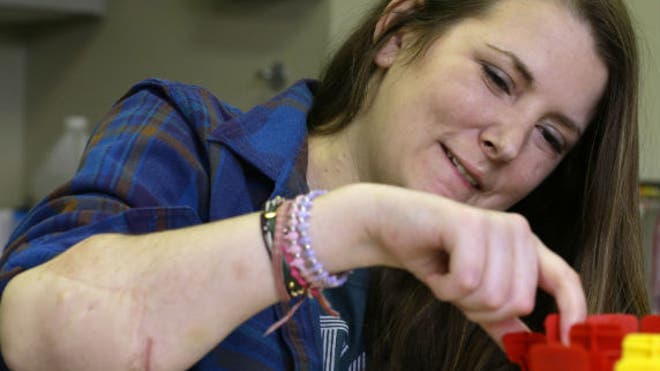
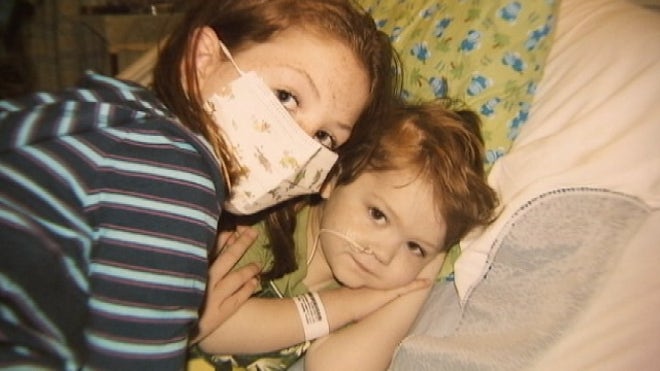
Young girl saves her 3 brothers with bone marrow donations

At 13, Julia Jenkins doesn’t always see eye-to-eye with her three little brothers. They can be rowdy and more than a little competitive. But the Jenkins kids share a connection that runs deep.

Julia Jenkins watched one brother get sick and then another and then another. Then she learned that she was the one person who might be able to help save them.

It started in 2008 when Will, then 2, developed a swollen lymph node in his neck. The diagnosis: Burkitt’s lymphoma, a rare cancer of the lymphatic system.

Will started chemotherapy, but then John, who was 6, began having severe stomach problems. “They diagnosed John with Burkitt’s lymphoma two years to the exact day later,” said (mother) Christy  Jenkins.

Doctors at the Aflac Cancer Center at Children’s Healthcare of Atlanta started looking for answers. Burkitt’s doesn’t usually run in families, but a specialist remembered hearing about a rare, genetic immune disorder called XLP carried by boys that could cause very similar symptoms. Blood tests showed both Will and John had XLP, as did 2-year-old Matthew.

“Here I was approached with the plate of, ‘All three boys need a bone marrow transplant to possibly survive,'” said Christy Jenkins.

That’s where Julia comes in.

“I remember getting my blood tested, like sticking a needle in my arm,” Julia Jenkins said.

Julia was a perfect bone marrow donor match for both John and Matthew, but she was so young that she
didn’t even know what being a donor meant.

“But, I said yes, because they’re my brothers,” said Julia Jenkins.

Source: USA news


Inexpensive hearing devices bring gift of sound to less fortunate

It’s said the clacking of dominoes is the music of the Dominican Republic, but it’s been years since the game sounded so good to retiree Fernando Velverde Baez, who lost his hearing because of old age.

“The difference is that you hear the sound even of the air, and the breeze,” said Baez. “I hear a little bird, that little bird, that just chirped.”

Baez can hear the birds again because of Stavros Basseas, and a remarkable device from his company Sound World Solutions.

Basseas used two technologies, common even in the poorest countries, a smartphone that works with a personal sound amplifier in the ear, connected by Bluetooth. An app lets users raise or lower the volume, and adjust treble and bass.

If you are someplace that doesn’t even have cell phone service, you don’t need it, according to Basseas.

At up to $4,000, the tiny, high-tech hearing aids Americans can buy are too expensive for most of the estimated 365 million people worldwide with severe hearing loss.

Only seven million hearing aids were sold last year, and 85 percent of them ended up in American and European ears.

Basseas said his goal has been to “give people solutions in developing countries that don’t exist.”
And give them a price low enough that people can afford it — between $100 and $300.

The company plans to introduce the device in Africa and South America in the coming months. There may be profits down the road, but the goal for the moment is about helping.

Baez doesn’t care if his hearing aid is a little bulky or looks unfashionable, as long as he can now hear his wife say one thing. He said, “She would say, ‘I love you,’ and I wouldn’t be able to hear well. Now she can whisper it to me, and I’ll hear her.”

Source: one news page