Listening to 30 mins of music can improve heart health

http://drkimfoster.files.wordpress.com/2011/08/music.jpgResearchers have discovered that listening to favorite music substantially improves endothelial function in Coronary Artery Disease.

The study evaluated the effects of listening to favorite music on endothelial function through changes of circulating blood markers of endothelial function: the stable end products of nitric oxide, asymmetric dimethylarginine, symmetric dimethylarginine and xanthine oxidase in 74 patients with stable CAD.

Professor Deljanin Ilic said that the combination of music and exercise training led to the most improvement in endothelial function. Improvements in endothelial function were associated with significant improvements in exercise capacity.

“Listening to joyful music for 30 minutes has been associated with improved endothelial function,” she said.

Source: Zee News


Early deaths from pollution in the US total 200,000 annually

Those who live in a particularly smoggy city in the US are able to see the pollution that surrounds them on a daily basis. But a recent study from the Massachusetts Institute of Technology (MIT) reveals that people who live in all types of environments are at risk of pollution-related death.

The study, published in the journal Atmospheric Environment, saw a team from MIT’s Laboratory for Aviation and the Environment track emissions from sources including industrial smokestacks, automobile tailpipes, marine and rail activities, and heating systems around the US.

In order to ascertain how many early deaths are a result of air pollution, the researchers used emissions data from the Environmental Protection Agency’s National Emissions Inventory, which is a catalog of emissions sources.

They used data from 2005, which was the most recent information available at the start of the study, and then divided it into six emissions sectors:

  • Electric power generation
  • Industry
  • Commercial and residential sources
  • Road transportation
  • Marine transportation
  • Rail transportation.

Results show that in total, air pollution causes about 200,000 early deaths each year, with the greatest number coming from the roads – exhaust from automobile tailpipes was linked to 53,000 deaths per year.

Steven Barrett, assistant professor of Aeronautics and Astronautics at MIT, says:

“It was surprising to me just how significant road transportation was, especially when you imagine [that] coal-fired power stations are burning relatively dirty fuel.”

Baltimore

One reason the researchers give for this finding is that vehicles are dense in likewise densely populated areas – which could increase the pollution exposure for large populations – whereas power plants are usually situated far from dense populations, and their emissions get deposited at a higher altitude.

Barrett says that a person whose death is pollution-related dies on average 10 years earlier than he or she otherwise would have.
Residents of Baltimore, MD, face the highest early emissions-related death rates.

When the MIT team analyzed the data on a state-by-state basis, they found that California’s residents have the worst exposure to air pollution, yielding about 21,000 premature deaths each year.

These deaths are mostly related to road transportation and emissions from both residential and commercial heating and cooking.

After mapping emissions in 5,695 cities across the US, the team found that Baltimore has the highest pollution-related mortality rate. In a given year, 130 out of every 100,000 residents will most likely die as a result of air pollution exposure.

Following closely behind automobile pollution, electricity generation emissions accounted for 52,000 early deaths each year.

The researchers note that the largest impact for deaths related to this type of pollution occurred in the east-central US and in the Midwest. They suggest a reason for this may be that Eastern power plants use coal with higher sulfur content than Western plants.

But the West Coast definitely did not escape health impacts. In Southern California alone, for example, marine-derived pollution from shipping and port activities accounted for 3,500 early deaths.

Barrett says:

“In the past 5 to 10 years, the evidence linking air-pollution exposure to risk of early death has really solidified and gained scientific and political traction.

There’s a realization that air pollution is a major problem in any city, and there’s a desire to do something about it.”

He notes that although the study is based on numbers from 2005, the results most likely represent today’s pollution health risks.

Source: Medical news today


Many neurologists unaware of safety risks related to anti-epilepsy drugs

A study by Johns Hopkins researchers shows that a fifth of US neurologists appear unaware of serious drug safety risks associated with various anti-epilepsy drugs, potentially jeopardizing the health of patients who could be just as effectively treated with safer alternative medications

The findings suggest that the US Food and Drug Administration (FDA) needs a better way to communicate information to specialists about newly discovered safety risks, the researchers say, since the warnings are in many cases not getting through to doctors making important prescribing decisions.

The researchers add that while their new study, reported in the journal Epilepsy and Behavior, was focused on neurologists and anti-epilepsy drugs, they believe their findings are applicable to a wide spectrum of medical specialists and medications.

“There is poor communication from the FDA to specialists, and there’s some risk to patients because of this,” says study leader Dr Gregory L Krauss, a professor of neurology at the Johns Hopkins University School of Medicine. “Unless it’s a major change requiring the FDA to issue a black box warning on a product, important information appears to be slipping through the cracks. We need a more systematic and comprehensive method so that doctors receive updated safety warnings in a format that guarantees they will see and digest what they need to protect patients.”

Dr Krauss and his colleagues surveyed 505 neurologists from across the nation in different types of medical practices between March and July of 2012. They asked about several new safety risks for antiseizure drugs recently identified by the FDA: increased suicidal thoughts or behavior with newer agents; high risks for birth defects and cognitive impairment in offspring of mothers taking divalproex (sold by the brand name Depakote); and risks for serious hypersensitivity reactions in some patients of Asian descent starting treatment with carbamazepine (Tegretol). One in five of the neurologists surveyed said they knew of none of the risks. Those neurologists who treat two hundred epilepsy patients a year or more were most likely to know all of the risks.

Dr Krauss says he was most struck by the lack of understanding of the risk to certain Asian patients who take carbamazepine to control their seizures. The FDA in 2007 recommended that before initiating the drug in patients of Asian heritage, neurologists should screen to see if those patients have a specific haplotype, a specific section of DNA found in a few per cent of Asian people, before prescribing the drug.

The researchers found that 70 per cent of the neurologists who responded knew of the recommendation. While 147 neurologists (29.1 per cent) reported initiating carbamazepine treatment in Asian patients, only 33 of them (22.5 per cent) said they performed haplotype screening. Eighteen neurologists reported that their Asian patients developed carbamazepine-related hypersensitivity reactions — severe skin rashes that can lead to scarring, blisters in the mouth and shredding of the skin — during this time period.

“If their doctors were more educated about the risks,” Dr Krauss says, “these patients may have avoided these severe hypersensitivity reactions.”

Dr Krauss says doctors may not do the screening because it is difficult to find laboratories able to perform the haplotyping, and he notes that it may make more sense to prescribe an alternate drug to Asian patients.

The researchers found that 80 per cent of respondents knew that the FDA had newly warned that the risk of suicide with newer drugs is 4.3 per 1,000, double what had previously been believed. Seventy per cent said they counselled patients about the risk.

As for pregnancy risks related to divalproex, fewer than half of the respondents knew that a warning had been issued noting high risks of birth defects and of developmental risks in offspring (an 8 to 9 point drop in IQ). While 93 per cent of respondents reported counselling women planning pregnancies about the birth defect risks of divalproex, Dr Krauss says safer drugs should be used if possible during pregnancy.

Dr Krauss says part of the problem is the absence of a single place for neurologists to find updated risk information. Neurologists get safety information from scattered sources; only a few get emails from the FDA, while others get the information from neurology societies, from continuing medical education (CME) courses or from newly published journal articles.

“The FDA needs to do better getting the warnings to prescribing doctors,” he says. “There has to be a direct way to communicate risks without overwhelming physicians with messages.”

Source: http://www.indiamedicaltimes.com/2013/08/31/many-neurologists-unaware-of-safety-risks-related-to-anti-epilepsy-drugs/


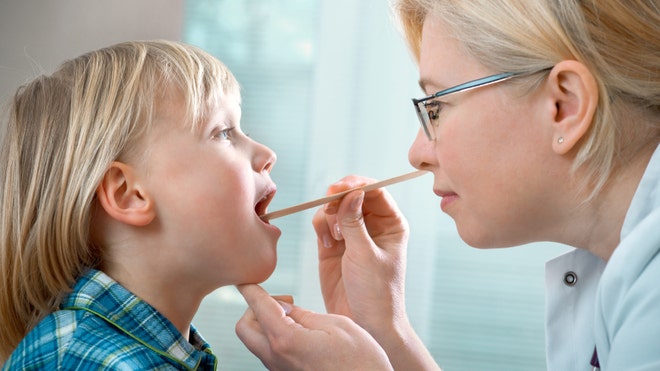
What every mom needs to know about tonsil surgery

Tonsil exam istock.jpg

, kids who had tonsillectomies using the microdebrider method stopped taking pain medicine and returned to their normal activities sooner than those who had the electrocautery method.

More than 530,000 children under the age of 15 have their tonsils removed each year. About 80 percent have obstructive sleep problems – snoring, irregular breathing – and the rest are because of infection, according to The American Academy of Otolaryngology-Head and Neck Surgery.

If your child needs his or her tonsils removed, you might be worried about the procedure, the pain, and the recovery. Here, learn about the new way tonsillectomies are done, if it’s right for your child, and the important questions you need to be asking.

The new way tonsillectomies are done

There are several ways doctors remove tonsils, with one of the most common being the electrocautery method. Using a handheld metal probe heated by an electric current, the tonsil tissue is destroyed and bleeding is well controlled. Yet, because heat is used, the soft tissue of the throat is burned, which causes more pain and a longer recovery.

However, within the last 10 years, doctors have been using a less painful method known as PITA—Partial Intracapsular Tonsillectomy and Adenoidectomy. Using a microdebrider, the surgeon “shaves” the tonsils with a rotating blade and uses suction to stop the bleeding.

“The surgeon is removing the tonsils from what we call inside out – from the center of the throat to the side wall,” said Dr. Julie L. Wei, a pediatric otolaryngologist who practices at Nemours Children’s Hospital in Orlando, Fla.

So instead of removing all of the tonsils, about 90 percent are removed, leaving the capsule or outermost layer behind.

“There are lots of benefits to doing a partial,” said Dr. Didier L. Peron, an attending physician at Morristown Medical Center who is board-certified in otolaryngology-head and neck surgery.

For starters, the nerve endings are not exposed and there’s no damage to the arches of the throat. As a result, children experience less pain, a shorter recovery, and the chance of bleeding is reduced.

According to a study in the journal Otolaryngology-Head and Neck Surgery, kids who had tonsillectomies using the microdebrider method stopped taking pain medicine and returned to their normal activities sooner than those who had the electrocautery method.

Another study also found that kids were at less risk for bleeding and dehydration after surgery. Pain can cause children to refuse to eat or drink, and many are re-admitted to the hospital with severe dehydration, according to Peron.

Can tonsils grow back?

Not all children are good candidates for a partial tonsillectomy, particularly for those who have repeated infections like strep throat. If the tissue is left behind, “there’s a concern they can still get strep more, even though they’ve had their tonsils out,” Wei said.

And with any kind of surgery, there are risks, which include removing normal tissue like the uvula.

But perhaps one of the most significant drawbacks is regrowth. “There’s no doubt that occasionally the tonsils keep growing,” said Peron, who explained that the chances are more likely in young kids. He estimated a 10 percent chance that tonsils will grow back for 2- and 3-year-olds.

There’s one caveat to the question of re-growth, however. Often times, a pediatrician will look in a child’s mouth and see the tonsils but not the scar they’re used to seeing with the electrocautery method. They tell the family the tonsils are there, but “they never realized it was 10 times as big three years ago,” according to Wei. The family is lead to believe the tonsils grew back when actually, “it has to do with how it looks. Maybe there’s not that much regrowth at all,” she said.

The best thing to do is to return to the doctor who did the surgery for a proper evaluation. And even if they did grow back, if it’s not causing the child any problems, leave it alone.

Source: http://www.foxnews.com/health/2013/09/01/what-every-mom-needs-to-know-about-tonsil-surgery/




Go makeup free once a week to delay ageing

Rita Strazinska has urged women to go makeup free one day a week to protect the skin

Most women can’t imagine stepping out of the house without makeup, but avoiding it one day a week, can help in delaying the ageing process, suggests a skincare expert.

Rita Strazinska, founder of Bio2You Organic Seabuckthorn skincare, has urged women to go makeup free one day a week, for a minimum of 24 hours, to help protect the skin and allow it to rejuvenate without being weighed down by cosmetics, reports femalefirst.co.uk.

“By opting to give skin a breather once a week, accompanied by a good skincare routine, women may find their self-confidence levels actually increase as they notice the condition of their skin improving, whilst the world has chance to appreciate their natural beauty,” said Strazinska.

Following are the key reasons behind her tip:

A clearer complexion: No makeup can help in reduction of spots, blemishes and acne. Makeup can also irritate the skin, leading to redness and allergic reactions.

Go chemical free: Most cosmetics have harmful chemicals like parabens, so it is wise to give skin a rest from such ingredients at times.

More time: The average woman spends around 20 minutes every morning putting on makeup. Going makeup free means more time to sleep or eat breakfast!


Statins proved to be best for treating cataracts

Statins are among the most commonly prescribed medications for cataracts, which is the leading cause of visual impairment worldwide affecting more than 20 million people, according to research.

In the USA they are prescribed to 1 in 3 people over 45 years of age at a cost of 35 billion dollars annually.

“There is persistent concern among physicians and other health care providers about the possible cataractogenicity of statins.1 We therefore investigated the relationship of statins and cataracts in a meta-analysis of 14 studies selected after detailed review of the medical literature. To our knowledge this is the first meta-analysis on the topic,” Professor Kostis said.

The meta-analysis included 2,399,200 persons and 25,618 cataracts. The average duration of treatment was 54 months and average age was 61.

Using random effects meta-analysis, a statistically significant decrease in cataracts with statins was observed.

“This corresponds to an approximately 20 percent lower rate of cataracts with statin use compared to no statin use,” professor Kostis said.

Meta-regression showed that younger people were more likely to benefit.


5-year-old boy will receive medical marijuana to treat seizures

An Arizona family plans to give medical marijuana to their 5-year-old son to treat his seizures caused by a genetic brain defect.

Zander Welton had his first seizure when he was 9 months old and now has them weekly.

His parents, who live in Mesa, say the cortical dysplasia, coupled with autism, keeps Zander from any real form of communication. He squeals and grunts, and on occasion, will bring them a cup to indicate that he’s thirsty, but otherwise doesn’t use hand gestures or form words.

After hearing about some disabled kids thriving thanks to medical marijuana, Jacob and Jennifer Welton have started the process of making Zander a legal cardholder.

The Weltons hope to start giving their son the marijuana oil drops by next week, using a syringe to pinpoint the exact dosage that works.

“If this finally works for Zander and I finally get to meet who he is, that would be amazing.

Because I don’t know who he is. He’s just a little boy that’s trapped in this craziness,” Jennifer Welton told Phoenix TV station KNXV.

The Weltons have two other sons and Zander is the second oldest. He’s undergone two brain surgeries, a third surgery for shock therapy and has been administered a series of trial and error prescription drugs.

His latest prescription made minor improvements with his seizures, but Jennifer Welton said the medication made her son more combative.

Zander’s mobility also is limited and he often reverts back to crawling after a bad seizure.

For medical marijuana treatments, the Weltons need two doctors to sign off on it. The caregiver also needs to be approved for a medical marijuana caregiver’s card and that person has to live with the recipient.

The couple connected with a naturopathic doctor and started the process to administer legal pot, learning Tuesday that their applications have been approved.

Medical marijuana isn’t covered by insurance.  The state currently picks up the $5,000 a month tab for Zander’s prescriptions.

The CBD oil will cost about $300 a week out-of-pocket. The Weltons have been reaching out to friends and family for donations.
Read more: http://www.foxnews.com/health/2013/08/29/5-year-old-boy-will-receive-medical-marijuana-to-treat-seizures/#ixzz2dX9Ck82y


HPV vaccine for boys has ‘good start’ in first year

When the HPV vaccine was first recommended for boys, health officials worried it would be an unusually hard sell. But a new report suggests that might not be the case.

About 1 in 5 boys got at least one of the recommended three doses last year, relatively good for a new vaccine aimed at adolescents.

The shots are largely intended not to protect boys from disease, but to stop them from spreading a sexually transmitted virus to girls that could cause cervical cancer.

The vaccine hasn’t been very popular among girls. The government report issued Thursday is the first real sense of how many boys are getting the shots.

“It’s a good start,” said Shannon Stokley, a vaccination expert with the Centers for Disease Control and Prevention.

Introduced in 2006, the vaccine protects against human papillomavirus, which is spread during sex. Most infections go away on their own, without people developing symptoms. But the virus can cause cervical cancer in females, genital warts in both sexes, and some other, less common conditions like throat and anal cancer.

The vaccine was first recommended for girls ages 11 and 12 because it works best if given before a teen starts to have sex. In 2011, it was also recommended for boys that age to help prevent the virus’s spread.

The CDC report covers vaccination rates for last year, the first full year since the shots were advised for boys. It’s based on telephone calls to families for about 19,000 boys and girls ages 13 to 17.

About 21 percent of the boys had gotten at least one of the three doses. Less than 7 percent were fully vaccinated.

The rates look relatively good compared to the initial rates for some other vaccines aimed at adolescents. For example, the initial rate for a meningococcal vaccine was just 12 percent.

Rates tend to start low when a vaccine is first recommended and build after. So the HPV numbers for boys are reason to be optimistic, said the CDC’s Dr. Melinda Wharton, although she added a word of caution.

“Given how the coverage level has stalled for girls, though, a solid start isn’t enough,” she said.

For girls, the initial rate for at least one HPV shot was 25 percent. Last year, it was about 54 percent and hadn’t changed much from the previous two years. Only a third was fully immunized with all three doses last year.

“We’d really like to do much better with boys and girls,” Wharton said.

Source: fox news


IVF more successful in women under 35 years of age

http://www.aboutfertility.org/img/posts/ivf-prediction-tests-reducing-some-guess-work-of-fertility-treatments.png

women below the age of 35 can be blessed with a baby if they opt for In Vitro Fertilization.

A new study has revealed that one in two women below the age of 35 can be blessed with a baby if they opt for In Vitro Fertilization.

However, the research by the University of NSW also suggested that the chances of success drop dramatically after five tries, News.com.au reported.

The study, which is the first in the world to track national success rates for IVF, is based on 2011 statistics from 35 centers in Australia and New Zealand.

According to the study`s lead author UNSW Professor Elizabeth Sullivan, although fertility treatment can be useful, it is always best to conceive spontaneously if possible.
It was found that the overall chance for all age groups of delivering a baby is 21 per cent after one cycle of treatment, increasing to 40 per cent by the fifth cycle, but when women aged 35 and older are removed from the statistics, the success rate jumps to more than 50 per cent after five attempts.

Prof Sullivan says although older women have a very low success rate using their own eggs, they usually manage as well as younger women using donor eggs.

The study is to be presented at a Fertility Society of Australia scientific meeting.

Source: http://zeenews.india.com/news/health/health-news/ivf-more-successful-in-women-under-35-years-of-age_23647.html


Excessive use of internet ‘causing sleep problems’

http://www.cybersmart.gov.au/Schools/Cyber%20issues/~/media/Cybersmart/Schools/Online%20issues/Excessive%20internet%20use/Images/Student-On-Computer-earphones-laptop-home.ashx

It was found that one in five said that they needed to check their Twitter, Facebook or email accounts because they have a “fear of missing out

A new survey has revealed that one out of 10 people do not sleep properly at night in order to stay in touch on the internet.

In the poll conducted by Nytol last December, more than 50 percent of 2000 people polled admitted that they went online while in bed trying to sleep, News.com.au reported.

It was found that one in five said that they needed to check their Twitter, Facebook or email accounts because they have a “fear of missing out”, while just one in 10 described their quality of sleep as “good”.

The survey suggested that while almost half of the respondents went straight from the couch to bed, less than 15 minutes after switching off the TV, two in five checked emails or social media accounts straight before bed, and one in four thought they were addicted to checking emails and social media in bed.

Source: http://zeenews.india.com/entertainment/wellness/excessive-use-of-internet-causing-sleep-problems_141798.htm