Social deprivation increases mortality risk in type 1 diabetes

Levels of social deprivation, as well as how well a patient controls their blood sugar, is an independent risk factor for mortality in people suffering from type 1 diabetes, a new study has revealed.

Research from Diabetes Clinical Academic Group at King’s Healthcare Partners, UK, and presented by Dr Stephen Thomas, Dept of Diabetes and Endocrinology, Guy’s and St Thomas’ Hospitals NHS Foundation Trust (GSTT), London, analysed blood sugar control (HbA1c levels), demographics and health resource utilisation data collected over a 10 year period for a cohort of 1038 patients with type 1 diabetes attending two inner city London specialist diabetes outpatient clinics.

All patients attending the service in 2002 with HbA1c data, a measure of blood glucose control, available for each year from 2002 to 2004 and with ongoing follow-up within the clinics until 2010 were included. Economic status was determined using the index of multiple deprivation (IMD) a weighted deprivation score derived from a national dataset based on postcode of residence.

The group had a mean age at baseline of 42 years and had had diabetes for a mean of 18 years. The average baseline HbA1c between 2002 and 2004 was 8.1 percent. In total, 37 deaths occurred by 2012 (3.6 percent cumulative mortality).

Those who died were on average older with a higher mean baseline HbA1c (9.1 percent) Having a baseline HbA1c over 9.0 percent carried a cumulative 10-year morality that was significantly increased at 9 percent. Those who died were more likely to be socially deprived, with 61 percent of deceased patients having scores in the poorest 20 percent of the population range (mean IMD score 32 points deceased vs 24 points for patients still alive).

Age, HbA1c and deprivation were all independent risk factors for death of patients with type 1 diabetes.

Source: ANI


Better use of antibiotics could be key to fighting ‘superbugs’

Better use of antibiotics could help fight the infection Clostridium difficile – the super bug.

A team from the University of Leeds, Oxford University Hospitals NHS Trust and Oxford University, mapped all cases of Clostridium difficile (C.diff) in Oxfordshire over a three-year period (2008 to 2011).

C. diff causes severe diarrhoea, cramps and sometimes life-threatening complications, and has traditionally been thought to be transmitted within hospitals from other sick C.diff patients.

The research found that less than one in five cases of the so called ‘hospital superbug’ were likely to have been caught from other hospital cases of C.diff, where the focus of infection control measures has been.

By assessing the genetic variation between C.diff cases, the team identified those cases that were matched and were likely to be linked. By adding hospital records and the community movements of each case, they worked out if that transmission was likely to have happened as a result of hospital or patient contact.

Source: sify.com


Omega-3 fatty acids not tied to women’s mental sharpness

Women who consume plenty of omega-3 fatty acids may not have better thinking and memory skills as a result, according to a new study.

Some researchers have suggested that fatty acids found in fish and fish oil supplements might protect against memory loss.

But studies trying to test that theory have been “all over the place,” said Dr. Jennifer G. Robinson from the University of Iowa in Iowa City, senior author of the new report.

“There’s nothing really convincing, (in) one direction or the other,” she told Reuters Health.

To address the uncertainty, she and her colleagues analyzed data collected as part of the large Women’s Health Initiative trial focused on hormone replacement therapy.

For the new study, they compared women’s fatty acid levels to their performance on six years’ worth of thinking and memory tests.

The study included 2,157 women ages 65 to 80, and Robinson’s team looked at their levels of two omega-3 fatty acids, docosahexaenoic acid (DHA) and eicosapentaenoic acid (EPA). The researchers also adjusted for the effects of hormone therapy in the women who were taking it.

On seven kinds of thinking and memory tests, Robinson and her colleagues found no differences between the one-third of women with the lowest omega-3 levels and the one-third with the highest levels.

That was after also taking into account other health and lifestyle factors, like whether women smoked and how much they exercised.

The tests measured women’s short-term memory for numbers and pictures and their ability to recognize shapes that are flipped or rotated, for example.

Scores on those exams did decline gradually over time, but there was no link between a woman’s omega-3 levels and how far or fast her scores fell, the study team reports in Neurology.

Robinson said Women’s Health Initiative participants tended to be healthy and well-educated, which may have bolstered their “cognitive reserve” and protected against memory loss – even without extra omega-3 fatty acids. It’s possible, she added, that the fatty acids would make a bigger difference among less-advantaged women.

Or, it may be that researchers would have to measure fatty acids over longer periods of time to see a link with thought processing. The blood levels used here probably only reflect diet over several months, she said.

“It’s just one snapshot, one point in time,” Robinson said. “The feeling as we look at all these chronic diseases … is it’s really what happens over your lifetime that’s important in terms of diet and physical activity.”

Alan Dangour, who has studied fatty acids and memory at the London School of Hygiene and Tropical Medicine, said omega-3s are important for brain development early in life. But after that, the data get a bit fuzzier.

“There is no good evidence to support the consumption of omega-3 supplements to promote or maintain cognitive health in later life,” Dangour, who wasn’t involved in the new research, told Reuters Health in an email.

“However, omega-3 fatty acids are an important part of the diet and may have other health benefits,” he said.

Source: Zee News


3-Year-Old Girl Dies in Sofa Bed

A 3-year-old girl died after she was caught inside a sofa bed where she and another child were sleeping in their Harlem home Sunday, police said.

Police responding to a 911 call at the home on West 140th Street around 6 p.m. found Aissante Diallo unconscious. She was pronounced dead at the scene.

Police said she and a 10-year-old sibling were on the bed when it somehow folded up, trapping Aissante. The 10-year-old was able to escape.

Two other younger children were in the room at the time, but not on the bed.

The children were in the care of their mother’s boyfriend, who flagged down a police officer on the street for help after the child was caught. He has been charged with endangering the welfare of a child.

Neighbors were horrified.

“Can you imagine?” said Fatsu Matza, crying. “She just stays right there and strangles herself to death.”

The medical examiner will determine the cause of death.

Source: http://www.nbcnewyork.com/news/local/Child-Found-Dead-Harlem-Home-Police-224858622.html 


US Attorneys General urge FDA to regulate e-cigarettes

T

Top U.S. law enforcement officials urged the Food and Drug Administration on Tuesday to promptly issue a promised set of rules governing the sale of e-cigarettes, adding to a growing body of legal and public health officials demanding action.

In 2009, the FDA was given authority to regulate cigarettes, cigarette tobacco and roll-your-own tobacco, although not pipe tobacco, cigars or e-cigarettes. The law allows the FDA to expand its authority over all tobacco products, but it must first issue new regulations. The FDA has said they are in development.

In a letter to FDA Commissioner Margaret Hamburg, Attorneys General from 41 states asked the agency to “take all available measures” to issue the rules by the end of October.

“We ask the FDA to move quickly to ensure that all tobacco products are tested and regulated to ensure that companies do not continue to sell or advertise to our nation’s youth,” they wrote.

The FDA did not immediately respond to a request for comment.

The letter comes less than a week after the American Academy of Pediatrics and 14 other public health organizations, including the American Lung Association and American Heart Association, sent a letter to President Barack Obama asking him to pressure the FDA into issuing the rules.

In July, the FDA said it might place restrictions on menthol cigarettes following a review that showed the products are likely to be more addictive than regular cigarettes. The agency is seeking public comment.

In their letter, the Attorneys General noted that sales of e-cigarettes have doubled every year since 2008 and are projected to reach $1.7 billion in 2013. The cost, meanwhile, has fallen, making them more affordable and attractive to youth, they said.

Moreover, there are no restrictions on advertising e-cigarettes.

“Consumers are led to believe that e-cigarettes are a safe alternative to cigarettes, despite the fact that they are addictive, and there is no regulatory oversight ensuring the safety of the ingredients in e-cigarettes.”

Source: Foxnews.com


Soon, spring-like fibres to mend broken hearts

Researchers have fabricated spring-like fibers to help repair damaged heart tissue.

Doctoral students Sharon Fleischer and Ron Feiner – under the supervision of Dr. Tal Dvir of Tel Aviv University’s Department of Molecular Microbiology and Biotechnology and the Center for Nanoscience and Nanotechnology – have fabricated fibers shaped like springs that allow engineered cardiac tissue to pump more like the real thing.

Dvir said that until now, when scientists have tried to engineer cardiac tissue, they’ve used straight fibers to support the contracting cells.

He said that but these fibers prevent the contraction of the engineered tissue and what they did was mimic the spring-like fibers that promote contraction and relaxation of the heart muscle.

Dvir asserted that they found that by growing tissues on these fibers, they got more functional tissues.

The researchers identified spiral-shaped collagen fibers in the extracellular matrix of rat hearts and seeing the potential for an advance, they set out to recreate them for the first time.

After fabricating the spring-like fibers using advanced techniques, they subjected them to a variety of tests.

As the researchers predicted, the spring-like fibers showed better mechanical properties than straight fibers, with especially improved elasticity.

And compared to tissue engineered with straight fibers, the tissue engineered with spring -like fibers contracted with greater force and less mechanical resistance.

They study has been published in the journal Bio-materials in August.

Source: deccanchronicle.com


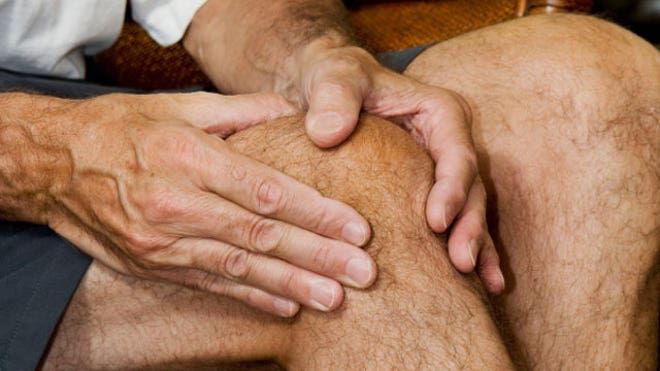
Weight loss tied to knee arthritis benefits

Intensive weight loss together with regular exercise did more to ease knee arthritis than exercise alone for overweight and obese adults in a new U.S. study.

Knee inflammation, pain and functioning all improved more among people who cut back on calories in addition to working out, researchers found.

The greatest benefits were seen among those who lost the most weight, and they tended to be the ones who combined diet and exercise.

“While both the exercise and the diet interventions separately were beneficial, the combination of the two was superior in virtually every outcome,” Stephen Messier, who led the study at Wake Forest University in Winston-Salem, North Carolina, said.

Extra weight is known to raise the risk of knee osteoarthritis, which happens when cartilage around the joint breaks down, causing inflammation, pain and stiffness.

One review found that being overweight doubles a person’s risk of knee osteoarthritis, and being obese quadruples it

For the new study, Messier and his colleagues wanted to see what effect losing weight through a strict diet program would have on arthritis symptoms.

They randomly assigned 454 overweight and obese adults with mild or moderate knee arthritis to 18 months of diet counseling, exercise or both.

For participants on the diet, the goal was to lose at least 10 percent of their starting weight. People replaced some meals with shakes and attended regular weight monitoring and nutrition sessions.

The exercise program involved one hour of physical activity three times per week, including aerobic walking and strength training.

By the end of the study, people assigned to both diet and exercise had lost an average of 23 pounds. That compared to almost 20 pounds in the diet-only group and four pounds among those who only exercised.

Compared to people in the exercise-only group, those who combined diet and exercise had less knee inflammation and pain and better functioning at 18 months.

For example, pain scores measured on a scale of 0 to 20, with higher scores indicating more pain, fell by 3.1 points in the diet plus exercise group and by 1.4 points in the exercise-alone group and about the same in the diet-alone group.

Likewise, on a 0-to-68 scale measuring knee function, people in the combined diet and exercise group improved by an average of 10.5 points, versus 4.7 points among those who only exercised.

People in the diet-alone and the diet plus exercise groups had about the same levels of knee inflammation – both lower than in the exercise-alone group.

“No one expects diet and exercise to have a huge impact” on osteoarthritis, Dr. Amanda Nelson, from the University of North Carolina at Chapel Hill’s Thurston Arthritis Research Center, said.

“The fact that most of the improvements were modest is what we would expect to see.”

Regardless of their group, participants who lost 10 percent of their body weight or more saw greater improvements in inflammation and other arthritis measures than those who dropped less weight, the researchers write in the Journal of the American Medical Association.

Messier told Reuters Health that exercise seems to have benefits for osteoarthritis independent of weight loss, so it should remain part of standard care.

Although not all patients may be able to find the same support provided in the study, many communities have YMCAs and other places people can go to get help with weight-loss and exercise goals, he noted.

Some people, Messier said, “just need help. If you have someone who is sedentary for most of their life … to just ask them, ‘Well, I think you need to lose a few pounds and exercise’ and then walk out the door, it’s not enough.”

Nelson, who wasn’t involved in the new research, told Reuters Health that people should also turn to family members and community groups for support, if possible.

Although a 10-percent weight loss continues to be the goal for overweight people with arthritis, even two pounds is better than nothing, she said.

“Patients should be encouraged that any weight loss is likely to be beneficial, and the more they can do the better,” Nelson said

Source: Reuters.com


1 in 500 patients wakes up on operating table

One of the most disturbing surgical complications is also frighteningly common: As many as 1 in every 500 patients wakes up on the operating table and is at least dimly aware of what’s happening, according to a new survey of doctors.

The findings, published in the British Journal of Anesthesia, noted most patients say they are not distressed by the experience because they feel no pain and are not fully awake or aware of the circumstances.

But lead researcher Jaideep Pandit, an Oxford University anesthetist, said it happens far more frequently than past research has suggested. One reason: Only 1 in 15,000 patients who can remember at least some aspects of an operation mentions the experience to the doctor afterwards.

The experiences recalled by the patients: Vague awareness of conversations among the staff in the operating room and even the knife on their skin (but no pain). 

“The difference between the incidence of one in 500 and one in 15,000 suggests that even in the rare cases where patients are experiencing awareness, in most cases, the sensation is a ‘neutral’ one,” Pandit told the Independent on Sunday. 

“What we are possibly seeing is a third state of consciousness — dysanaesthesia — in which the patient is certainly aware of events but not concerned by this knowledge, especially as they are not in pain.” 

He added that problems in the way the anesthetic is given or even by genetic variation among surgical patients may cause some to react differently to the drugs.

For the survey, Pandit polled more than 7,100 anesthesiologists at 329 British hospitals.

Source: http://www.newsmaxhealth.com/Health-News/waking-during-surgery/2013/09/23/id/527243


For black infants, a precarious start in life

Samantha Bradley holds her 1-year-old son, Adris, in Long Beach, Calif. Adris, born premature, required heart and eye surgery.

Samantha Bradley was only six months pregnant. She had already miscarried once. She knew she needed to get to an emergency room.

“I was in tears,” she said. “The only thing I could think was, ‘Get me to a hospital.’ ”

On vacation in Palm Springs, Bradley and her sister rushed to a nearby hospital. About 30 minutes later, Bradley gave birth to her son, Adris. The baby weighed just 1 pound, 8 ounces — a little more than a bag of coffee.

Adris would spend four months in the hospital, undergoing surgery to close a valve near his heart and eye surgery caused by a disease common in premature infants.

Black women like Bradley are 1½ times as likely as white women to give birth prematurely, and their babies are more than twice as likely to die before their first birthday.

Researchers once blamed a lack of prenatal care for the disparity. Now, research shows that the explanation is much more complex, rooted in the years before the women even get pregnant. Black women are more likely to be poor, have less education, lack health insurance and have chronic conditions such as diabetes and obesity.

“They are coming into the pregnancy at higher risk,” said Kay Johnson, who chairs the advisory committee on infant mortality for the U.S. Department of Health and Human Services. “By the time they see a doctor, seven months is too short to repair long-term adverse health.”

The leading causes of infant mortality are preterm birth and low birth weight. Even if premature children survive, they can face lifelong health or developmental problems.

The nation’s health care overhaul is expected to help close racial gaps by increasing access to preventive care, health insurance and family planning, Johnson said. The government also is investing in projects to reduce preterm birth and infant mortality.

“While there are all these medical risk factors, there are a whole bunch of other social risks,” said Erin Saleeby, director of women’s health programs for the Los Angeles County Department of Health Services. “The medical side of it will never be enough.”

Socioeconomics and medical care don’t fully explain why black women disproportionately lose their babies. Even black women who are highly educated are at higher risk than white women with less education.

That may be because of the cumulative effects of racism and stress, said Johnson, citing research on the subject.

Meridith Merchant, 42, a licensed psychologist who lives in Los Angeles, said she did all she was supposed to do during her pregnancy in 2005, eating well and attending all her prenatal appointments.

When she was 6½ months pregnant, her water broke. At Cedars-Sinai Medical Center, she gave birth to a girl, Nailah Asha, who weighed just 2 pounds.

Nailah spent five months in the neonatal intensive care unit, until she could eat and breathe on her own.

Merchant and her husband spent long hours at the hospital. Nailah was born with heart defects, and several weeks after her birth, she tested positive for Down syndrome.

She went home after five months but had trouble gaining weight. One day, Merchant was holding Nailah when her body went limp. Merchant called 911. Her daughter died at the hospital of an intestinal disorder. It was one day before her first birthday.

Every year, Merchant said, she commemorates Nailah’s birthday.

Source: http://www.timesdispatch.com/news


How Many Die From Medical Mistakes In U.S. Hospitals?

It seems that every time researchers estimate how often a medical mistake contributes to a hospital patient’s death, the numbers come out worse.

In 1999, the Institute of Medicine published the famous “To Err Is Human” report, which dropped a bombshell on the medical community by reporting that up to 98,000 people a year die because of mistakes in hospitals. The number was initially disputed, but is now widely accepted by doctors and hospital officials — and quoted ubiquitously in the media.

In 2010, the Office of Inspector General for the Department of Health and Human Services said that bad hospital care contributed to the deaths of 180,000 patients in Medicare alone in a given year.

Now comes a of the Journal of Patient Safety that says the numbers may be much higher — between each year who go to the hospital for care suffer some type of preventable harm that contributes to their death.

That would make medical errors the, behind heart disease, which is the first, and cancer, which is second.

The new estimates were developed by John T. James, a ‘s space center in Houston who runs an advocacy organization called . James has also about the death of his 19-year-old son after what James maintains was negligent hospital care.

Asked about the higher estimates, a spokesman for the American Hospital Association said the group has more confidence in the IOM’s estimate of 98,000 deaths. ProPublica asked three prominent patient safety researchers to review James’ study, however, and all said his methods and findings were credible.

What’s the right number? Nobody knows for sure. There’s never been an actual count of how many patients experience preventable harm. So we’re left with approximations, which are imperfect in part because of inaccuracies in medical records and the reluctance of some providers to report mistakes.

Patient safety experts say measuring the problem is nonetheless important because estimates bring awareness and research dollars to a major public health problem that persists despite decades of improvement efforts.

“We need to get a sense of the magnitude of this,” James said in an interview.

James based his estimates on the findings of four recent studies that identified preventable harm suffered by patients — known as “adverse events” in the medical vernacular — using use a screening method called the , which guides reviewers through medical records, searching for signs of infection, injury or error. Medical records flagged during the initial screening are reviewed by a doctor, who determines the extent of the harm.

In the four studies, which examined records of more than 4,200 patients hospitalized between 2002 and 2008, researchers found serious adverse events in as many as 21 percent of cases reviewed and rates of lethal adverse events as high as 1.4 percent of cases.

By combining the findings and extrapolating across 34 million hospitalizations in 2007, James concluded that preventable errors contribute to the hospital patients annually.

That is the baseline. The actual number more than doubles, James reasoned, because the trigger tool doesn’t catch errors in which treatment should have been provided but wasn’t, because it’s known that medical records are missing some evidence of harm, and because diagnostic errors aren’t captured.

An estimate of 440,000 deaths from care in hospitals “is roughly one-sixth of all deaths that occur in the United States each year,” James wrote in his study. He also cited other research that’s shown hospital reporting systems and peer-review capture only a fraction of patient harm or negligent care.

“Perhaps it is time for a national patient bill of rights for hospitalized patients,” James wrote. “All evidence points to the need for much more patient involvement in identifying harmful events and participating in rigorous follow-up investigations to identify root causes.”

Dr. Lucian Leape, a Harvard pediatrician who is referred to the was on the committee that wrote the “To Err Is Human” report. He told ProPublica that he has confidence in the four studies and the estimate by James.

Members of the Institute of Medicine committee knew at the time that their estimate of medical errors was low, he said. “It was based on a rather crude method compared to what we do now,” Leape said. Plus, medicine has become much more complex in recent decades, which leads to more mistakes, he said.

Dr. David Classen, one of of the Global Trigger Tool, said the James study is a sound use of the tool and a “great contribution.” He said it’s important to update the numbers from the “To Err Is Human” report because in addition to the obvious suffering, preventable harm leads to enormous financial costs.

Dr. Marty Makary, a surgeon at Johns Hopkins Hospital whose book Unaccountable calls for greater transparency in health care, said the James estimate shows that eliminating medical errors must become a national priority. He said it’s also important to increase the awareness of the potential of unintended consequences when doctors perform procedure and tests. The risk of harm needs to be factored into conversations with patients, he said.

Leape, Classen and Makary all said it’s time to stop citing the 98,000 number.

Still, hospital association spokesman Akin Demehin said the group is sticking with the Institute of Medicine’s estimate. Demehin said the IOM figure is based on a larger sampling of medical charts and that there’s no consensus the Global Trigger Tool can be used to make a nationwide estimate. He said the tool is better suited for use in individual hospitals.

The AHA is not attempting to come up with its own estimate, Demehin said.

Dr. David Mayer, vice president of quality and safety at Maryland-based , said people can make arguments about how many patient deaths are hastened by poor hospital care, but that’s not really the point. All the estimates, even on the low end, expose a crisis, he said.

“Way too many people are being harmed by unintentional medical error,” Mayer said, “and it needs to be corrected.”

Source: http://www.npr.org/blogs/health/2013/09/20/224507654/how-many-die-from-medical-mistakes-in-u-s-hospitals